
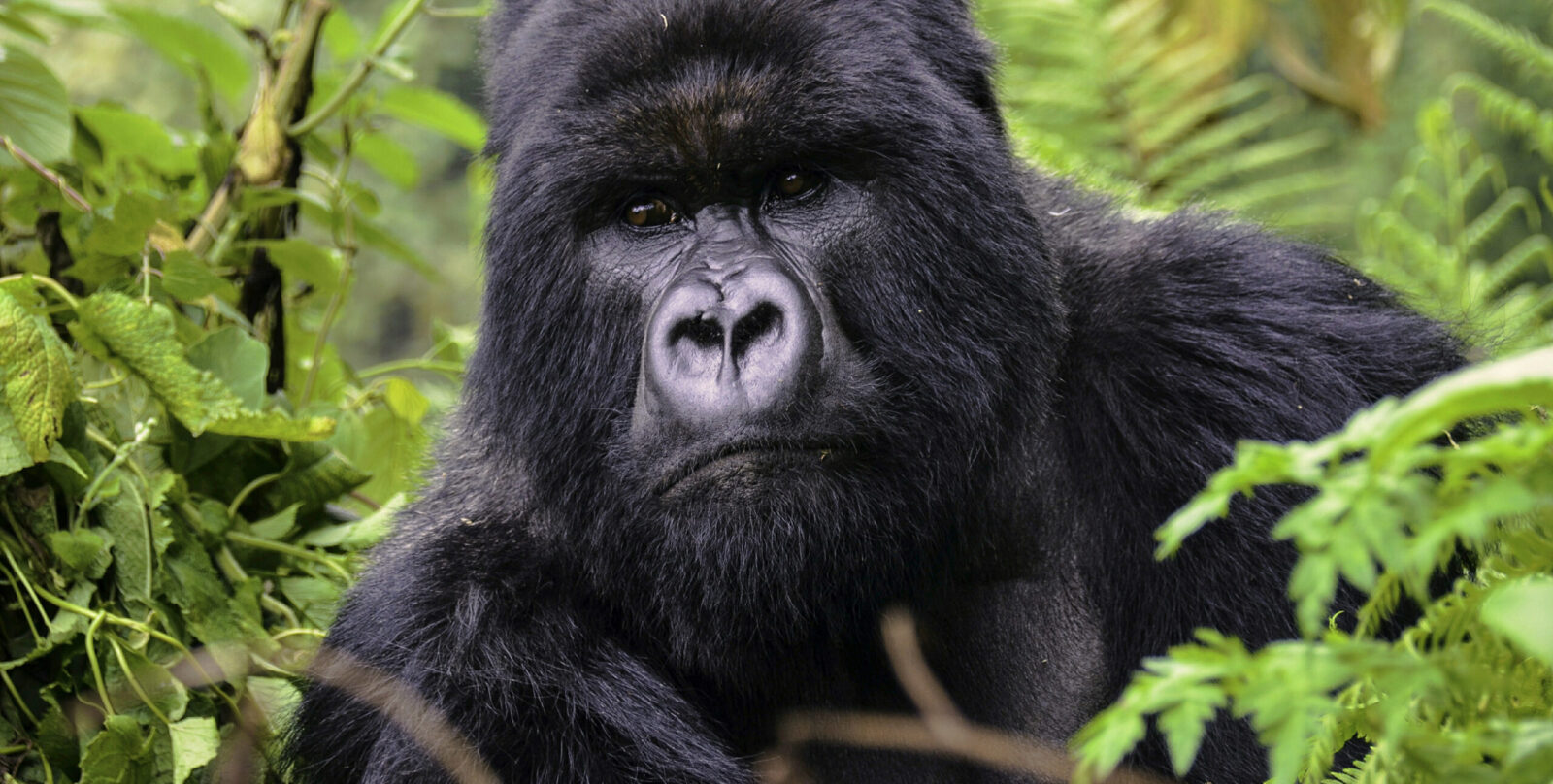
Volcanoes, Mist & Mountain Gorillas: The Ecology of Bwindi Explained
Most gorilla trekking guides focus their explanations on rules, distances, and viewing etiquette, understandably useful information, but rarely take the time to explain why this particular forest looks and feels the way it does in the first place. The ecology of Bwindi explains, in genuinely fascinating and often surprising detail, why this particular forest became one of the most important mountain gorilla habitats on the planet, and understanding it adds real depth to a trek most visitors otherwise experience purely as a wildlife encounter without much thought to the underlying environmental forces that made it possible. Bwindi’s altitude, rainfall, temperature range, and layered vegetation zones combine into a genuinely unique ecosystem, one that happens to support both extraordinary biodiversity and the very specific conditions mountain gorillas require in order to thrive here rather than elsewhere.
Altitude and Temperature: The Foundation of Everything Else
Bwindi’s terrain spans a genuinely considerable altitude range, from roughly 1,160 meters at its lowest points to 2,600 meters at its highest points, and this elevation gradient drives nearly every other ecological pattern within the park. Mean annual temperatures range from a cool 7 to 15 degrees Celsius at the lower end to 20 to 27 degrees at the warmer end, a genuinely wide spread within a single, relatively compact park that creates distinct microclimates across different sectors and elevations. This altitude-driven cooling is precisely why Bwindi, despite sitting almost on the equator, feels considerably cooler and mistier than most visitors expect from an African rainforest, and it is also a major reason malaria risk within the park itself runs lower than in Uganda’s warmer lowland regions, since the mosquitoes that transmit it struggle in Bwindi’s cooler conditions. This same altitude gradient also means packing for a Bwindi trek genuinely requires layering, since a morning that starts noticeably cool and misty at higher elevation can warm considerably by midday, especially in sectors that dip toward the park’s lower, warmer edges.
Rainfall Patterns and the Forest’s Perpetual Dampness
Annual rainfall across Bwindi ranges from roughly 1,400 to 1,900 millimeters, concentrated particularly in two rainy periods, March through April and September through November, though genuine dry spells are relatively rare given the forest’s overall humid, misty character even during the comparatively drier months. This consistent moisture, combined with the altitude-driven cooling described above, produces the atmospheric mist that gives Bwindi much of its distinctive, almost otherworldly visual character, clouds settling into valleys and clinging to ridgelines in a way that has become genuinely iconic in photographs of the park. This dampness also directly shapes the forest’s structure, supporting the dense, multi-layered canopy and rich understory vegetation that makes trekking here so physically demanding compared to drier forest types elsewhere. It also means mud is simply a permanent feature of the trekking experience rather than an occasional inconvenience, present to some degree across nearly every sector and season, which is precisely why guides so consistently emphasize proper waterproof footwear regardless of when exactly a visitor plans to trek.
Four Distinct Vegetation Zones in One Park
Bwindi’s altitude gradient produces four genuinely distinct vegetation zones within its roughly 32,000 hectares, an unusually compressed range of habitat diversity for a single, relatively modest-sized protected area. Lower elevations support lush lowland rainforest, dominated by towering hardwood species including mahogany, red stinkwood, and various fig trees that create the dense, high canopy structure typical of tropical lowland forest. Moving upward, montane forest takes over at higher elevations, featuring species like Prunus africana, valued both ecologically and, historically, for its medicinal bark, alongside various Entandrophragma species. Higher still, particularly in the park’s southern and eastern reaches, distinct bamboo forest zones emerge, an entirely different habitat structure again that supports its own specific, specialized wildlife community. At the very highest elevations, sub-alpine vegetation appears, a genuinely different ecological zone entirely from the lush lowland forest most first-time visitors picture in their minds when they imagine Bwindi.
Why This Ecological Diversity Matters for Gorillas Specifically
This layered habitat diversity directly explains why Bwindi supports such a substantial mountain gorilla population within a relatively compact area. Different vegetation zones provide different food sources across the seasons, wild celery and bamboo shoots in some areas, fruit-bearing trees in others, giving gorilla families genuine dietary flexibility as they move through their territory across the seasons, rather than depending on any single, potentially unreliable food source at a given time of year. The forest’s overall structural complexity, dense understory, varied canopy heights, abundant ground vegetation, also provides the kind of cover and nesting material gorillas require, while the sheer scale of intact, undisturbed forest habitat supports a population large enough to maintain genuine genetic diversity across multiple family groups rather than a single isolated, vulnerable population confined to one small, uniform patch of habitat. This same structural diversity is part of why conservationists consider intact forest connectivity, not just raw protected area, so important to long-term gorilla population health, since a population spread across genuinely varied habitat zones is more resilient to localized disease outbreaks or food shortages than one concentrated in a single, ecologically uniform area would be.
An Ecosystem Supporting Far More Than Gorillas
This same ecological richness sustains well over 1,000 flowering plant species and more than 120 distinct mammal species beyond gorillas alone, along with the exceptional bird diversity, including numerous Albertine Rift endemics, that makes Bwindi one of Africa’s premier birding destinations. Understanding this broader ecological context reframes a gorilla trek as an encounter with one especially charismatic piece of a much larger, genuinely remarkable ecosystem, one shaped by millions of years of altitude, rainfall, and geological history converging in this specific corner of the Albertine Rift. Researchers continue documenting new detail within this ecosystem even now, and species inventories for plants, insects, and smaller vertebrates are, by most accounts, still not considered fully complete, a reminder that Bwindi’s biodiversity remains an active area of ongoing scientific discovery rather than a fully catalogued, closed subject.
How Ecology Shapes Trek Difficulty by Sector
Understanding Bwindi’s ecology also explains why the park’s four trekking sectors, Buhoma, Ruhija, Rushaga, and Nkuringo, offer noticeably different trekking experiences despite belonging to the same forest. Sectors sitting at different points along Bwindi’s altitude gradient encounter different vegetation zones, and by extension different terrain challenges, more directly: sectors closer to the montane and bamboo transition zones tend toward steeper, more physically demanding terrain, while lower-elevation areas offer somewhat gentler approaches, though gorilla family movement patterns still introduce genuine unpredictability regardless of which sector a given trek happens to begin in on any particular morning. This ecological variation across the park is part of why guides sometimes factor sector choice into recommendations for less physically confident trekkers, since the underlying terrain genuinely differs even before accounting for how far a specific gorilla family has moved on a given morning.
Seasonal Ecology and Why Timing Matters
Bwindi’s two rainy periods do more than simply affect trail conditions for human visitors; they drive genuine ecological rhythms that shape gorilla behavior and movement throughout the year. Fruiting and flowering cycles tied to seasonal rainfall patterns influence which parts of the forest offer the richest feeding opportunities at any given time, which in turn affects where gorilla families concentrate their movement. Visitors trekking during peak fruiting periods sometimes encounter families that have moved into denser forest sections chasing seasonal food sources, while drier periods can see more predictable movement patterns as families settle into more consistent feeding routines. This ecological rhythm is one more reason experienced guides emphasize that trek length and difficulty genuinely cannot be predicted reliably in advance, since the forest’s own seasonal ecology, not just random chance, drives real variation in where gorillas spend their time. Trackers who spend each morning locating families before visiting groups arrive develop a genuinely detailed working knowledge of these seasonal patterns, informal expertise built through daily observation that complements, and sometimes anticipates, the more formal ecological research conducted across the park.
Experiencing This Ecology Firsthand
Our page on the history of Bwindi National Park covers how this ecosystem came to be formally protected, and our guide to the birds of Bwindi explores one specific, spectacular dimension of the biodiversity this ecology supports. Our page on how fit you need to be for gorilla trekking is worth reading alongside this ecological picture, since terrain difficulty and ecology are directly connected rather than separate concerns. A well-paced three-day Bwindi gorilla trekking safari gives you time to genuinely notice this shifting ecology as you move through different sectors and elevations, the mist, the changing vegetation, the layered canopy, all of it the direct, tangible result of the ecological forces described here, working quietly behind every gorilla encounter the park makes possible. The ecology of Bwindi is, in the end, the real reason mountain gorillas ended up here at all rather than anywhere else, a fact genuinely worth carrying with you into the forest alongside your camera, your rain gear, and your gorilla permit.