
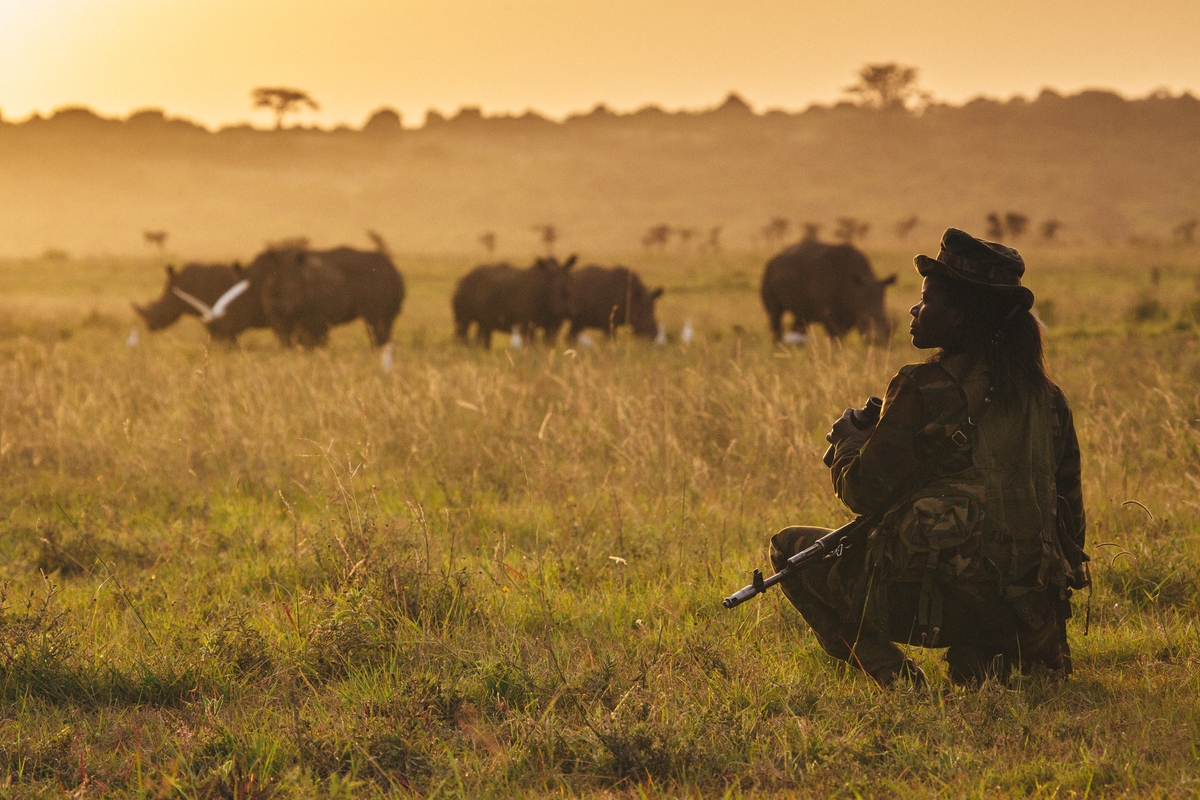
Not every single day of a gorilla trekking trip has to involve a forest walk. Uganda’s Queen Elizabeth and Murchison Falls National Parks, and Rwanda’s Akagera National Park, offer classic vehicle-based safari – game drives across open savannah, boat cruises along rivers and channels thick with wildlife – giving a trip real variety alongside its primate centrepiece. This is genuinely where the “big game” half of an East African safari trip happens, distinct from anything a forest trek can offer.
Game Drives in Queen Elizabeth National Park
Queen Elizabeth National Park is Uganda’s most visited savannah park, and for good reason: its mix of open grassland, wetland and forest supports over 95 mammal species within one park boundary. Game drives across the Kasenyi plains reliably deliver elephant, buffalo, Uganda kob and, with some luck, lion, while the Ishasha sector further south is famous specifically for tree-climbing lions, which rest in the branches of fig trees during the heat of the day – a genuinely unusual sighting most visitors don’t expect from an African safari.
The Kazinga Channel Boat Cruise
A boat cruise along the Kazinga Channel, the natural waterway connecting Lakes Edward and George, is one of the most reliably rewarding half-days on any Uganda itinerary. The channel holds some of the very highest hippo and Nile crocodile density found anywhere in the country, and its banks reliably draw elephant, buffalo and a genuinely huge range of waterbirds down to drink, all viewable at close range from the deck of a boat rather than a vehicle – a genuinely relaxing contrast to a bumpier game-drive morning.
Murchison Falls: The Nile Boat Cruise and Game Drives
Murchison Falls National Park centres on the point where the Nile forces itself through a gorge roughly seven metres wide before plunging over a 43-metre drop, the world’s most powerful waterfall by force per unit width. A boat cruise from the park’s Paraa area to the base of the falls is a highlight in its own right, passing hippos, crocodiles and abundant birdlife along the way. Game drives across the park’s northern sector add lion, elephant, giraffe and buffalo sightings on the savannah side of what is otherwise a river-and-waterfall park.
Akagera National Park: Rwanda’s Big Five
For travellers on a Rwanda-inclusive itinerary, Akagera National Park delivers a genuine Big Five safari – lion and both black and white rhino were reintroduced here after local extinction, joining the existing elephant, buffalo and leopard populations already there, together forming a genuine conservation success story in its own right. Akagera’s rolling hills, lakes and wetlands support strong birdlife too, and boat trips on Lake Ihema add a water-based game-viewing option distinct from the standard vehicle game drive.
Safari Activities at a Glance
| Queen Elizabeth game drive | Half or full day · park entry ~$40 |
| Kazinga Channel cruise | ~2 hours · hippos, crocodiles, birdlife |
| Murchison Falls Nile cruise | ~3 hours · to the base of the falls |
| Akagera game drive | Half or full day · Big Five, no primate permit needed |
How Safari Activities Fit Into an Itinerary
Unlike gorilla and chimpanzee trekking, none of these activities require a limited-availability permit – access is arranged through park entry fees, generally bookable with just a day or two’s notice through your guide rather than months in advance. This makes safari activities the flexible part of an itinerary, easy to add, extend or adjust once you’re already travelling, in a way trekking days simply aren’t. Most multi-park itineraries schedule at least one full day around a savannah park specifically to give a break from the more physically demanding trekking days, pairing naturally with Queen Elizabeth or Murchison Falls given their position between Uganda’s trekking parks.
What to Bring on a Game Drive or Boat Cruise
Considerably less kit is needed here than for a forest trek. Comfortable, layered clothing (early morning game drives can be genuinely cool before the day warms up), sun protection, and binoculars if you have them cover most of what you’ll want. No hiking boots or rain gear are strictly necessary, since neither activity involves walking, though a light jacket is worth having on hand for the wind on an open boat.
Best Time of Day for Game Drives
Wildlife activity across all three parks consistently peaks in the cooler hours around dawn and dusk, when predators are more likely to be moving and grazing animals feed before the day heats up. Early morning game drives, typically departing around 6:30am, are the single most productive window for predator sightings specifically, while a mid-morning or late-afternoon drive still delivers strong general wildlife viewing without requiring quite as early a start. Midday drives, by contrast, tend to be quieter as animals rest in shade during the hottest hours, which is part of why boat cruises – where wildlife gathers to drink regardless of time of day – work well as a midday activity that game drives don’t match as reliably.
Birdlife Across the Safari Parks
All three parks reward birders specifically, with Queen Elizabeth alone recording over 600 species thanks to its unusual mix of savannah, wetland and forest habitat within one boundary. The Kazinga Channel and Murchison Falls’s Nile stretch are particularly strong for waterbirds – herons, storks, kingfishers, and the prehistoric-looking shoebill stork on occasion – while Akagera’s wetlands add papyrus-specialist species found nowhere else on a standard Rwanda itinerary. Bringing binoculars, even for travellers not specifically birding, adds real value to any boat cruise or game drive across the region.
Photography on Safari
Game drives and boat cruises are considerably more photography-friendly than a forest trek – no flash restrictions, a stable vehicle or boat platform, and generally better, more open light than the dappled shade of rainforest trekking. A telephoto lens (200mm or longer) makes a real difference for wildlife shots at typical safari distances, and the pop-up roof hatch on our game-drive vehicles gives a genuinely useful elevated, stable shooting position that a standard car window doesn’t. Golden hour, in the hour after sunrise or before sunset, consistently produces the most striking light for both wildlife and landscape shots across all three parks.
Family-Friendly Safari Activities
Because there’s no minimum age requirement for a game drive or boat cruise, unlike the 15-year minimum for gorilla trekking, these activities are genuinely well suited to families travelling with younger children. Queen Elizabeth’s Kazinga Channel cruise in particular is a reliable family favourite, requiring no walking and delivering close, safe wildlife viewing that keeps younger travellers engaged for the full two hours. We build safari activities into family itineraries specifically as the shared, whole-group days that bookend the more selectively-attended trekking activities.
Frequently Asked Questions
Do I need a permit for a game drive or boat cruise?
No – these activities require only park entry fees, arranged with much shorter notice than a trekking permit, typically just a day or two ahead through your guide.
Which park has the best chance of seeing lions?
Queen Elizabeth’s Ishasha sector is specifically known for its tree-climbing lions, while Kasenyi plains offer more typical ground sightings. Akagera in Rwanda also holds a reintroduced lion population.
Can I do a boat cruise and a game drive on the same day?
Yes – this is a common structure in Queen Elizabeth specifically, combining a morning boat cruise on the Kazinga Channel with an afternoon game drive on the Kasenyi plains.
Is Akagera worth adding to a Rwanda gorilla trip?
If you want a genuine Big Five safari alongside gorilla trekking, yes – it’s the only park in our Rwanda operating area offering that classic savannah experience.
Vehicles for Safari Activities
Game drives run in a 4×4 safari vehicle with a pop-up roof hatch, letting you stand and view or photograph wildlife over the surrounding grass rather than shooting through a window. The same vehicle and driver-guide that handle your trekking-day transfers typically cover game drives too, so there’s no separate vehicle booking involved – it’s simply a different kind of day using the same setup already arranged for your trip. Boat cruises use a separate, larger vessel operated by the park authority or an approved operator, generally with covered and open-air seating options and a naturalist guide narrating sightings along the way.
Combining Safari Days With Trekking Days
Because game drives and boat cruises are considerably less physically demanding than a forest trek, they work well as a deliberate recovery day slotted in immediately after a gorilla or chimpanzee trek, letting you enjoy genuinely good wildlife viewing without asking your legs to do much work the following morning. Many of our itineraries follow exactly this pattern: trek one day, transfer and safari activity the next, repeating that rhythm across a multi-park trip rather than stacking demanding days back to back.
A Quiet Word on Weather
Safari activities proceed in light rain without much disruption, unlike a trek where mud genuinely changes the physical difficulty of the day. A wet morning may simply mean fewer other vehicles out and, often, particularly good sightings as animals move more in cooler, overcast conditions than under a blazing midday sun.
Add Safari Activities to Your Trip
Tell us which parks and activities interest you most, and we’ll build the right mix of game drives and boat cruises into your itinerary alongside your primate trekking days, sequenced for a comfortable overall pace. Get in touch to start planning.