
Gorilla Safari Photography Rules: What Is and Isn’t Allowed
Gorilla safari photography is one of the most tightly regulated forms of wildlife photography in the world, especially in conservation areas like Bwindi Impenetrable National Park and Mgahinga Gorilla National Park. These rules are not about restricting creativity-they exist to protect mountain gorillas from stress, disease transmission, and behavioral disruption while ensuring visitors still get meaningful photographic opportunities.
Because gorillas are highly intelligent and share close genetic similarity with humans, even small disturbances can affect their natural behavior. Photography rules are therefore designed to maintain a balance between documentation and conservation ethics.
The Core Principle: Non-Disruptive Photography
All gorilla photography rules are built on one principle: do not alter gorilla behavior or habitat conditions for the sake of a photo.
This means the photographer must adapt to the gorillas, not the other way around. Every guideline flows from this conservation-first approach.
Flash Photography Is Strictly Prohibited
One of the most important rules is the complete ban on flash photography.
Flash is not allowed because:
It can startle or stress gorillas
It may disrupt natural behavior, especially in juveniles
It can cause repeated disturbance if multiple cameras are used
In dense forest environments, natural lighting is already limited, so photographers must rely on high ISO settings, wide apertures, and steady shooting techniques instead of artificial lighting.
Maintaining Minimum Distance
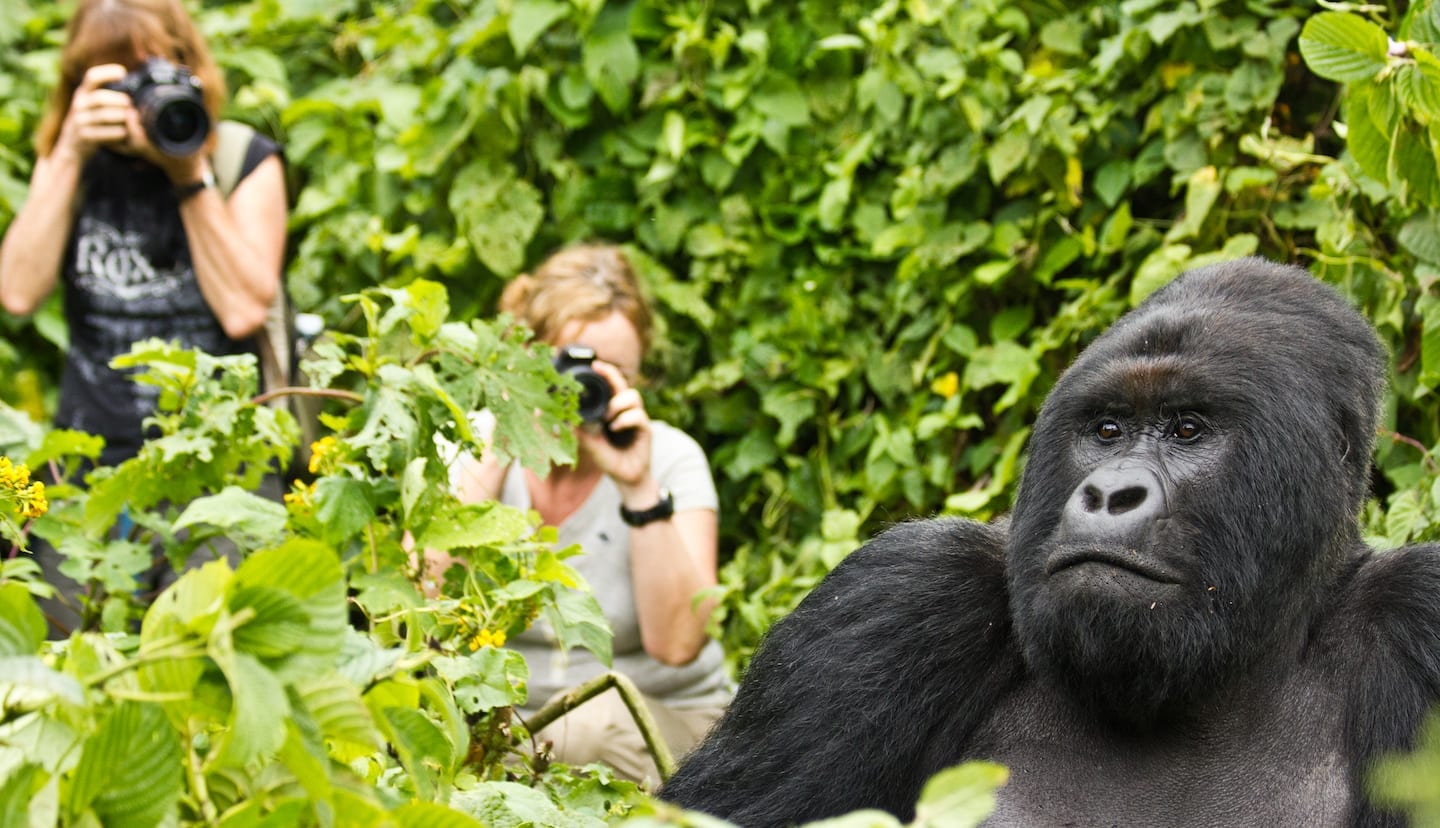
Visitors must maintain a safe distance from gorillas at all times. This rule applies even when gorillas move closer on their own.
From a photography perspective, this means:
No attempts to physically approach subjects
No zooming into restricted proximity zones by moving forward
Composing shots from where you are positioned
Telephoto or zoom lenses are often used to manage distance without disturbing the animals.
No Sudden Movements or Noise While Shooting
Camera operation must be quiet and controlled. Sudden movement, loud shutter bursts, or rapid repositioning can affect gorilla comfort.
Photographers are expected to:
Move slowly and deliberately
Avoid unnecessary repositioning
Use silent shooting modes where possible
Minimize group disturbance during composition
The goal is to blend into the environment as much as possible.
No Use of Artificial Props or Attraction Methods
Photography in gorilla habitats must remain entirely natural. It is strictly forbidden to:
Use food to attract gorillas
Use sounds or calls to provoke reactions
Place objects in the environment for staged shots
Alter vegetation or surroundings for composition
Gorillas must behave naturally without human influence.
Time Limit Compliance
Visitors are allowed a strictly limited time with gorillas, usually one hour. Photography must be completed within this window.
This rule ensures:
Minimal disturbance to gorilla daily routines
Equal access for all trekking groups
Controlled exposure to human presence
Photographers must work efficiently and prioritize key moments rather than attempting excessive shots.
No Touching or Physical Interaction
Even for photographic purposes, physical interaction is strictly prohibited.
This includes:
No touching gorillas
No attempting close-up contact shots by reducing distance physically
No encouraging interaction for camera framing
Any interaction must be entirely natural and initiated by the gorillas themselves.
Respecting Gorilla Behavior During Shooting
Photographers are expected to continuously observe gorilla behavior and adjust accordingly.
If gorillas show signs of discomfort or movement changes, such as turning away, vocalizing, or shifting direction, photographers must:
Stop shooting momentarily
Reduce movement
Allow the group to settle
Behavioral respect is more important than image capture.
Equipment Handling Rules
Camera gear must be managed carefully to avoid disturbance or environmental damage.
Key expectations include:
Keeping gear compact and secure
Avoiding unnecessary lens changes in the forest
Using silent or low-noise equipment when possible
Protecting equipment from mud, rain, and vegetation contact
Large, intrusive setups are discouraged due to space limitations in forest environments.
No Drone or Remote Photography Devices
Drones and remote-controlled cameras are not allowed in gorilla trekking areas. These devices can:
Cause stress and panic in gorilla groups
Disrupt natural forest soundscapes
Violate conservation boundaries
All photography must be ground-based and manually controlled.
Ethical Composition Guidelines
Beyond technical rules, ethical photography practices are strongly emphasized.
Photographers are encouraged to:
Capture natural behavior such as feeding, grooming, and resting
Avoid forcing dramatic or staged perspectives
Respect personal space of animals
Prioritize storytelling over sensational imagery
The most powerful images are those that reflect authentic gorilla life without interference.
Managing Low-Light Conditions
Because gorilla habitats are dense forests, lighting is often low even during daytime.
Photographers must adapt by:
Using higher ISO settings
Stabilizing cameras for slower shutter speeds
Maximizing natural light openings in the canopy
Avoiding flash or artificial lighting
This requires technical preparation before entering the forest.
Group Photography Discipline
Since trekking groups operate together, photographers must be mindful of others.
Rules include:
Not blocking paths or views
Avoiding prolonged positioning in one spot
Respecting ranger instructions during shooting moments
Allowing equal opportunity for viewing and photography
Group coordination ensures safety and efficiency during encounters.
Final Perspective
Gorilla safari photography rules are designed to protect both wildlife and the integrity of the experience in Bwindi Impenetrable National Park and Mgahinga Gorilla National Park. They are not restrictions on creativity but safeguards for conservation.
By eliminating flash, controlling distance, enforcing quiet behavior, and limiting interaction, these rules ensure that mountain gorillas remain undisturbed in their natural environment.
For photographers, this creates a unique challenge: capturing powerful, emotional wildlife images without altering the scene. The result is photography that is not only visually compelling but also ethically responsible-reflecting true wilderness moments exactly as they occur in the forest.