
Gorilla Safari Human DNA: How Close Are We Really
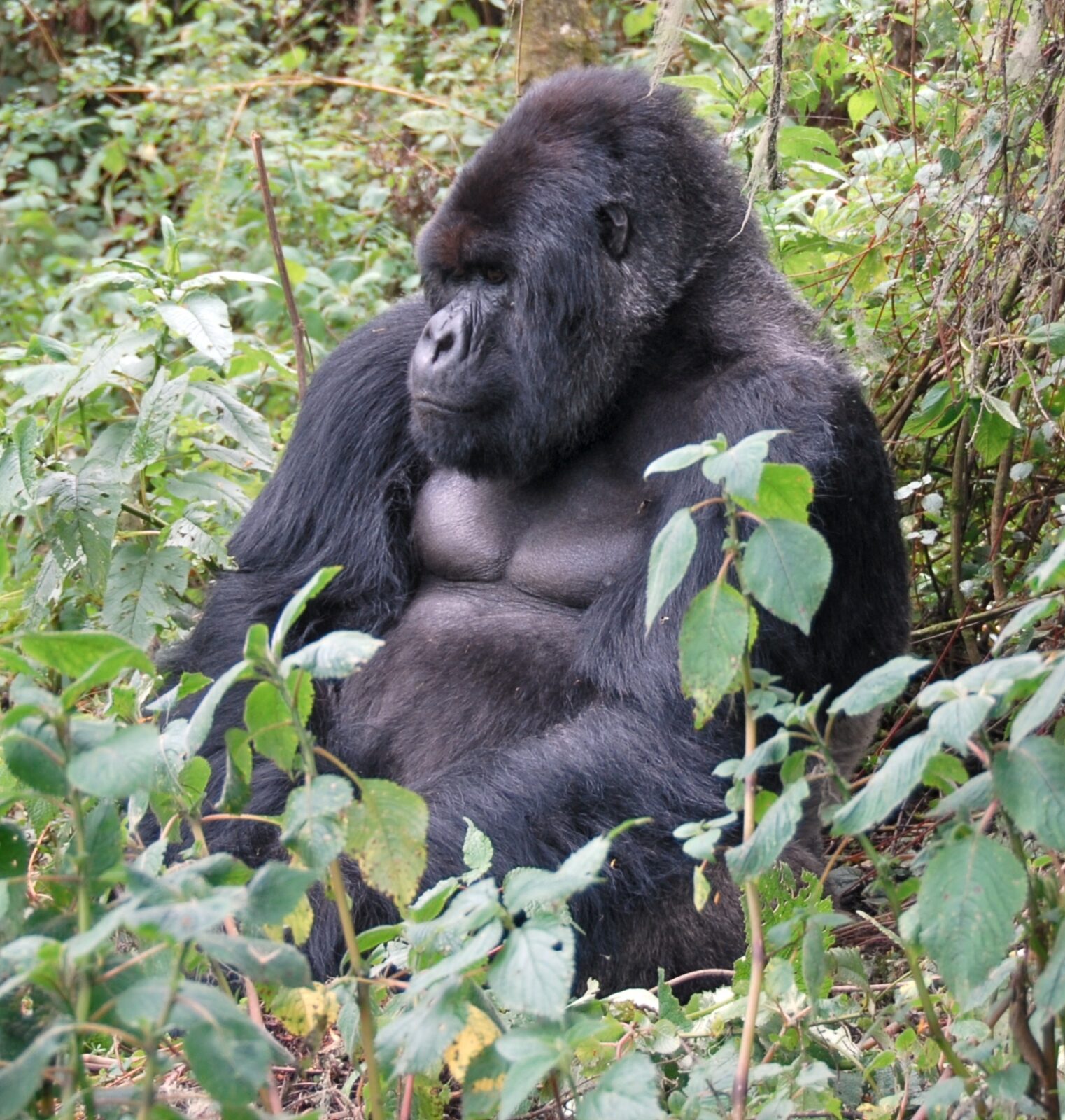
One of the most striking facts shared during gorilla safaris is just how closely related gorillas are to humans. When visitors meet a silverback at close range in places like Bwindi Impenetrable National Park or Volcanoes National Park, the emotional reaction often comes from more than size or behavior-it comes from recognition. Gorillas feel familiar in a way few wild animals do.
That familiarity is rooted in genetics. Gorillas are not just distant relatives in the animal kingdom. They are part of the same evolutionary branch that includes humans, making them one of our closest living relatives.
How close is gorilla DNA to human DNA?
Gorillas share roughly 98 to 99 percent of their DNA with humans, depending on how genetic similarity is measured.
This number does not mean gorillas are “almost human,” but it does indicate a very recent shared evolutionary ancestor in geological terms. Humans, chimpanzees, bonobos, and gorillas all diverged from a common ancestor relatively recently compared to most species on Earth.
Chimpanzees and bonobos are slightly closer to humans genetically than gorillas, but gorillas still fall within the same close primate family group.
What DNA similarity actually means
High DNA similarity does not mean identical biology or behavior.
Instead, it reflects shared genetic building blocks that control:
Body structure
Brain development
Immune system function
Basic social behavior
Reproductive biology
Many of these genes are similar across primates because they evolved from a common ancestor that already had many of these traits.
Small genetic differences, however, lead to major differences in appearance, size, intelligence expression, and behavior.
Why gorillas look and behave differently despite DNA similarity
Even with very high genetic overlap, gorillas and humans look and behave very differently because gene expression matters more than raw similarity.
Gene expression determines how genes are activated or suppressed during development.
For example:
Gorillas develop massive upper body strength suited for climbing and ground movement.
Humans develop fine motor skills and highly advanced language centers.
Gorillas maintain dense body hair for forest adaptation.
Humans evolved reduced body hair for thermoregulation in different environments.
These differences are shaped by millions of years of adaptation to different ecological conditions.
Shared traits between gorillas and humans
Despite differences, gorillas and humans share many important biological and behavioral traits.
Emotional expression
Gorillas display emotions such as comfort, fear, curiosity, playfulness, and grief-like behavior. These expressions are visible during gorilla trekking, especially in family interactions.
Family bonding
Gorillas form strong, long-term family relationships. Mothers care for infants for years, similar to human parental investment patterns.
Social learning
Young gorillas learn behavior by observing adults, similar to human cultural learning processes.
Communication
Gorillas use vocalizations, gestures, facial expressions, and body posture to communicate meaning within groups.
Intelligence
Gorillas demonstrate memory, problem-solving ability, and environmental awareness in complex forest ecosystems.
Brain similarities between gorillas and humans
Gorillas have large and highly developed brains relative to body size compared to many mammals.
While human brains are significantly larger and more complex in areas related to abstract reasoning and language, gorillas share similar brain structures responsible for:
Emotion processing
Social behavior
Memory formation
Motor coordination
This neurological overlap explains many of the familiar behaviors seen during gorilla encounters.
Evolutionary relationship
Humans and gorillas share a common ancestor that lived millions of years ago.
Over time, different evolutionary paths led to the development of distinct species adapted to different environments.
Humans evolved toward bipedalism, tool reliance, and complex language.
Gorillas evolved toward strength, forest adaptation, and stable family group structures.
These differences represent evolutionary specialization rather than superiority.
Why gorillas feel “human-like” during safari encounters
Many travelers describe gorilla encounters as emotionally powerful because gorillas exhibit behaviors that feel familiar.
Direct eye contact, gentle interaction between family members, infant care, and calm resting postures all trigger psychological recognition in humans.
This is often described as the “uncanny familiarity” effect, where the brain recognizes shared traits despite obvious physical differences.
This emotional connection is one reason gorilla trekking is considered one of the most impactful wildlife experiences in the world.
Genetic similarity and disease vulnerability
High genetic similarity also has an important conservation implication: disease transmission.
Because gorillas share many biological similarities with humans, they are vulnerable to many of the same pathogens.
Respiratory infections, in particular, can spread from humans to gorillas with serious consequences.
This is why strict health rules exist during trekking, including distance requirements, health screening, and in some cases mask use.
Protecting gorillas from human disease is directly linked to their genetic closeness.
What DNA does NOT mean in practical terms
It is important to interpret DNA similarity correctly.
Even with high genetic overlap:
Gorillas are not humans
Gorillas cannot think or communicate like humans
Gorillas have different cognitive frameworks shaped by their environment
Gorillas are fully wild animals with distinct evolutionary pathways
DNA similarity reflects shared ancestry, not identical behavior or consciousness.
Why gorillas matter for understanding human evolution
Studying gorillas helps scientists understand how human traits evolved.
By comparing gorillas, chimpanzees, and humans, researchers can identify which traits are shared and which are unique to humans.
Gorillas help answer questions about:
Early social structures in primates
Evolution of family bonding
Development of communication systems
Adaptation to forest environments
This makes gorilla conservation important not only for biodiversity but also for understanding human origins.
What travelers often realize during gorilla trekking
During actual encounters, many visitors experience a shift in perception.
Before trekking, gorillas may seem like distant wildlife species.
After observing them closely, especially in calm family settings, many travelers begin to notice behavioral parallels such as caregiving, emotional reactions, and social bonding.
This does not mean gorillas are human, but it highlights how closely related primates can share behavioral foundations.
Thoughts
Gorillas share nearly 98 to 99 percent of their DNA with humans, making them one of our closest living relatives. However, that similarity does not mean they are human-like in identity or behavior. Instead, it reflects a shared evolutionary history that has diverged over millions of years.
What makes gorilla safaris so powerful is not just seeing a rare animal in the wild, but encountering a species that shares deep biological and emotional roots with us.
In the forests of East Africa, especially in places like Bwindi and Volcanoes National Park, that genetic connection becomes visible in behavior, family structure, and expression-turning a wildlife encounter into something far more profound and reflective.