
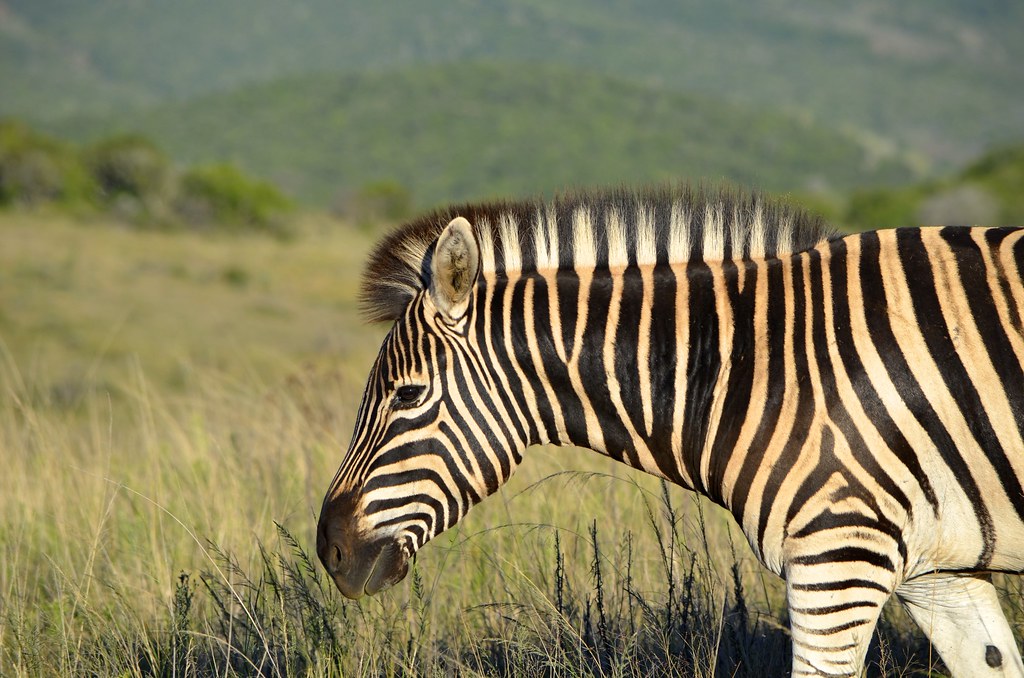
An Ordinary Morning on Safari
The morning began like many others on the African plains.
The sun was climbing steadily above the horizon, casting long shadows across the grasslands. Our convoy of safari vehicles moved slowly along a dusty track, searching for wildlife before the heat of the day settled over the landscape.
The atmosphere was relaxed.
Travellers scanned the surrounding savannah with binoculars while cameras rested on laps, ready for the next exciting sighting. We had already seen giraffes feeding among acacia trees and a small herd of impalas grazing near a seasonal stream.
Nothing suggested that anything unusual was about to happen.
Then the zebras reacted.
A Sudden Change in Behaviour
A herd of zebras stood roughly two hundred metres ahead of our vehicles.
Only moments earlier they had been grazing peacefully. Heads were down, tails flicked lazily at insects, and foals wandered close to their mothers.
Suddenly, everything changed.
Several zebras lifted their heads at the same time.
Their ears pointed in one direction.
The herd froze.
Even without understanding animal behaviour, it was obvious that something had caught their attention.
The Alarm Call
Then came the sound.
A sharp, high pitched bark echoed across the grassland.
Another followed.
Then another.
The noise was unlike the familiar sounds of grazing animals. It was urgent, loud, and impossible to ignore.
Our guide immediately stopped the vehicle.
“Listen to the zebras,” he whispered.
The herd was issuing alarm calls.
Zebras communicate through a variety of sounds, including snorts, whinnies, and barks. Alarm calls are used to warn other members of the herd about potential danger nearby. These vocal warnings often spread quickly through a group, allowing animals to react before a predator gets too close.
Nature’s Early Warning System
The zebras continued staring towards a patch of tall grass.
Their bodies remained tense.
Not a single animal resumed grazing.
Within seconds, nearby impalas also became alert. Several Thomson’s gazelles stopped feeding and looked in the same direction.
The message was spreading through the wildlife community.
Something was there.
Experienced safari guides learn to read these signals because animals often detect danger long before humans notice it. The behaviour of prey species can reveal the location of predators that remain hidden from view.
Instead of searching randomly, our guide focused entirely on the area the zebras were watching.
The Hidden Predator
At first, we saw nothing.
The grass moved slightly in the breeze.
A few birds flew overhead.
Then a shape appeared.
A lioness slowly lifted her head above the grass.
She had been lying almost completely hidden, waiting patiently as the zebras grazed nearby.
Without the alarm calls, nobody in the convoy would have noticed her.
The camouflage was simply too effective.
Her golden coat blended perfectly with the dry grass, making her nearly invisible until she moved.
Why Zebras Are So Alert
For zebras, detecting predators is a matter of survival.
Lions are among their most dangerous enemies. A successful hunt often depends on getting close before being detected. The earlier a zebra spots a predator, the better its chances of escaping.
This constant vigilance has shaped zebra behaviour for thousands of years.
Even while grazing, zebras regularly lift their heads to scan their surroundings. Herd members rely on one another, creating a network of eyes and ears spread across the landscape.
When one zebra notices danger, everyone benefits.
The alarm call becomes a warning shared with the entire herd.
Strength Through Numbers
As the lioness realised she had been detected, she remained motionless.
The opportunity for a surprise attack had vanished.
The zebras slowly gathered closer together while maintaining visual contact with the predator.
This behaviour is common among prey animals.
A large group is more difficult to ambush than a single isolated individual. Many animals also feel safer when surrounded by others because more individuals can help detect threats.
The foals moved closer to their mothers while adult zebras positioned themselves protectively around the younger members of the herd.
The Convoy Learns a Lesson
For the travellers in our vehicles, the experience was a powerful reminder of how much information wildlife communicates without words.
Nobody had spotted the lioness first.
The zebras had.
Their behaviour provided clues long before the predator became visible.
Many experienced safari guides spend as much time watching prey animals as they do searching for predators. A nervous impala, a suddenly silent group of baboons, or a herd of alert zebras can reveal exactly where a predator is hiding.
Wildlife constantly exchanges information, and learning to interpret those signals transforms an ordinary game drive into a much richer experience.
More Than Just a Warning
The alarm call did more than protect the zebras.
It alerted every nearby animal.
The impalas became cautious.
The gazelles moved away.
Several birds suddenly left the area.
Even the lioness appeared to understand that her cover had been blown.
The entire landscape reacted to a single warning.
It was a fascinating example of how interconnected life on the savannah truly is.
Where You Can Witness Zebra Behaviour
Travellers often observe this type of behaviour in many of East Africa’s leading safari destinations.
In Uganda, zebras are commonly seen in Lake Mburo National Park and Kidepo Valley National Park. Kenya offers excellent opportunities to observe zebra herds in the Maasai Mara National Reserve, Amboseli National Park, Tsavo East National Park, and Tsavo West National Park.
In Tanzania, Serengeti National Park, Ngorongoro Conservation Area, Tarangire National Park, and Ruaha National Park all support large zebra populations that frequently interact with predators.
Although alarm calls are not guaranteed on every safari, patient observation often reveals fascinating examples of wildlife communication.
Listening Instead of Looking
Many safari visitors spend most of their time searching the horizon.
The experience with the zebras taught us that listening can be just as important as looking.
The sounds of the African wilderness carry valuable information. Alarm calls, warning snorts, bird distress calls, and sudden silence often reveal far more than the eye can immediately see.
Guides who understand these signals gain an important advantage when tracking wildlife.
A Warning That Changed the Morning
Eventually, the lioness stood up and walked away through the grass.
The zebras relaxed.
Heads lowered once again.
The herd returned to grazing as though nothing had happened.
Yet the experience stayed with everyone in the convoy.
A few minutes earlier, we had simply been watching a herd of zebras feeding in the morning sun. Then one sharp alarm call changed everything. It revealed a hidden predator, prevented a surprise attack, and gave us a front row seat to one of nature’s most effective survival systems.
That morning, the zebras did more than protect themselves.
They reminded us that on the African savannah, survival often belongs to those who pay attention first. Sometimes the most important wildlife sighting of the day begins not with what you see, but with what you hear.