
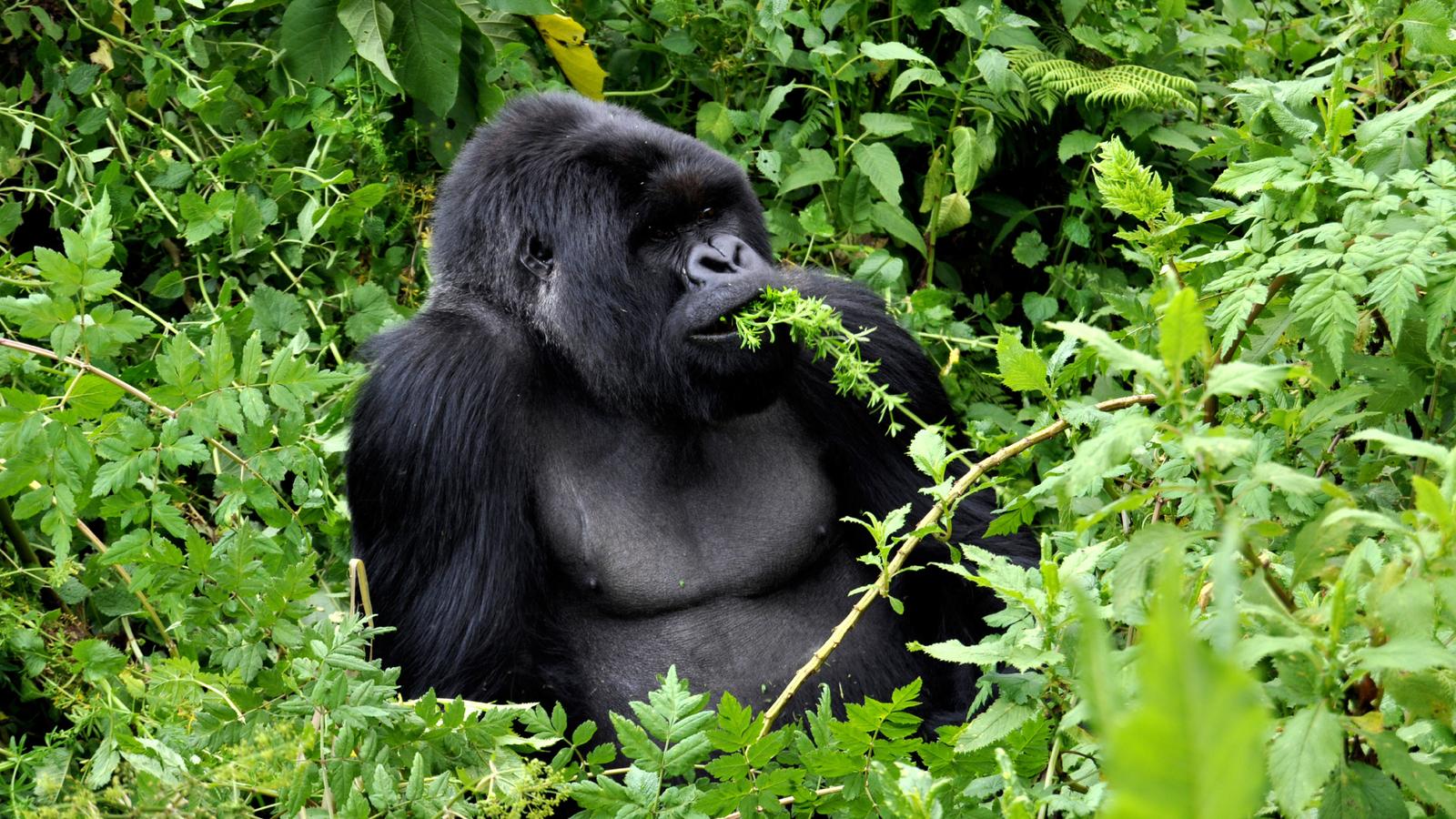
The One-Hour Rule: Why Gorilla Trekking Encounters Are Strictly Timed
The one-hour rule is the single most important piece of etiquette to understand before a gorilla trek, and it surprises many first-time visitors just how strictly it is enforced. After what can be anywhere from thirty minutes to seven hours of hiking through Bwindi Impenetrable Forest, the actual face-to-face time with a mountain gorilla family is capped at exactly sixty minutes, timed by the ranger guide from the moment the group is positioned in front of the gorillas, not from the moment they are first spotted in the distance or heard rustling nearby. When that hour is up, the group leaves, regardless of what the gorillas happen to be doing at that exact moment, whether that is a dramatic display from a silverback or nothing more exciting than a family napping in the undergrowth.
Why Exactly One Hour, Not More
The rule exists primarily for disease control. Mountain gorillas share roughly 98 percent of human DNA, which means they are vulnerable to the same respiratory viruses, common colds, influenza strains, and other infections, that circulate constantly among humans but rarely cause serious illness in us. For a gorilla population that numbers only in the low thousands globally, a disease outbreak introduced by tourism could be genuinely catastrophic, and limiting close human contact to a single timed hour per day per family is one of the core measures conservation authorities use to manage that risk. The Uganda Wildlife Authority, Rwanda Development Board, and the Democratic Republic of Congo’s Institut Congolais pour la Conservation de la Nature all enforce the same one-hour standard across their respective gorilla trekking programs, which tells you how central this particular rule is considered to gorilla tourism’s long-term sustainability.
Stress reduction is the second major reason behind the limit. Gorillas are highly sensitive to prolonged human presence, and extended exposure can measurably disrupt natural feeding, resting, and social behavior within a family group. Keeping the viewing window short and predictable allows habituated gorilla families to return to undisturbed natural behavior for the remaining twenty-three hours of the day, which matters both for animal welfare and, from a purely practical standpoint, for keeping habituated families calm and receptive to future visits rather than gradually becoming avoidant or aggressive toward tourists over time.
What Actually Happens During the Hour
Ranger guides start the clock the moment the group is settled at a safe viewing distance, generally a minimum of seven meters from the nearest gorilla, though the animals themselves frequently close that gap on their own terms, since the distance rule constrains human movement toward gorillas, not gorilla movement toward humans. Within that hour, visitors are expected to keep voices low, avoid sudden movements, and follow the guide’s instructions instantly if a gorilla, particularly a silverback, displays any sign of agitation. Flash photography is banned outright, and face masks are required throughout the encounter as an additional disease-prevention measure. None of this is meant to make the hour feel clinical or restrictive in practice; most visitors describe it as passing remarkably quickly, precisely because a family of gorillas going about ordinary business, feeding, grooming, juveniles play-wrestling, a silverback keeping watch, offers more to take in than most people expect from a single hour.
If the group’s hour happens to fall during a period when the gorillas are moving through dense vegetation rather than resting in a clearing, rangers will reposition the group as needed to maintain both a clear view and the required safety distance, which occasionally means the encounter feels more mobile than visitors picture in advance. Photography opportunities vary considerably based on foliage density and how the family is behaving that particular hour, which is one more reason the experience can differ noticeably between two groups trekking the same day.
What Happens If Your Hour Runs Out Mid-Encounter
There is no extension, no exception for a particularly good moment, and no negotiating with the ranger guide once the hour is up. This can feel abrupt, especially if the family happens to be at its most active or visible right as time expires, but guides treat the limit as non-negotiable precisely because consistent enforcement is what makes the whole system work at scale across dozens of gorilla families and thousands of annual visitors. Guides do typically give a verbal warning as the hour approaches its end, which at least removes the element of surprise even if it does not soften the disappointment of walking away from an especially good sighting.
The One Real Exception: Gorilla Habituation Experience
Travelers who want meaningfully more time with mountain gorillas than the standard one-hour rule allows do have a legitimate option: the Gorilla Habituation Experience, offered exclusively in Bwindi’s Rushaga sector since Uganda Wildlife Authority piloted the program there in the mid-2010s. Rather than visiting a fully habituated family for a strict hour, participants join the research and ranger teams working to habituate a gorilla family still becoming accustomed to human presence, and the viewing window extends to a full four hours instead of sixty minutes. Group sizes are also considerably smaller, capped at four visitors rather than the standard eight, which produces a noticeably more intimate, research-oriented experience than a typical trek. This comes at a significantly higher price than a standard permit and requires a bit more physical stamina given the longer day, but for photographers, researchers, and repeat visitors specifically seeking depth over a quick encounter, it is the one legitimate way around the one-hour rule.
How the One-Hour Rule Compares Across Countries
Rwanda and the Democratic Republic of Congo both apply the same sixty-minute standard as Uganda, which is worth knowing if you are weighing gorilla trekking destinations partly on the strength of this rule, since it will not factor into that decision either way. Rwanda’s Volcanoes National Park enforces the one-hour rule with arguably even more consistency than Uganda, partly because its higher permit price, $1,500 as of the current tariff, funds a larger ranger and tracker workforce per gorilla family, which in turn tends to produce more predictable trekking days and a stricter, more uniformly applied hour. The DRC’s Virunga National Park applies the same standard in principle, though political instability in the region has at times affected how consistently the park can operate at all, let alone enforce viewing-time details, so travelers considering Congo gorilla trekking should treat the one-hour rule as standard policy rather than something to verify sector by sector.
What does vary somewhat by country is how strictly the seven-meter minimum distance is interpreted and how quickly guides intervene if a gorilla approaches closer than that on its own initiative, since the animals themselves are not bound by any human-imposed distance rule. In practice, guides across all three countries handle this the same way: they do not force gorillas back, but they do reposition visitors if a family member’s approach creates a safety concern, particularly with a young, unpredictable juvenile or a silverback showing any sign of stress.
Making the Most of Your Hour
Some first-time trekkers arrive expecting the one-hour rule to feel like a countdown clock hanging over the experience, and are surprised to find that in practice it rarely feels that way once the encounter begins. Guides do not announce the time remaining every few minutes, and most visitors report losing track of it almost entirely, absorbed in watching a juvenile tumble through undergrowth or a silverback methodically working through a stand of wild celery, until the guide’s quiet warning that only a few minutes remain arrives sooner than expected. Treating the hour as a single continuous experience rather than a series of photo opportunities to check off tends to produce both better photographs and a more memorable encounter, since gorillas respond to a calm, attentive group very differently than to one constantly shuffling for a better camera angle.
Understanding the one-hour rule in advance is what allows visitors to genuinely make the most of it rather than spending part of the hour adjusting camera settings or working out where to stand. Reviewing your camera’s settings the night before, packing spare batteries so equipment failure does not eat into precious minutes, and mentally preparing for an abrupt, non-negotiable end all help visitors stay present for the full sixty minutes rather than distracted by logistics. Our page on gorilla safari photography rules goes further into the specific etiquette around cameras during this window. For travelers weighing the standard trek against the longer alternative, our comparison of the gorilla safari permit versus habituation permit lays out the practical differences in depth, and our dedicated guide to the Gorilla Habituation Experience covers what the four-hour version actually involves day to day. The FAQ on how long a gorilla safari takes each day is a useful companion read for understanding how the one-hour viewing window fits into the rest of a trekking day. If the longer, more immersive option appeals to you, our three-day Gorilla Habituation Experience itinerary is built specifically around it.