
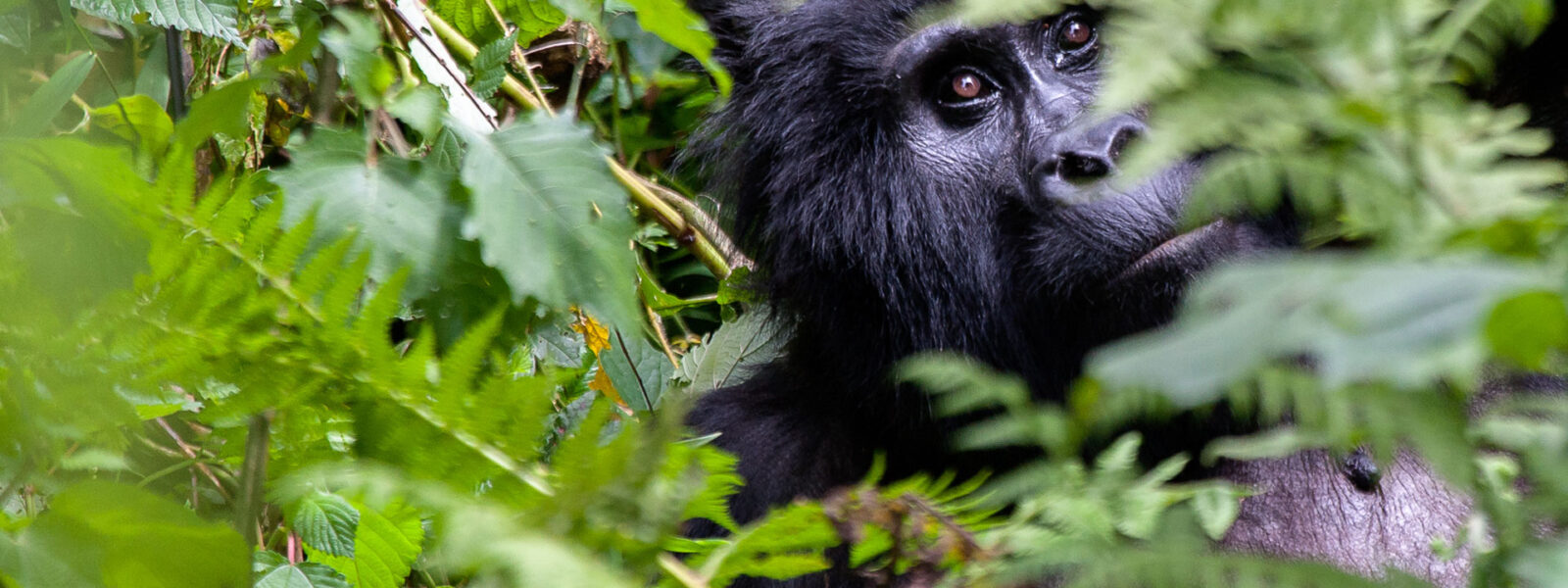
History of Bwindi National Park: From Ancient Forest to UNESCO Site
The history of Bwindi National Park stretches back considerably further than its formal conservation status might suggest, and understanding that longer story adds real depth to a trek that most visitors experience purely as a present-tense wildlife encounter. Bwindi Impenetrable Forest is estimated to be more than 25,000 years old, a genuinely ancient ecosystem that survived the last Ice Age largely intact while much of the surrounding African landscape transformed dramatically around it, making it one of the oldest continuously existing rainforests on the entire continent. Few ecosystems anywhere in Africa can claim this kind of sustained continuity, and it is worth pausing on what that actually means in practice: the trees, soil, and understory a visitor walks through today are, in a genuine ecological sense, the direct continuation of a forest system that predates human agriculture in the region entirely.
An Ancient Forest Long Before Formal Protection
Long before any government designation existed, Bwindi’s dense, biodiverse forest had already developed the extraordinary ecological richness that defines it today, a direct product of its sheer age and the ecological stability that comes from having escaped the kind of dramatic climatic disruption that reshaped so much of the surrounding region. This deep history explains much of what makes Bwindi scientifically remarkable: its exceptional concentration of Albertine Rift endemic species, its status as home to roughly half of the world’s remaining mountain gorillas, and its more than 160 tree species and over 100 fern species all trace back to millennia of relatively undisturbed ecological continuity that few other African forests can claim.
From Forest Reserve to National Park
Formal protection began considerably later than the forest’s own natural history, with the area first designated a Forest Reserve in 1932 under British colonial administration, a status focused primarily on regulating timber extraction rather than comprehensive ecological protection in the modern conservation sense. This forest reserve status persisted for nearly six decades, during which some logging and resource extraction continued alongside partial protection, a period that shaped the forest’s edges and accessibility even as its core remained largely undisturbed.
The pivotal shift came in 1991, when Uganda’s government formally established Bwindi Impenetrable National Park under Statutory Instrument No. 26, elevating its protection status considerably and specifically recognizing the area’s exceptional value as mountain gorilla habitat, a designation that arrived at a genuinely critical moment given how severely poaching pressure had already reduced the region’s gorilla population by that point. This reclassification meaningfully reduced timber harvesting and other extractive activity across most of the park, allowing already-recovering areas to continue returning toward genuinely pristine forest habitat, a process still visible in the varying forest maturity across different parts of the park today for visitors who know to look for it.
UNESCO World Heritage Recognition
Just three years after its elevation to national park status, Bwindi received UNESCO World Heritage Site designation in 1994, recognized under criteria covering both outstanding natural beauty and exceptional biodiversity significance. This international recognition reflected growing global understanding of Bwindi’s unique ecological importance, not just as gorilla habitat but as one of the most botanically and ornithologically significant forests on the African continent, home to hundreds of bird species and an outsized share of the Albertine Rift’s endemic flora and fauna relative to the park’s modest total area of roughly 32,000 hectares. UNESCO’s designation also carried practical consequences beyond prestige, drawing international conservation funding and scientific attention toward Bwindi specifically, resources that have supported ongoing research, monitoring, and protection work in the decades since, well beyond what a purely domestic conservation budget could likely have sustained on its own.
How This History Shapes the Park You Visit Today
Understanding this progression, ancient undisturbed forest, followed by extractive-focused reserve status, followed by full national park protection, followed by international recognition, helps explain several things visitors notice on the ground without necessarily understanding why. Trail conditions and forest density vary somewhat across different parts of the park partly because of this uneven history of past use and protection intensity. The sheer age of the forest itself, visible in massive old-growth trees and the layered, complex canopy structure found in Bwindi’s most undisturbed sections, represents a genuinely different kind of forest experience than younger secondary growth forests found in many other African parks. And the very existence of habituated gorilla families available for trekking today rests directly on the protection decisions made throughout this history, particularly the critical 1991 shift from extractive forest reserve to genuine national park status. Visitors walking Bwindi’s trails today are, in effect, moving through a living record of this layered history, forest sections that regenerated after logging pressure eased, boundaries that shifted as protection tightened, and trailheads that grew up around the specific points where habituation and tourism infrastructure eventually took root.
The Human History Alongside the Forest’s History
Bwindi’s history is not only ecological and administrative; it is also deeply human. The Batwa people lived within and alongside the forest for generations before formal conservation protections were established, developing an intimate traditional knowledge of the forest’s resources, medicinal plants, and seasonal rhythms built over centuries of coexistence with the same ancient trees and wildlife that define the park today. The 1991 national park designation, while critical for gorilla conservation, also meant the Batwa were resettled outside the forest boundary, a genuinely difficult chapter in the park’s history that conservation and tourism programs today, including community walks and cultural visits, attempt to address by creating economic opportunity and preserving Batwa cultural knowledge within a changed relationship to the land their ancestors called home for generations.
This human dimension is worth holding alongside the ecological and conservation history, since Bwindi’s story is not simply one of pristine nature discovered and protected, but of a long-inhabited landscape whose conservation came with real costs to the communities most intimately connected to it, a complexity increasingly acknowledged in how the park’s history gets told today. Responsible tourism operators and conservation organizations working around Bwindi today generally treat this acknowledgment as an ongoing responsibility rather than a settled matter, since genuinely repairing the economic and cultural disruption of displacement takes considerably longer, and involves considerably more sustained effort, than any single revenue-sharing program or cultural walk can fully accomplish on its own.
How Gorilla Tourism Changed the Park’s Trajectory
The introduction of gorilla trekking tourism in the early 1990s, closely following the park’s official establishment, fundamentally altered Bwindi’s economic and conservation trajectory in ways the original 1932 forest reserve designation never anticipated. Habituation of the first gorilla families for tourism began in this period, a painstaking, years-long process, generally taking two to three years of consistent, gradual exposure for a wild family to tolerate close human presence, that eventually created the foundation for the trekking industry that today funds much of the park’s ongoing ranger patrols, veterinary care, and community revenue-sharing programs, as covered in more detail in our page on the gorilla habituation process. This shift from a purely extraction-focused or passively protected forest reserve to an actively managed, tourism-funded conservation model represents arguably as significant a turning point in Bwindi’s modern history as the 1991 and 1994 formal designations themselves, and it is the reason the park today looks, functions, and sustains itself so differently from the timber-focused forest reserve it once was. Ranger and tracker roles, largely nonexistent in the forest reserve era, expanded considerably alongside the trekking industry, creating a genuinely new category of local employment tied directly to keeping the forest and its gorillas intact rather than to extracting resources from it, a structural shift in the local economy every bit as significant as the change in the park’s formal legal status.
Experiencing Bwindi’s Deep History Firsthand
Understanding the history of Bwindi National Park adds genuine context to a trek that most visitors otherwise experience as a purely present-moment wildlife encounter. Our page on gorilla population growth success stories covers more of the specific conservation trajectory this protective history enabled, and our overview of gorilla safari conservation touring is worth reading for travelers who want to engage even more directly with this history during their visit. Travelers interested in the Batwa side of this history should also look at our page on how gorilla rangers protect Bwindi today, which covers the modern conservation workforce that grew directly out of the history described above. A well-paced three-day Bwindi gorilla trekking safari gives you time to appreciate this ancient forest’s full story, not just the gorillas that have made it famous, but the 25,000 years of ecological history, and the complicated, still-unfolding human history, that made their survival here possible in the first place. Few wildlife encounters anywhere ask visitors to hold quite this much layered context at once, ancient forest, colonial-era extraction, hard-won protection, displaced communities, and a conservation-tourism model still actively working out how to honor all of it simultaneously, but that complexity is precisely what makes a genuine understanding of Bwindi’s history worth the extra effort before or after your trek.