
Hippo Pools of Queen Elizabeth: Best Spots to Watch These Giants
Queen Elizabeth National Park’s tree-climbing lions get most of the marketing attention, but travelers who arrive expecting hippos to be a minor supporting act are consistently surprised by just how central these animals actually are to the park’s daily wildlife spectacle. The hippo pools of Queen Elizabeth support one of the highest concentrations found anywhere in Africa, with estimates placing the park’s total hippo population well into the thousands, giving visitors near-guaranteed, close-range viewing in a way few other African destinations can match. Travelers who have visited multiple African hippo-viewing destinations consistently rank Queen Elizabeth among the very best, not simply for raw numbers but for the sheer density and visibility of the animals along accessible shoreline stretches. Knowing exactly where to find the best concentrations, and how to view them safely and respectfully, turns hippo watching from a passing curiosity into one of the genuine, standout highlights of a well-planned Queen Elizabeth safari.
The Kazinga Channel: The Park’s Premier Hippo Habitat
The Kazinga Channel, a roughly 40-kilometer natural waterway connecting Lake George and Lake Edward, functions as the single most important hippo habitat within Queen Elizabeth National Park, and its banks host what many experienced guides consider the highest concentration of hippos visible from a single vantage point anywhere in Uganda. Estimates for the channel’s hippo population run into the thousands, congregating along the water’s edge in dense, overlapping groups that make for genuinely spectacular viewing, particularly during the dry season when receding water levels concentrate animals more tightly along the remaining accessible shoreline. A boat cruise along the channel remains the single best way to experience this concentration up close, and our page on the Kazinga Channel boat safari covers this specific activity in considerably more depth for travelers planning their itinerary around it.
Mweya Peninsula: Hippos From Your Doorstep
The Mweya Peninsula, sitting at the confluence of the Kazinga Channel and Lake Edward, offers something genuinely unusual among Uganda’s wildlife viewing locations: hippo sightings that require no boat, no vehicle, and often no organized activity at all. Lodges and camps positioned across the peninsula routinely report hippos grazing on open lawns after dark, moving between the water and grassland feeding areas that happen to overlap with accommodation grounds, giving guests staying here a genuinely real chance of hippo encounters simply by stepping outside after dinner in the evening. Our page on Mweya Peninsula covers this specific base in more depth, useful for travelers weighing where to stay specifically to maximize casual, low-effort hippo viewing alongside more structured game drives and boat cruises elsewhere in the park.
Why Hippos on Land at Night Demand Real Caution
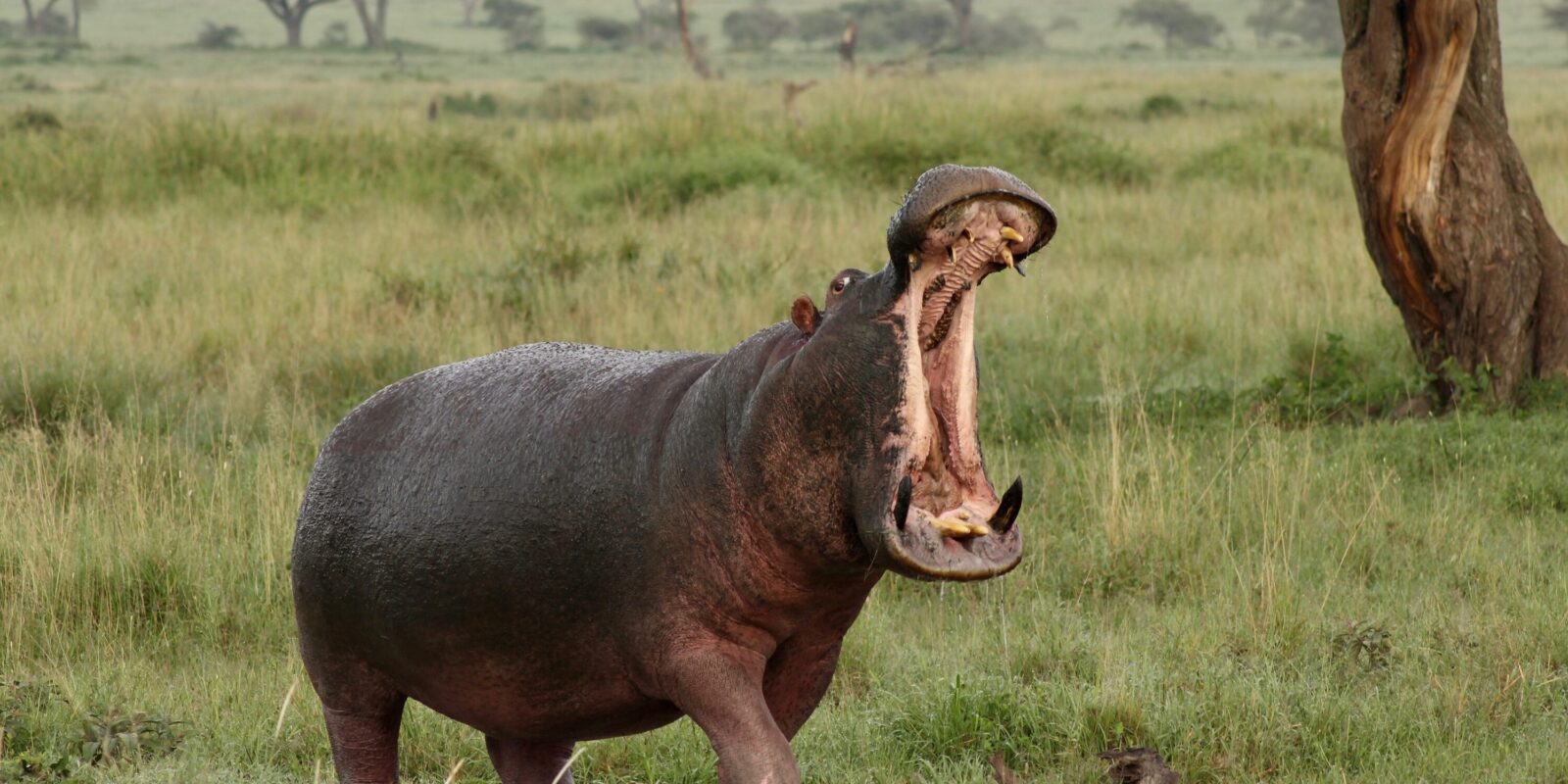
This same convenience carries a genuine safety dimension worth taking seriously rather than treating as a minor footnote. Hippos leave the water after dark specifically to graze on land, following established paths between water and feeding grounds that sometimes cross directly through lodge grounds and walking paths. Despite their famously docile daytime appearance, hippos are responsible for more human fatalities in Africa than almost any other large mammal, precisely because visitors underestimate how fast and aggressive they become when they feel their route to water is blocked or threatened. Staff at Mweya-area lodges brief guests specifically on this risk, and following their guidance, staying on marked paths after dark, never walking between a hippo and open water, and always using an escort after dinner whenever one is offered, matters considerably more here than it does at most other wildlife lodges across Uganda.
Hamukungu and the Fishing Villages Along the Channel
Beyond the main tourist viewing points, the fishing communities dotted along the Kazinga Channel’s shoreline, Hamukungu among the most visited, offer a genuinely different angle on hippo viewing entirely. These villages have coexisted alongside dense hippo populations for generations, and visiting one, either as a standalone cultural stop or combined with a boat cruise passing nearby, offers a chance to see how local communities navigate daily life alongside animals that pose genuine, ongoing risk to fishing activity and crop farming near the water’s edge. This human dimension adds genuinely real context to the hippo population figures that headline most park marketing, since coexistence with an animal responsible for this many recorded human encounters requires exactly the kind of accumulated local knowledge and caution these communities have developed over generations. Fishermen working the channel at dawn and dusk, precisely when hippos are most active moving between grazing grounds and water, navigate around established hippo territories with a precision built from lived experience rather than guidebook advice, and guides who grew up in these communities often bring genuinely irreplaceable local insight to a boat cruise beyond what standard park training alone provides.
Timing Your Visit for the Best Hippo Viewing
Hippo viewing across Queen Elizabeth’s various pools and channels is available year-round, but timing meaningfully affects the quality of the experience. Dry season months, generally June through September and December through February, concentrate hippos more tightly along remaining water sources as smaller pools and channels shrink, often producing denser, more dramatic viewing than the wetter months when hippos disperse more widely across a greater number of temporarily available water sources. Early morning and late afternoon boat cruises tend to offer the most active viewing, since hippos are more likely to be moving, vocalizing, or engaging in the territorial displays that make for the most memorable sightings, compared to the more static, submerged behavior typical of the hottest midday hours. Midday cruises still deliver plenty of hippos to observe, simply in a quieter, more resting state, so travelers with only a single available time slot for their boat cruise should not feel they are missing the experience entirely, just a somewhat more subdued version of the more energetic morning and evening viewing.
Understanding Hippo Behavior Before You Watch
Getting the most out of hippo viewing, whether from a boat, a vehicle, or a lodge veranda, benefits from understanding a little of what you are actually watching. Hippos spend the vast majority of daylight hours submerged or partially submerged specifically to regulate body temperature and protect their skin from sun exposure, surfacing periodically to breathe in a pattern experienced guides can predict fairly reliably once they have observed a specific pod for a while. The loud, distinctive vocalizations hippos make, often described as a combination grunt and bellow, typically signal territorial communication between males or general group coordination rather than aggression specifically, though a sudden, sharp change in vocalization pattern is exactly the kind of cue experienced boat captains watch for as a signal to increase distance from a particular group.
Photography Tips Specific to Hippo Pools
Hippo photography rewards patience considerably more than most other wildlife photography in Queen Elizabeth, given how much time these animals spend submerged with only eyes and ears visible above the waterline. Waiting for a full surfacing, when a hippo’s entire head and often shoulders clear the water briefly before a vocalization or yawn, produces considerably more dynamic images than shots taken during the more common partial-submersion state. A boat cruise offers meaningfully better photographic angles than a vehicle-based view from the shoreline, since water-level positioning captures the scale and density of a large hippo pod in a way elevated, distant shoreline views simply cannot replicate. Bringing a telephoto lens matters here just as much as it does for savanna game viewing, since maintaining safe distance from hippo pods, considerably more important than with most other wildlife given their genuine unpredictability, means the best shots still require real focal length to capture convincingly. A lens in the 300 to 400 millimeter range, or the equivalent reach on a bridge camera, generally strikes the right balance for most travelers, close enough to isolate individual hippos and capture genuine detail while still respecting the distance experienced boat captains maintain from any given pod.
Building Hippo Viewing Into Your Queen Elizabeth Itinerary
Our broader overview of Queen Elizabeth National Park covers the full range of activities worth combining with dedicated hippo viewing, game drives, the Kazinga Channel cruise, and the park’s chimpanzee trekking at Kyambura Gorge, into a single, genuinely well-rounded overall itinerary. Most visitors find that a single Kazinga Channel boat cruise, ideally combined with a Mweya Peninsula stay for the added chance of evening sightings, delivers thoroughly comprehensive hippo viewing without requiring a dedicated, separate activity purely for this purpose. The hippo pools of Queen Elizabeth reward travelers who take the time to understand not just where to look, but when and how, turning what many visitors expect to be a brief, secondary sighting into one of the genuine highlights of their entire Uganda safari. Few travelers arrive at Queen Elizabeth specifically for the hippos, and fewer still leave without ranking a Kazinga Channel encounter among the trip’s most memorable single stretches of wildlife viewing, a reminder that the park’s less-marketed attractions often end up delivering just as much impact as the ones that made the itinerary in the first place.