
Mweya Peninsula: Why It’s the Best Base for Queen Elizabeth Safari
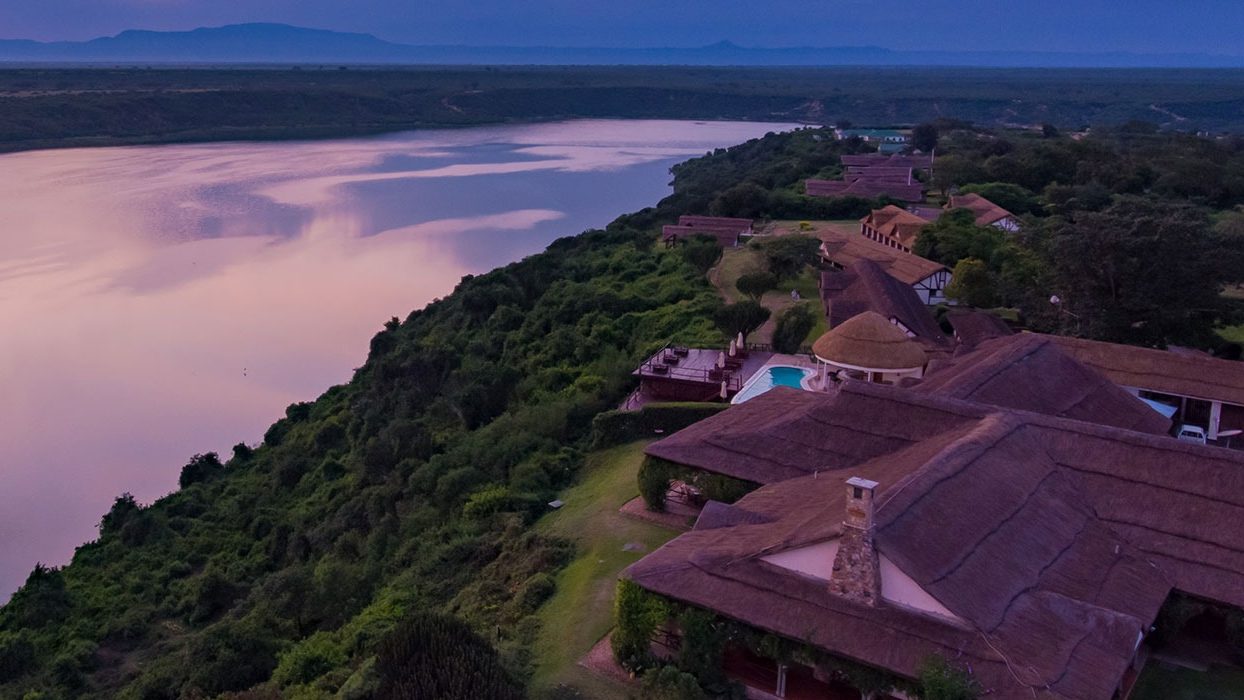
The first thing you see when you arrive at Mweya Peninsula isn’t a sign or a gate or a reception desk.It’s the channel.You’re driving along a dusty road. Trees on both sides. Nothing special. Then suddenly the road opens up and there it is – the Kazinga Channel, stretching out below you like a giant blue-gray carpet.And the hippos.
You hear them before you see them. That low, grumbling chorus that sounds like a hundred old men clearing their throats at once. Then you spot them. Dozens of dark shapes in the water. Some surfacing. Some diving. Some just floating, eyes and nostrils above the surface, looking at you like you’re the one who doesn’t belong.I pulled over the first time. Just stopped the car and stared.My guide laughed. “You get used to it,” he said.I’ve been back three times. I’m not used to it yet.
What Exactly Is Mweya Peninsula?
It’s a finger of land that juts into the Kazinga Channel. Not big. Maybe a few kilometers from end to end. But somehow, in that small space, everything important in Queen Elizabeth National Park comes together.
On one side: the channel. On the other side: Lake Edward. Behind you: the Kasenyi Plains, where the best game drives happen. A short drive away: the Maramagambo Forest, the crater lakes, the mating grounds of the Uganda kobs. Mweya isn’t just a place to sleep. It’s the hub. The center of everything.And unlike other parts of the park, it has something most visitors don’t expect.
Reliable electricity. Good roads. Lodges that range from budget camping to “did I just walk into a magazine?”You can base yourself here for three days and reach almost everything Queen Elizabeth has to offer without spending hours on terrible roads.That’s rare in Ugandan parks. Trust me.
The View That Never Gets Old
I’ve stayed in a lot of places with “great views.”Most of them oversell it. A sliver of ocean between two buildings. A mountain barely visible through the haze.Mweya doesn’t oversell.
From almost anywhere on the peninsula, you’re looking at water. The channel on one side. Lake Edward on the other. And on clear days – which are more common than you’d think – the Rwenzori Mountains rise up in the distance, snow-capped and impossible-looking.
I sat on the deck of Mweya Safari Lodge one evening. Had a gin and tonic. Watched the sun set behind the mountains. The sky turned orange, then pink, then purple. Hippos grunted in the channel below. A fish eagle cried somewhere in the distance.
A woman at the next table started crying.Not sobbing. Just… tears running down her cheeks. Her husband put his arm around her.“You okay?” I asked, feeling weird for interrupting.She nodded. “It’s just so beautiful,” she said. “I didn’t know places like this still existed.”I knew exactly what she meant.
Why Mweya Beats Every Other Base
Let me break this down honestly.
Queen Elizabeth has other places to stay. The Ishasha sector. The northern part of the park near Lake George. Community campsites outside the gates. But Mweya is different.
Location. You’re in the center of everything. Kasenyi Plains (best game drives) is 20 minutes away. Kazinga boat cruise departure point is literally right there. Maramagambo Forest is 30 minutes. The crater lakes are 15 minutes. You don’t waste hours driving to and from your lodge.
Views. I already said this. But it’s worth repeating. Nowhere else in the park gives you water + mountains + savanna all in one glance.
Wildlife on your doorstep. You don’t need a game drive to see animals at Mweya. Elephants wander across the peninsula at dusk. Hippos graze on the lawn at night – yes, the actual lawn. Warthogs trot past the reception area like they own the place. I once watched a monitor lizard climb a tree outside my room. Just casually. Like it was nothing.
Amenities. This sounds shallow. But after a long day of dusty game drives, reliable electricity, hot showers, and a decent restaurant matter. Mweya has all of it. The budget options are more basic, but even the campsite has good facilities.
Safety. Mweya is well-patrolled by rangers. Not that other parts of the park are dangerous – they’re fine. But at Mweya, you can walk between your room and the restaurant after dark without worrying. There are guards with flashlights. The paths are lit. It’s a small thing until you need it.
The Elephants on the Lawn (Not a Joke)
This sounds like something a lodge puts in their brochure to sound exciting. It’s not marketing. It’s real.Almost every evening, around sunset, a herd of elephants walks onto the grounds of Mweya Safari Lodge. Not near the grounds. Onto the grounds. The lawn where you had lunch. The path to the pool. The parking lot.They graze. They tear branches off trees. They splash water from the ornamental pond. The babies chase each other.The lodge staff just… wait. They don’t shoo the elephants away. They don’t sound alarms. They stand at a safe distance and let the elephants do their thing.
After about an hour, the herd wanders off. The staff go back to work. The next morning, they repair the damage – broken fences, trampled bushes, the occasional dented trash can.I asked a staff member if this was annoying.He laughed. “We chose to build here,” he said. “The elephants were here first.”That attitude – animals before convenience – is why I keep coming back to Uganda.
Where to Stay on Mweya Peninsula (Every Budget)
You have options. From “splurge and don’t regret it” to “I just need a flat spot for my tent.”
Splurge: Mweya Safari Lodge. The classic. The one everyone wants to stay at. Perched on the edge of the peninsula with insane channel views. Rooms are lovely – not over-the-top luxury, but comfortable and well-designed. Pool. Good restaurant. Bar with that view. The elephants on the lawn. This is where you stay if you want the full Mweya experience. Prices are high ($200–400 per night). But honestly? Worth it for special trips.
Mid-range: Buffalo Safari Lodge. A bit further from the water, but still on the peninsula. Cottages are cozy. Food is solid. There’s a watering hole where animals come to drink – you can watch from the deck. More affordable than Mweya Lodge ($100–150 per night). Good balance of comfort and price.
Budget: Mweya Hostel. Yes, there’s a hostel on the peninsula. Basic dorm rooms and private rooms. Shared bathrooms. Simple meals. Clean and safe. Popular with backpackers and overland trucks. Around $20–30 per night. Don’t expect luxury. But the location is the same as the expensive lodges. You’re sleeping in the same place. Just with fewer pillows.
Camping: Mweya Campsite. Right next to the hostel. Basic campsite with shared facilities. Hot showers (sometimes). A kitchen shelter. You can pitch your own tent for around $10–15 per night. The views from the campsite are almost as good as the lodge. I’ve camped here twice. Loved it both times.
Unique: Katara Lodge. Not actually on the peninsula, but close enough to mention. A few kilometers away, overlooking the channel from a hill. Luxury cottages with floor-to-ceiling windows facing the water. The views are arguably better than Mweya Lodge – you’re higher up. Prices are similar to Mweya Lodge. Worth considering if the lodge is full.
What You Can Do From Mweya (Without Long Drives)
This is the real advantage.
From Mweya, your day looks like this:
6:00 AM: Wake up. Coffee. Walk to your vehicle.
6:30 AM: Game drive on Kasenyi Plains. Lions, elephants, hyenas, kobs. The predators are most active now. The light is soft.
9:30 AM: Back to Mweya. Breakfast. Shower. Rest.
12:00 PM: Lunch. (Skip the heavy stuff. You’ll be on a boat soon.)
1:00 PM: Kazinga Channel boat cruise. Hippos. Crocodiles. Elephants swimming. Birds everywhere.
3:00 PM: Back from the cruise. Optional: drive to the crater lakes. Or Maramagambo Forest for the bat cave. Or just relax.
5:00 PM: Late afternoon game drive. Or sit on the lodge deck and watch the elephants come to the lawn.
7:00 PM: Dinner. Watch the sunset over the channel.
9:00 PM: Bed. Exhausted. Happy.
You didn’t spend hours driving between activities. You didn’t wake up at 4 AM to reach good game drive areas. You didn’t eat bad food at a roadside stop because you were too far from your lodge.That’s the Mweya advantage.
The Downsides (Because No Place Is Perfect)
I’m being honest here. You should know the bad stuff too.
It can get crowded. Mweya is popular. During peak season (June–August, December–February), the lodges fill up. The boat cruise queues are long. The restaurant at Mweya Lodge is busy. If you want solitude, Mweya during peak season isn’t it.
Prices are higher than elsewhere. Not dramatically. But you pay a premium for the location. The budget options are reasonable, but the mid-range and splurge lodges are more expensive than similar quality elsewhere in the park.
The animals on the lawn are amazing… until they’re not. I loved watching elephants at sunset. But one night, a herd got too close to my room. I could hear them breathing outside my window. Amazing? Yes. Also slightly terrifying when you’re trying to sleep.
The road from the main gate to Mweya is dusty. Really dusty. In dry season, you’ll be covered in red dust by the time you arrive. Bring a bandana or dust mask. Your camera will need cleaning.
Limited dining options outside the lodges. There’s no village or town on the peninsula. If you’re camping or staying at the hostel, you’ll eat at the lodge restaurant or cook your own food. The restaurant is fine, but it’s your only option unless you drive out of the park.
A Story From My First Night at Mweya
I was camping. My first solo trip to Uganda. A little nervous. A little overwhelmed.Set up my tent at the campsite. Cooked pasta on a tiny gas stove. Sat on a bench overlooking the channel while I ate.The sun was setting. The hippos were grunting. I felt small and far from home and also exactly where I was supposed to be.
Then I heard footsteps.Not human footsteps. Heavy. Slow. Multiple feet.I froze.A shape emerged from the bushes. Huge. Gray. An elephant. Not thirty meters away.I didn’t move. Didn’t breathe.
The elephant looked at me. I looked at the elephant.Then she – I think it was a she – turned and walked toward the water. Three more elephants followed. A family. They walked past my tent like it was just another rock in their path. Which, to them, it probably was.
They reached the channel. Drank. Splashed. Watched the sunset.I sat there, cold pasta in my lap, watching them.That was my first night at Mweya.I’ve stayed in fancier places since. Lodges with hot showers and soft beds and gin and tonics on the deck.But that night, in my little tent, with elephants walking past like I wasn’t even there?That’s the memory I keep.
Practical Info (So You Can Actually Go)
How to get there. From the main gate of Queen Elizabeth National Park, follow the signs to Mweya. The road is about 30 minutes from the gate. It’s paved part of the way, then dirt. Passable in a 2WD in dry season, but a 4×4 is better.
Where to book. Mweya Safari Lodge: book directly or through a tour operator. Buffalo Safari Lodge: book online. Hostel and campsite: book through the Uganda Wildlife Authority or just show up (space usually available except peak season).
What to bring. Dust mask. Binoculars. Camera. Jacket for boat cruise. Headlamp if camping. Cash for tips and small purchases – credit cards work at the lodge but not everywhere.
When to go. Dry season (June–September, December–February) for best access. Wet season is quieter and greener but the road to Mweya can get muddy.
How long to stay. Minimum 2 nights. 3 is better. 4 if you want to really relax and not rush between activities.
The Honest One
You could stay somewhere else. You could stay in Ishasha and focus on the tree-climbing lions. You could stay near the northern entrance and save a few dollars. You could stay outside the park entirely and drive in each day.People do all of those things. Some of them have great trips.But here’s what I’ve learned after multiple visits.
Queen Elizabeth is a big park. The roads are rough. The distances are longer than they look on a map. Wasting hours driving to and from your lodge means less time watching animals and more time eating dust. Mweya solves that.
You wake up in the middle of everything. You eat breakfast with a view of hippos. You drive twenty minutes to the best game drive area. You walk to the boat cruise dock. You watch elephants graze on the lawn at sunset.And at the end of the day, you don’t collapse into bed exhausted from driving. You collapse into bed exhausted from seeing things.That’s the difference.Mweya isn’t just a place to sleep. It’s the reason your Queen Elizabeth safari works.Stay there. You’ll thank me.