
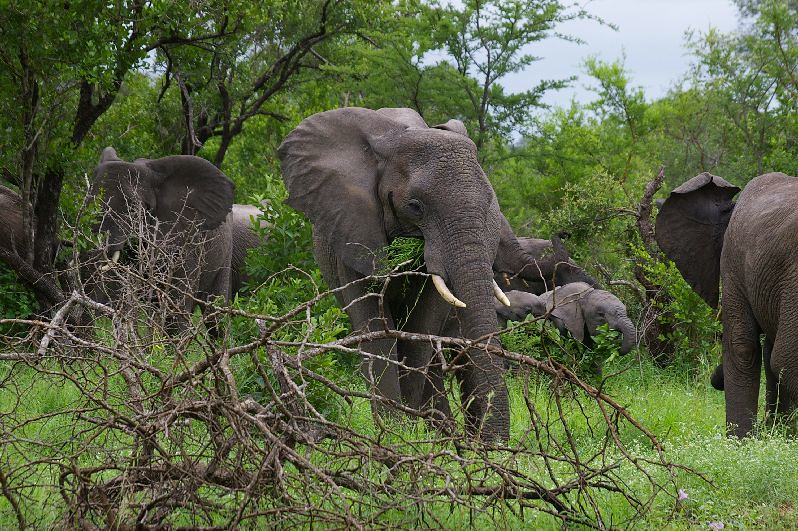
Elephants of Queen Elizabeth National Park: Population & Viewing Tips
Gorilla trekking genuinely dominates most Uganda safari planning conversations, but travelers who add Queen Elizabeth National Park to their itinerary often come away citing elephants, not lions or hippos, as the wildlife encounter they remember most vividly. Queen Elizabeth’s elephant population represents one of Uganda’s genuine conservation success stories, a recovery from serious poaching pressure decades ago to a healthy, growing herd that today ranks among the most reliable large-mammal sightings anywhere in the park. Understanding the population’s history, where elephants are most likely to appear, and how to time a game drive carefully around their movement patterns turns a hopeful, uncertain search into a considerably more confident, well-informed part of your overall itinerary.
How Many Elephants Actually Live in the Park
Population estimates for Queen Elizabeth’s elephants vary meaningfully depending on the specific survey and year cited, ranging from roughly 2,500 individuals in some assessments to figures exceeding 4,000 in more recent counts, including a 2018 census that recorded nearly 3,950 elephants across the wider park ecosystem. This range reflects both genuine population growth over recent decades and the inherent difficulty of counting a wide-ranging, mobile species across a park spanning nearly 2,000 square kilometers, so travelers researching exact figures should treat any single cited number as a reasonable approximation from one specific survey rather than a permanently fixed, universally agreed count. What all these estimates agree on is the underlying trend: a population that has grown substantially since the serious poaching crisis of Uganda’s more unstable decades, making Queen Elizabeth’s elephant recovery a genuinely encouraging, well-documented conservation story in its own right. Conservationists tracking the population over successive survey periods point to this sustained upward trajectory as evidence that the underlying protective infrastructure, ranger patrols, community engagement, and consistent government commitment, has genuinely taken hold rather than representing a temporary or fragile improvement vulnerable to reversal.
The Recovery From Historical Poaching Pressure
Queen Elizabeth’s elephant population suffered genuinely severe losses during periods of civil unrest and organized poaching that affected much of Uganda’s wildlife through the late twentieth century, with elephant numbers falling dramatically below historical baselines during the crisis years. The population’s substantial recovery since then traces directly to sustained ranger patrol work, strengthened anti-poaching enforcement, and the broader political stability Uganda has maintained over recent decades, a combination that mirrors the conservation formula credited with Uganda’s parallel mountain gorilla recovery. This context matters for appreciating what you are actually watching during a game drive: elephants moving freely across open savanna today represent the direct result of decades of deliberate protection work, not simply an animal that was always guaranteed to be there in these numbers by some fixed, unchanging natural order. Visitors who take a moment to consider this history often describe the sighting differently afterward, less a routine checklist item and more a tangible marker of what sustained conservation effort can actually achieve within a single generation.
Why Elephants Move Across International Borders
A genuinely distinctive feature of Queen Elizabeth’s elephant population is its connection to the wider Virunga ecosystem across the border in the Democratic Republic of Congo, with herds periodically crossing between the two countries’ protected areas as they follow seasonal food and water availability. This cross-border movement means the elephants visible on any given Queen Elizabeth game drive represent a genuinely transnational population rather than a population strictly confined within Uganda’s borders, a detail that adds real ecological significance to the park’s conservation role within the broader Albertine Rift region. It also means elephant sighting frequency can shift somewhat depending on where herds happen to be within this larger cross-border range at any given time, one more reason experienced guides emphasize flexibility over guaranteed, scheduled sightings. This transnational dimension also means Queen Elizabeth’s elephant conservation success cannot be fully separated from the security and conservation situation across the border, since a herd’s ability to move freely between protected areas depends on conditions holding steady on both sides, one more reason Uganda’s relative political stability over recent decades has mattered so much for this specific population’s recovery.
Where to Find Elephants Within the Park
The Ishasha sector, tucked into the park’s southern reaches, ranks among the most consistently productive areas for elephant sightings, where herds roam across open grassland in numbers that make for genuinely memorable game drive viewing. The Kasenyi plains and the areas immediately surrounding the Kazinga Channel also regularly produce genuinely strong elephant sightings, particularly given the channel’s role as a reliable water source drawing herds in during both wet and dry seasons. Travelers focused specifically on maximizing their elephant viewing odds should discuss sector-specific strategy directly and honestly with their guide or operator, since recent sighting patterns shift somewhat season to season and a guide with current, on-the-ground knowledge will generally outperform any fixed, generic recommendation about which specific area to prioritize.
Best Timing for Elephant Game Drives
Early morning and late afternoon game drives most consistently produce the strongest elephant sightings overall, both because temperatures are cooler and more comfortable for active movement during these windows and because the tall savanna grass elephants often move through provides better camouflage and concealment during the hottest midday hours. Elephants’ large size makes them easier to spot at a distance than many other savanna species even in tall grass, but experienced guides still emphasize these cooler timing windows as genuinely producing more active, visible behavior rather than animals resting in shade or partial cover during peak heat.
Elephant Behavior Worth Understanding Before Your Drive
Queen Elizabeth’s elephants live in classic matriarchal family groups typical of African elephant social structure generally, led by an experienced older female whose accumulated knowledge of reliable water sources, safe travel routes, and seasonal food availability guides the entire group’s day-to-day movement decisions. Bull elephants, meanwhile, often travel entirely alone or in smaller, looser bachelor groups kept separate from the main family herds, meaning a solitary large male sighting represents a genuinely different social context altogether than encountering a full, well-established family group traveling together with young calves in tow. Understanding this distinction helps make sense of the varied group sizes and compositions visitors encounter across different game drives, rather than assuming every sighting represents the same basic social unit. Young males typically leave their natal family group around adolescence, gradually spending more time on the periphery before eventually striking out on their own or joining a loose bachelor association, a transition guides can sometimes point out directly when a particular sighting includes a younger male displaying exactly this in-between social behavior.
Safety Considerations Around Elephant Encounters
Elephants, despite their generally calm demeanor during most game drive encounters, remain genuinely powerful, occasionally unpredictable animals, and maintaining appropriate vehicle distance matters as much here as it does with any of Queen Elizabeth’s other large mammals. Experienced guides watch specifically for warning signs, ear flaring, trunk raising, a sudden shift in group attention toward the vehicle, and will reposition the vehicle well before any situation genuinely escalates, a routine, practiced part of professional guiding rather than a rare emergency response. Visitors should follow guide instructions immediately during any elephant encounter, particularly around family groups with young calves, since protective maternal behavior can shift a calm sighting into a genuinely tense one faster than many first-time safari visitors expect. Vehicles should never attempt to pass between separated members of a family group, even briefly, since elephants maintain strong social bonds and a matriarch separated from part of her group, even momentarily by a vehicle’s path, can react with considerably more agitation than the same vehicle simply waiting for the group to cross together. Guides are trained specifically to read these group dynamics before a crossing begins, which is precisely why following their positioning decisions during an elephant encounter matters more than it might for less socially complex species.
Combining Elephant Viewing With Queen Elizabeth’s Other Highlights
Elephant sightings pair genuinely naturally with the rest of a well-rounded Queen Elizabeth itinerary, game drives through Ishasha or the Kasenyi plains, a Kazinga Channel boat cruise for water-based wildlife including the park’s substantial hippo population, and, for travelers with extra time, a chimpanzee trek at Kyambura Gorge. Our page on hippo pools of Queen Elizabeth covers the water-based side of this itinerary in more depth, and our broader overview of Queen Elizabeth National Park rounds out the full range of activities worth combining into a single, comprehensive visit. Queen Elizabeth’s elephant population, recovered from genuine crisis to a thriving, cross-border herd numbering in the thousands, stands as one of Uganda’s quieter conservation triumphs, well worth appreciating as more than simply another item on a game drive checklist. Travelers who take the time to learn even the basics of what they are watching, matriarchal leadership, cross-border movement, the decades-long recovery from crisis, tend to find their game drives noticeably more rewarding than those who treat each sighting purely as a photo opportunity to check off before moving on to the next stop on the itinerary.