
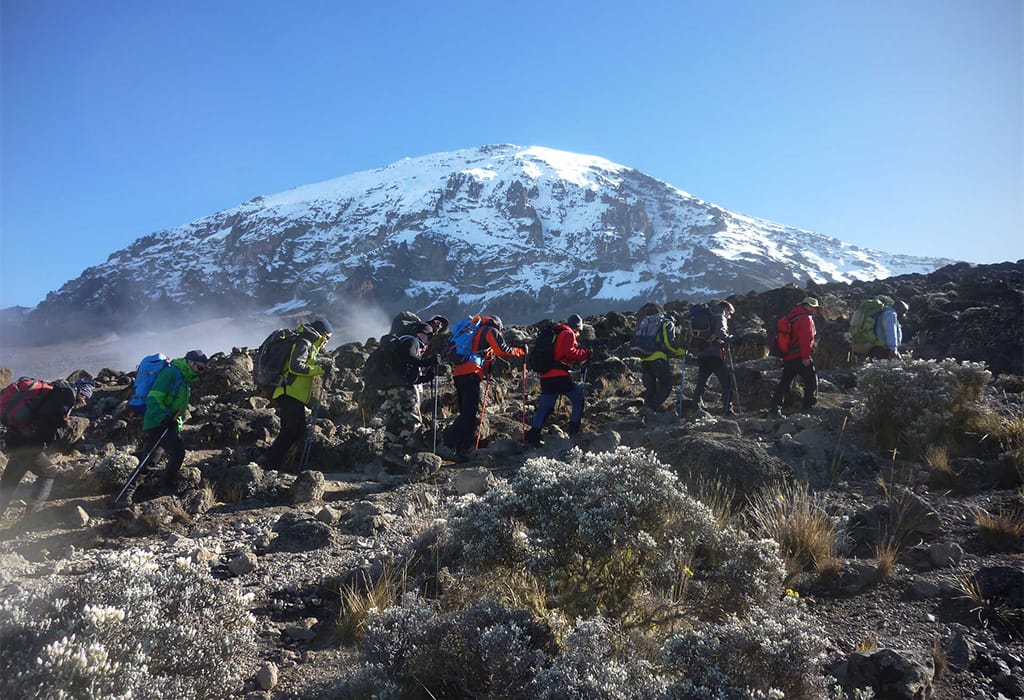
Rwenzori Glaciers: Will Africa’s Equatorial Ice Cap Survive Climate Change?
Standing almost exactly on the equator, the Rwenzori Mountains hold something that seems almost contradictory: permanent ice. Snow-capped peaks rising out of dense equatorial rainforest are one of the more startling sights in East Africa, and for over a century the Rwenzoris have been counted alongside Kilimanjaro and Mount Kenya as one of only three places on the continent where glaciers exist at all. That distinction, however, is running out of time, and the mountains have become one of the clearest, most visible markers of climate change anywhere in Africa.
A Century of Retreat
It is a strange thing to consider, standing in humid, dripping rainforest at the base of the range, that a few thousand vertical metres above, conditions cold enough to preserve ice year-round have persisted for millennia. That contrast, tropical forest at the foot of the mountain and frozen rock and snow at its crown, is part of what has made the Rwenzoris so compelling to explorers, scientists, and trekkers alike since they were first properly documented by European expeditions over a century ago.
Scientific measurement of the Rwenzori glaciers dates back to the early 1900s, when the range’s ice fields were first properly surveyed and mapped. Since those initial measurements, the mountains have lost the overwhelming majority of their ice, with some estimates placing the loss above ninety percent of the original glacial extent. What once covered a substantial footprint across the range’s highest peaks has shrunk to isolated, fragmented remnants clinging to the most sheltered and highest-altitude pockets still cold enough to sustain them.
The pace of that retreat has not been steady. Glaciologists studying the range have documented an acceleration through the latter half of the twentieth century that has continued largely unabated since, tracking closely with the broader global pattern of rising temperatures affecting mountain glaciers worldwide, from the Alps to the Andes to East Africa’s own scattered ice fields.
Margherita Peak and What Remains
Mount Stanley’s Margherita Peak, at 5,109 metres, is Africa’s third-highest point after Kilimanjaro and Mount Kenya, and the highest point in Uganda. It is also the most significant remaining holder of glacial ice within the Rwenzori range, along with smaller remnants on neighbouring peaks including Mount Speke and Mount Baker. Climbers who summit Margherita Peak today are, in effect, witnessing a rapidly closing window, walking across ice fields that scientific projections suggest may not exist in any meaningful form within a matter of decades, and by some more urgent estimates, potentially within a single decade.
Why the Rwenzoris Are Especially Vulnerable
Tropical glaciers like those in the Rwenzoris behave differently from their counterparts in temperate and polar regions, and that difference makes them particularly vulnerable to a warming climate. Because equatorial regions do not experience the same strong seasonal temperature swings as higher latitudes, tropical glaciers exist in a narrower margin between the conditions that sustain ice and the conditions that melt it. Even modest increases in average temperature can tip that balance decisively, which is part of why the Rwenzori ice fields, along with those on Kilimanjaro and Mount Kenya, have retreated so much faster proportionally than many glaciers in cooler parts of the world.
What Disappearing Ice Means Beyond the Summit
The consequences of the Rwenzori glaciers’ retreat extend well past the loss of a dramatic mountaineering feature. Glacial meltwater has historically fed streams and rivers flowing down from the range into surrounding communities, and the shifting pattern of that water supply, less reliable meltwater over the long term after an initial period of increased runoff, has real implications for agriculture and daily life in the valleys below. As ice retreats from steep rock faces it had long stabilised, the exposed terrain becomes more prone to landslides and rockfall, altering the mountain’s physical character in ways that affect both local communities and the trekking routes that draw visitors to the range in the first place.
A Changing Ecosystem at Altitude
The Rwenzoris’ famous afroalpine zone, home to giant lobelias, towering groundsels, and heather forests found almost nowhere else on Earth in this particular form, sits in close proximity to the retreating ice line. As glaciers shrink and temperature patterns shift at altitude, the boundaries of these unique vegetation zones are expected to move as well, adding an ecological dimension to the glaciers’ retreat that extends beyond the ice itself into the wider high-altitude ecosystem the range is known for among botanists and naturalists.
Why Trekkers Are Drawn to See It Now
A noticeable shift has taken place in how the Rwenzoris are marketed and discussed among serious trekkers, with growing numbers explicitly motivated by the chance to see the glaciers before they disappear entirely. This kind of last-chance interest, sometimes called last-chance tourism when it appears around vanishing natural features globally, has added a layer of urgency to what was already one of East Africa’s more demanding and rewarding trekking destinations. For climbers with genuine interest in reaching Margherita Peak and its remaining ice specifically, rather than simply completing the range’s highest trekking routes, the timeline is worth taking seriously rather than treating as an abstract, distant concern.
What a Visit Looks Like Today
Reaching the glaciated zone still requires a full multi-day trekking expedition through the range’s lower forest, bamboo, and heather zones before climbers arrive at the rocky, increasingly ice-free upper reaches where the remaining glaciers cling on. The trek itself remains a serious undertaking, technically demanding in its final stages and requiring proper acclimatisation, equipment, and an experienced guiding team given the altitude and terrain involved. What has changed is less the difficulty of the climb and more the visible extent of the ice once climbers reach the summit zone, noticeably reduced even compared to photographs from a decade or two ago.
A Rare and Narrowing Opportunity
The Rwenzori Mountains remain one of the few places on the African continent, alongside Kilimanjaro and Mount Kenya, where visitors can stand on genuine glacial ice without leaving the tropics, a combination of equatorial location and high-altitude cold that exists almost nowhere else on Earth. That rarity is precisely what makes the glaciers’ ongoing retreat feel so significant, not simply as a regional environmental story but as the closing chapter of a genuinely unusual natural phenomenon. For travellers drawn to trekking expeditions in the Rwenzori Mountains, the glaciers add a dimension to the climb that goes well beyond scenery, a direct, physical encounter with one of the clearest signs of a changing climate found anywhere on the continent.
How the Rwenzoris Compare to Kilimanjaro and Mount Kenya
All three of Africa’s glaciated peaks are retreating, but they are not doing so at identical rates or for identical reasons, and the comparison is instructive for understanding what makes the Rwenzoris distinct. Kilimanjaro, the continent’s most famous glaciated summit, has drawn the bulk of international attention to Africa’s vanishing ice, partly because of its accessibility and its status as the highest freestanding mountain in the world. Mount Kenya’s glaciers, smaller to begin with, have retreated so severely that several of its named glaciers have already disappeared entirely in recent decades, effectively serving as an early preview of what may eventually happen across the whole of the Rwenzoris.
The Rwenzoris occupy something of a middle position, less famous internationally than Kilimanjaro but home to a genuinely wetter, cloudier climate that has, for a period, offered slightly more protection to its ice fields than the drier conditions found on Kilimanjaro’s slopes. That protective effect has not been enough to reverse the underlying trend, but it may help explain why Rwenzori ice, while severely diminished, has not yet vanished as completely as some of Mount Kenya’s smaller glaciers.
The Role of Local Communities and Guides
Communities living in the foothills of the Rwenzoris have watched this retreat unfold across generations, and many hold oral histories and direct multi-decade memories of a visibly icier range than exists today. Local guides, who often come from these same communities and have worked the mountain’s trails for years, are frequently among the most informed and articulate voices on how specific sections of the route have changed, which sections of trail have become more exposed to rockfall as ice retreats, and where meltwater patterns have shifted noticeably within their own working lifetimes. Trekkers who take the time to talk with their guides about these changes often come away with a far more grounded understanding of the glaciers’ retreat than any statistic alone could provide.
What Scientists Are Watching Next
Ongoing monitoring of the Rwenzori ice fields continues, though the remote and difficult terrain makes consistent, frequent measurement more logistically challenging here than on more accessible glaciated peaks elsewhere in the world. Researchers tracking the range’s remaining ice are primarily focused on documenting the rate of retreat as precisely as conditions allow, data that feeds into the broader global picture of tropical glacier loss and helps refine projections for exactly when, rather than simply whether, the Rwenzoris will lose their permanent ice cover entirely. For now, the range remains one of a vanishingly small number of places where equatorial Africa and permanent glacial ice still coexist, however briefly that coexistence may continue, and every trekking season that passes adds one more data point to an already sobering trend line, one more year closer to the moment the range’s summit finally sheds the last of its snow for good.