
Hiking Mount Elgon: The Jackson Summit Trail Explained
Mount Elgon is one of Uganda’s most underrated high-altitude destinations, an ancient extinct volcano straddling the Uganda-Kenya border with one of the largest calderas of any mountain on Earth. While Wagagai Peak, at 4,321 metres, holds the title of the mountain’s true summit, Jackson’s Summit, a striking secondary peak at 4,165 metres, is the destination most closely associated with the mountain’s classic and most travelled route, and for many hikers it represents the more achievable, still thoroughly rewarding target on Mount Elgon’s slopes.
Why Jackson’s Summit Draws So Many Hikers
Named after Frederick Jackson, an early British explorer associated with the mountain’s colonial-era exploration history, Jackson’s Summit sits along the traditional Sasa Trail, Mount Elgon’s shortest and most direct route to the mountain’s higher reaches. Its position along this well-established path, combined with a genuinely dramatic setting overlooking the mountain’s vast caldera, has made it the peak most hikers on a standard multi-day Mount Elgon trek actually reach, whether or not they push on to attempt Wagagai itself.
The Sasa Trail Route to Jackson’s Summit
The Sasa Trail begins near Budadiri, a town on Mount Elgon’s southwestern flank, and immediately establishes itself as the steepest and most demanding of the mountain’s three main trekking routes. The first day alone typically involves well over a thousand metres of elevation gain, a brutal introduction that filters out hikers who underestimated the physical demands of the route before they have even reached the mountain’s more forgiving upper sections.
Despite its difficulty, the Sasa Trail remains the most popular route up Mount Elgon precisely because of that directness, offering the fastest path to genuine high-altitude terrain for hikers with limited time and solid fitness. Most itineraries built around this route run four days round trip, considerably shorter than the alternative Piswa and Sipi trails, which take longer but spread the elevation gain more gradually across the trek.
Jackson’s Pool and the Caldera Crossing
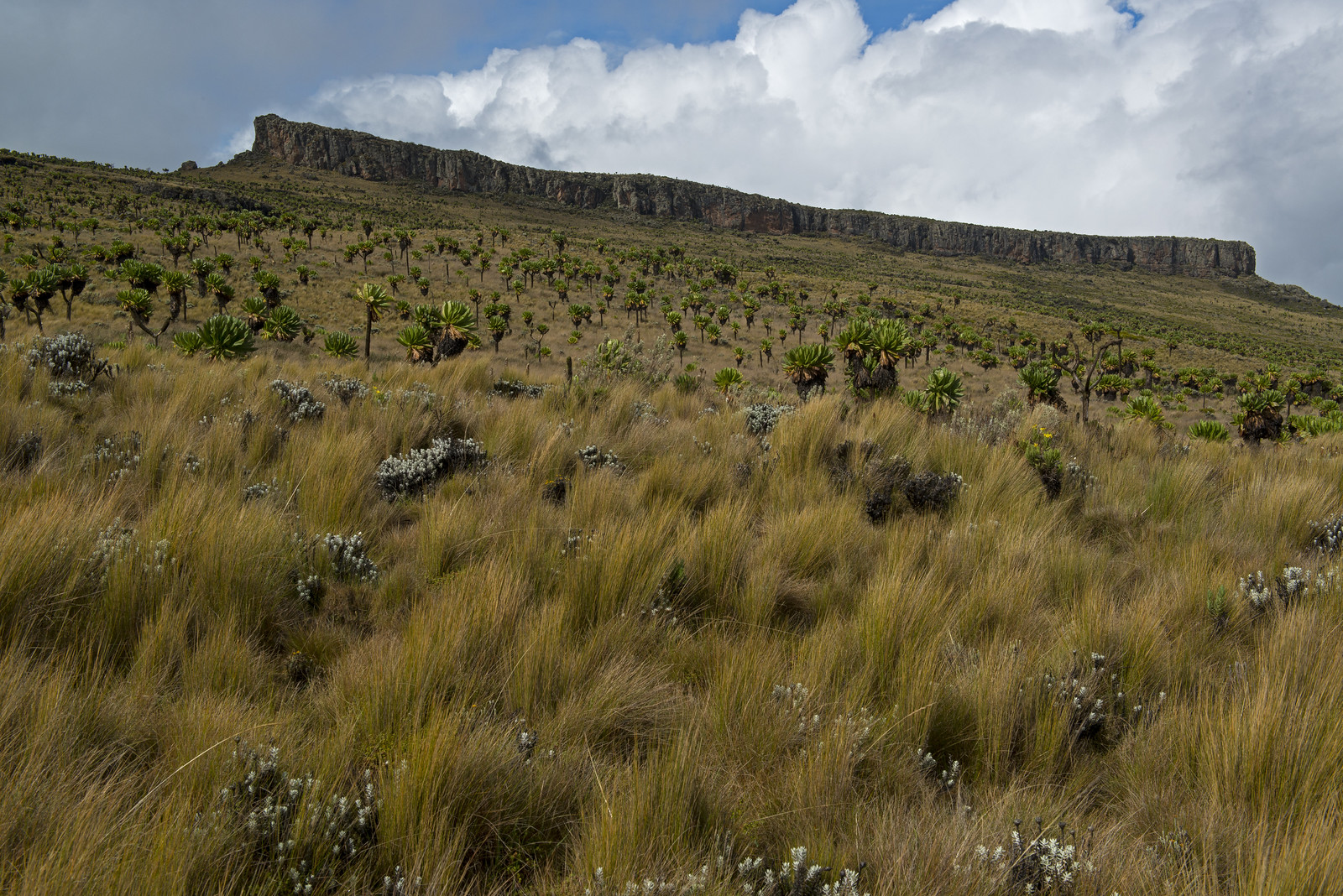
En route toward Jackson’s Summit, hikers pass Jackson’s Pool, a natural feature within Mount Elgon’s enormous caldera that ranks among the largest volcanic calderas anywhere on the planet. The crossing of this caldera terrain is one of the trek’s most distinctive stretches, an open, otherworldly landscape framed by standing rock plugs and dramatic escarpment walls that feels entirely different from the dense montane forest and bamboo zones the trail passes through lower down the mountain.
Endemic Plant Life Along the Way
Mount Elgon’s higher slopes support their own distinctive afroalpine flora, including species found nowhere else, among them a lobelia variety unique to the mountain. This plant life adds a genuinely scientific dimension to the trek for hikers with any interest in botany, echoing the giant lobelia and groundsel landscapes found on other East African high-altitude peaks like the Rwenzoris and Mount Kenya, while retaining its own distinct character shaped by Mount Elgon’s particular geology and caldera terrain.
Jackson’s Summit Versus Pushing on to Wagagai
For hikers deciding how far to push their Mount Elgon expedition, the choice between stopping at Jackson’s Summit and continuing on to Wagagai Peak comes down to time, fitness, and how much the distinction of reaching the mountain’s absolute highest point actually matters to a given traveller. Jackson’s Summit already delivers commanding views across the caldera and out over the surrounding landscape, along with a genuine sense of achievement given the demanding climb required simply to reach it. Wagagai adds further distance and elevation gain beyond that point, appealing most to hikers specifically motivated by summiting the true highest point of the mountain rather than simply experiencing its dramatic upper terrain.
Fitness and Preparation
The Sasa Trail’s reputation as Mount Elgon’s toughest route is well earned, and hikers considering it should arrive with genuine cardiovascular fitness and, ideally, some prior experience with multi-day hiking at altitude. The trail’s brutal first day in particular has caught out hikers who assumed Mount Elgon would be a gentler introduction to East African high-altitude trekking than it actually turns out to be. Those less confident in their fitness, or simply preferring a more gradual ascent profile, are often better served by the longer Piswa or Sipi trail alternatives, which reach the same general high-altitude terrain via a less punishing daily elevation gain.
What to Expect at Altitude
Nights on the upper sections of the Sasa Trail get genuinely cold, a sharp contrast to the warm, humid forest hikers pass through on the lower slopes, and proper cold-weather gear is essential regardless of how mild conditions feel at the trailhead. Weather at this altitude can shift quickly, with cloud and mist frequently rolling across the caldera and obscuring views that were clear only an hour earlier, a pattern common to most of East Africa’s higher mountain environments and one experienced guides plan routes and schedules around.
Guides and Logistics
As with all of Mount Elgon’s trekking routes, guides and porter support are standard practice, both for navigation across terrain that becomes considerably less obvious above the tree line and in support of the local communities whose livelihoods are connected to the mountain’s trekking economy. Advance booking through an established operator is the sensible approach given the multi-day nature of the trek and the logistics involved in arranging huts, provisions, and staffing for a route of this length and remoteness.
A Genuinely Rewarding Alternative to Uganda’s Bigger Peaks
Mount Elgon and its Jackson’s Summit route rarely get the same attention as the Rwenzoris’ glaciated peaks, but the mountain’s combination of a genuinely vast caldera, distinctive endemic flora, and a demanding but achievable multi-day trek makes it one of Uganda’s more underrated high-altitude experiences. For hikers drawn to Mount Elgon’s dramatic upper slopes, the Sasa Trail and its climb toward Jackson’s Summit offer a serious mountain challenge without the extended time commitment or technical glacier travel that a full Rwenzori expedition demands.
The Caldera Itself: A Geological Highlight in Its Own Right
Mount Elgon’s caldera is one of the mountain’s most genuinely remarkable features, and it is easy for hikers focused purely on reaching a summit to underappreciate just how significant this landscape is in geological terms. Formed by the collapse of the volcano’s original peak millions of years ago, the caldera spans a vast area, ranking among the largest of its kind anywhere in the world, and walking across even a portion of it on the way to Jackson’s Summit gives hikers a genuine sense of scale that photographs rarely capture adequately. Standing rock plugs, the eroded remnants of the volcano’s original internal structure, punctuate the caldera floor and surrounding slopes, adding a stark, sculptural quality to what is already one of the more visually striking stretches of any Ugandan trek.
Comparing the Three Main Routes
Understanding how the Sasa Trail fits alongside Mount Elgon’s other two main routes helps clarify why it remains the default choice for so many hikers despite its difficulty. The Piswa Trail, beginning near Kapkwata, offers a considerably more gradual ascent profile and rewards hikers with sweeping views across the Karamoja plains, appealing to those who prioritise a steadier, less punishing daily climb over speed. The Sipi Trail, the longest of the three at roughly fifty-six kilometres round trip and typically taking five to six days, allows hikers to combine the Sipi Falls hiking and coffee experience with a longer, more immersive approach to the mountain’s upper reaches, at the cost of a considerably longer overall time commitment.
Against these alternatives, the Sasa Trail’s appeal is straightforward: it gets hikers to genuinely dramatic high-altitude terrain, including Jackson’s Summit and the caldera crossing, in the shortest possible time, a real advantage for travellers building Mount Elgon into a broader Uganda itinerary with limited days to spare. The trade-off, a genuinely brutal first day, is one that fit, well-prepared hikers generally consider worthwhile given what the route delivers in return.
Wildlife and Birdlife Along the Trail
Mount Elgon’s lower forest zones, passed through on the initial stages of the Sasa Trail before the terrain opens into caldera and afroalpine landscape, support a range of forest wildlife and birdlife typical of Uganda’s montane forest habitats. Duikers, forest primates, and a notable variety of forest bird species can be encountered in these lower sections, though as with most demanding, fast-paced trekking routes, wildlife viewing tends to take a back seat to the physical demands of the climb itself for hikers focused on reaching the upper mountain. Those with a specific interest in the mountain’s biodiversity may find the more gradual Piswa or Sipi routes offer more natural opportunities to slow down and take in the forest environment along the way.
When to Attempt the Climb
Mount Elgon’s drier trekking windows generally align with the broader East African dry seasons, offering firmer trail conditions and clearer views across the caldera and surrounding landscape. Attempting the Sasa Trail during the wetter months is not impossible, but the combination of already steep, demanding terrain with slippery, saturated ground adds a meaningful layer of difficulty and risk that most experienced operators recommend avoiding unless a hiker has specific reasons for choosing a wet-season ascent.