
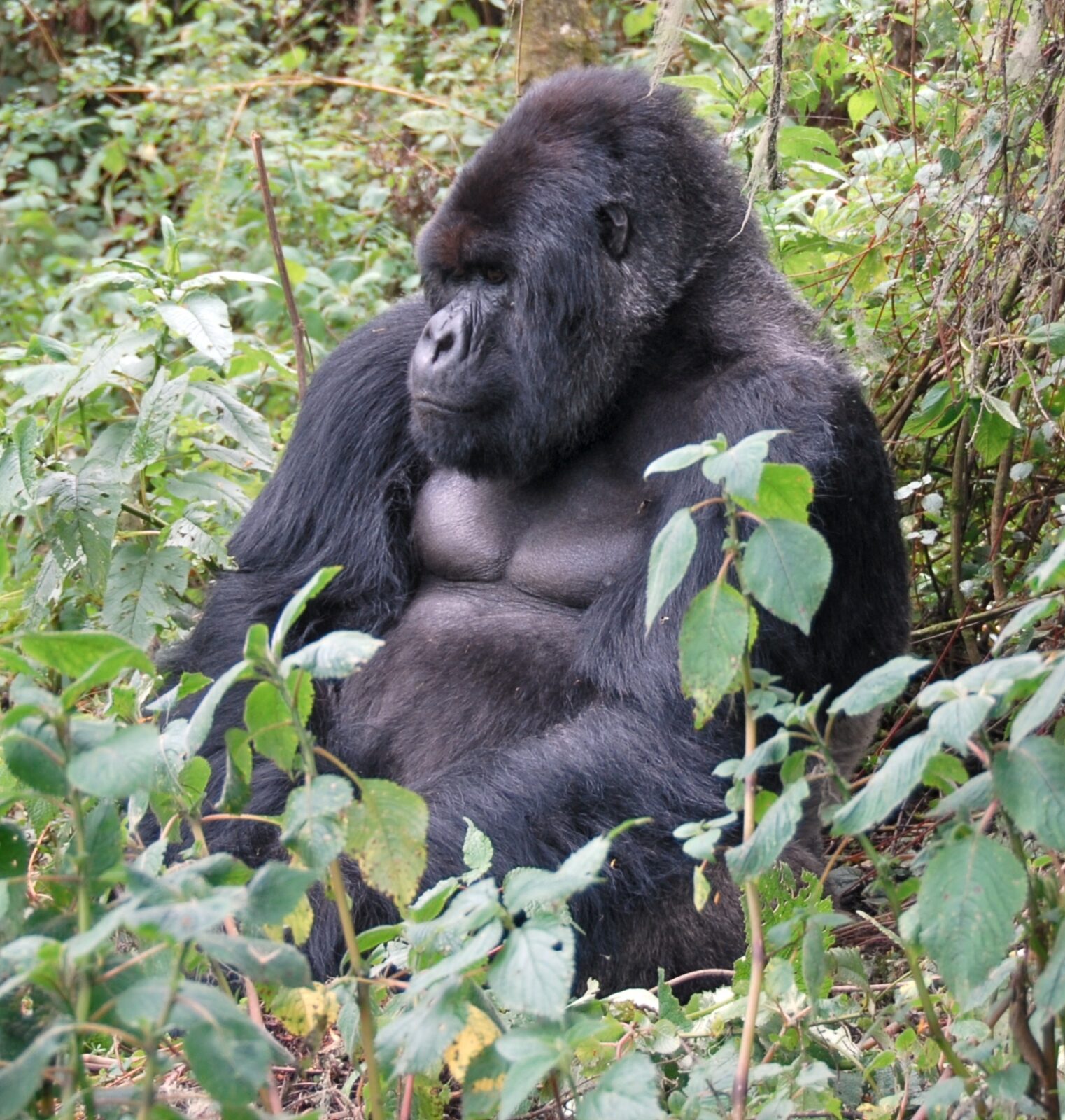
Gorilla Gestation Period: How Mountain Gorillas Raise Their Young
Watching a mother mountain gorilla cradle her infant during a trek in Bwindi or Volcanoes National Park offers one of the more quietly moving moments available on any gorilla trekking permit. Behind that single, tender image lies a reproductive and parenting strategy that unfolds over years rather than months, one of the slowest and most maternally demanding among all the world’s great apes.
Gestation and Birth
Mountain gorilla gestation lasts roughly eight and a half months, remarkably close to the nine-month human pregnancy, a similarity that reflects just how closely related humans and gorillas remain despite millions of years of separate evolution. A newborn gorilla arrives strikingly small, typically weighing between 1.8 and 2 kilograms, a fraction of an adult silverback’s eventual bulk, and utterly dependent on its mother from the very first moment of life.
The First Months: Constant Contact
For roughly the first five months, infant gorillas remain in near-constant physical contact with their mothers, nursing frequently, at least once every hour during the earliest weeks, and sleeping each night curled within their mother’s own nest rather than a separate one. Mothers during this period stay close to the group’s dominant silverback, drawing on his protective presence to shield the vulnerable infant from potential threats, whether from predators or, in rare but documented cases, from other gorillas within a shifting group dynamic.
Gradually Increasing Independence
Around the five-month mark, infants begin breaking physical contact with their mothers for the first time, initially only for a few fleeting seconds at a stretch. This distance grows steadily over the following months, and by around twelve months of age, infants venture as far as five metres from their mothers, though rarely further, testing their growing independence while remaining within an easy, reassuring reach of maternal protection. Nursing frequency drops in step with this growing distance, shifting from hourly feeds toward roughly once every two hours as solid foods begin supplementing breast milk.
The Juvenile Period and Weaning
Between roughly three and six years of age, young gorillas enter a distinct juvenile phase marked by decreasing maternal grooming, the end of shared sleeping nests, and full weaning from breast milk, typically complete by around three years old. This extended period of dependency, considerably longer than most primates, gives young gorillas extensive time to learn essential social behaviours, feeding techniques, and group dynamics directly through observation and interaction with their mothers and the wider family group.
Why Gorilla Reproduction Moves So Slowly
Female mountain gorillas do not give birth for the first time until around ten years of age, and mothers typically space subsequent births roughly four years apart, an interval reflecting just how much time and energy successfully raising a single infant to independence actually demands. This slow reproductive pace is a significant factor in why mountain gorilla populations recover so gradually even under strong conservation protection, each successful birth represents a substantial, multi-year investment rather than a quick, frequent occurrence.
The Silverback’s Role in Raising Young
While mothers handle the most direct, hands-on care, the group’s dominant silverback plays a genuinely significant supporting role in infant survival, providing protection, maintaining group cohesion, and in some cases directly engaging in gentle play with older infants and juveniles. Silverbacks are known to intervene protectively when infants are threatened, and their continued presence within a stable family group correlates strongly with higher infant survival rates, one of the reasons the loss of a dominant silverback, whether through natural death or, historically, poaching, could prove so disruptive to a group’s younger members.
What Trekkers Might Witness
Visitors on a gorilla trekking permit have a genuine chance of observing multiple stages of this developmental process within a single family, depending on which group they are assigned to and which specific individuals happen to be present that day. Newborns clinging tightly to their mothers, energetic juveniles playing and tumbling nearby, and the watchful presence of a protective silverback all offer visible windows into this extended, carefully paced developmental journey, adding genuine depth to an already extraordinary encounter.
Conservation Implications of Slow Reproduction
Understanding this slow, resource-intensive reproductive cycle helps explain why mountain gorilla conservation success, the species’ notable population recovery in recent decades, represents such a genuinely significant achievement. Every surviving infant reflects years of maternal investment, protection from a stable social group, and freedom from the disease and poaching pressures that have historically threatened young gorillas most acutely, making continued habitat protection and responsible tourism management essential to sustaining this hard-won progress into the future.
A Reminder of What Makes the Encounter So Special
Every mountain gorilla trekking permit carries the possibility of witnessing this remarkable, unhurried process of gorilla parenting firsthand, a reminder that the species’ continued survival depends on exactly this kind of patient, multi-year investment repeated across generations. For travellers preparing for a trek, understanding the gestation, infancy, and extended dependency period behind every gorilla family adds meaningful context to what is already one of the most profound wildlife encounters available anywhere on Earth.
Twins and Rare Reproductive Events
Gorilla twin births occur only rarely, a genuine departure from the species’ typical single-infant pregnancies, and when they do happen they present a significantly greater survival challenge given how demanding raising even one infant already proves for a mother gorilla. Researchers and field conservationists monitoring habituated groups pay particularly close attention to twin births, since the additional strain on a single mother’s nursing capacity and carrying ability can meaningfully affect the survival odds of both infants compared to a typical single birth within the same family group.
How Researchers Track Birth and Development
Long-term research stations working with habituated gorilla groups in both Bwindi and the Virunga massif maintain detailed records of individual gorillas across their entire lives, tracking birth dates, developmental milestones, and family relationships across multiple generations within the same monitored groups. This sustained, decades-long research effort, building directly on foundational work established by early gorilla researchers in the region, has produced one of the most detailed behavioural and demographic pictures available for any wild great ape population anywhere in the world, informing conservation strategy and deepening scientific understanding of gorilla reproduction well beyond what shorter-term studies could ever achieve.
Comparing Gorilla and Human Reproductive Timelines
The parallels between gorilla and human reproduction, similar gestation length, extended infant dependency, and a multi-year gap between successive births, reflect the two species’ shared evolutionary heritage as great apes, even as the details diverge in meaningful ways. Human infants, for instance, remain considerably more physically helpless for longer relative to gorilla infants, who develop the strength to cling independently to their mothers within days of birth, a critical adaptation given how much gorilla infants need to move with their mothers through forest terrain from virtually the very beginning of life.
Threats to Infant Survival
Beyond the historical threat of poaching, infant gorillas face natural survival challenges including disease, occasional predation risk, and the general vulnerabilities of early life common across most mammal species. Human-introduced respiratory illnesses represent a particular modern concern given how closely gorillas share genetic and physiological similarities with humans, one of the key reasons strict health protocols, including mandatory distance requirements and mask guidelines during periods of respiratory illness among trekking groups, have become standard practice across gorilla trekking destinations in both Uganda and Rwanda.
The Role of Older Siblings and Group Members
Beyond direct maternal care, young gorillas benefit from growing up within a broader family group that includes older siblings, other adult females, and, in larger groups, multiple silverbacks contributing to overall group protection and stability. Older juveniles often engage in extended play with younger infants, behaviour that serves both as entertainment and as genuine social and physical skill development, helping young gorillas build the coordination and social understanding they will eventually need as fully independent adult members of gorilla society.
What Happens as Gorillas Reach Maturity
As young gorillas approach maturity, males and females follow notably different paths. Young females often remain within or near their natal group, sometimes eventually transferring to a neighbouring group as they reach reproductive maturity themselves, continuing the reproductive cycle that began with their own mother’s multi-year investment in raising them. Young males, by contrast, typically leave their natal group as they mature, sometimes joining loose all-male bachelor groups for a period before eventually attempting to establish their own family group, a transition that can take years and does not guarantee ultimate reproductive success given the competitive nature of establishing a new silverback-led group.
Why This Knowledge Enriches a Trekking Experience
Armed with a genuine understanding of gorilla reproduction and parenting, trekkers observing a family group can interpret behaviour far more meaningfully than a purely visual encounter alone would allow, recognising the significance of a mother’s constant vigilance, an infant’s tentative first steps away from physical contact, or a silverback’s watchful positioning relative to the group’s youngest members. For travellers planning a gorilla trekking experience in Bwindi, this deeper understanding of gorilla family life transforms what is already an extraordinary encounter into a genuinely informed and considerably richer one.