
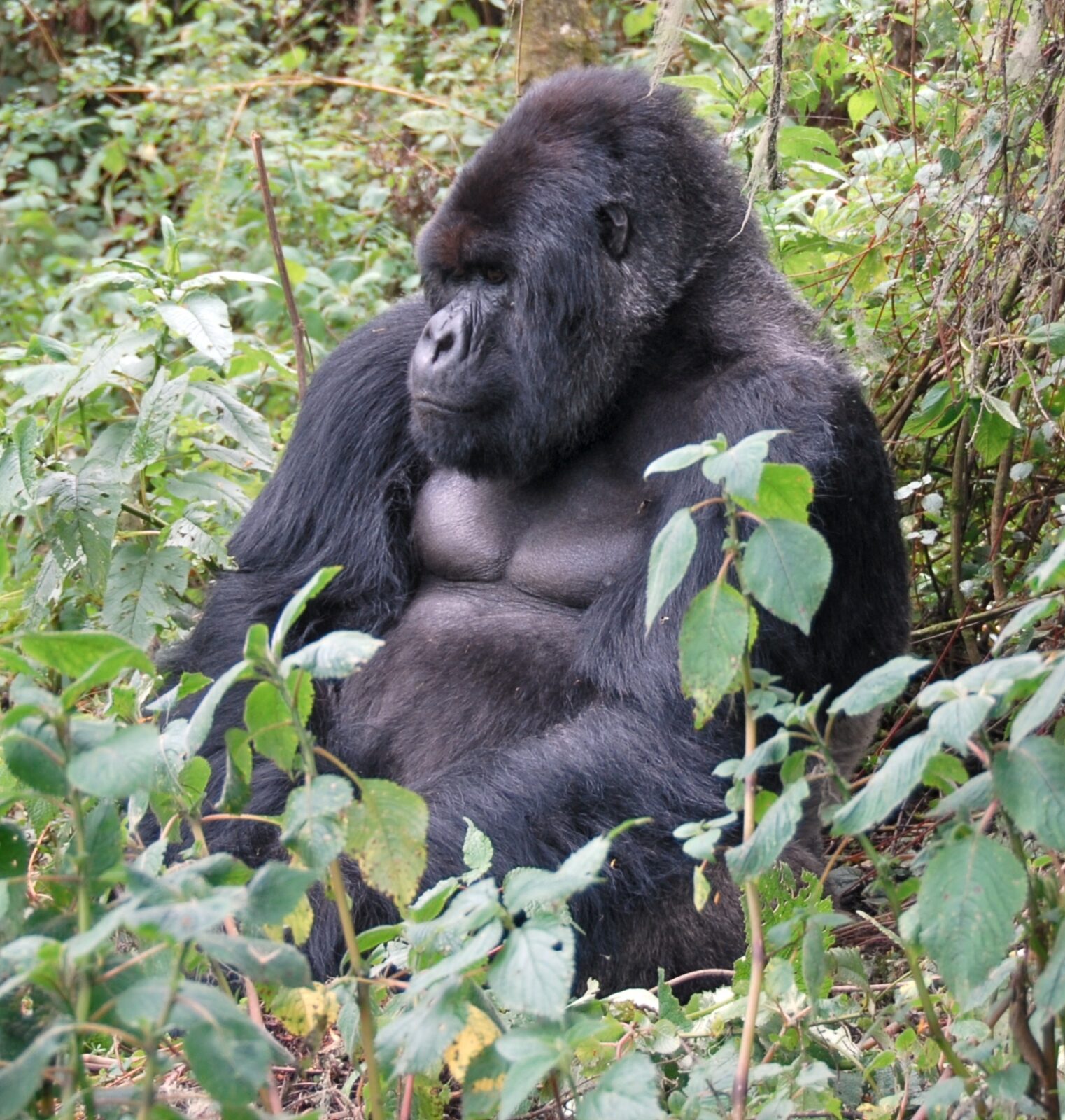
Every gorilla trekker who has done this long enough carries a version of the same story: a single moment, usually unplanned, when a wild gorilla looks directly at them and something about the encounter shifts from spectacle into something harder to name. This is one trekker’s account of that moment, and the hour of forest that led up to it, told the way it’s usually told afterward, over dinner, to anyone who’ll listen.
The Hike In Wasn’t What I Expected
I’d read enough beforehand to know the trek would be demanding, but there’s a gap between reading a description and feeling your calf muscles genuinely burn on a slope that seems to keep steepening no matter how far you’ve already climbed. Our group of eight had started confident and chatty at the trailhead; by the second hour, conversation had mostly given way to focused breathing and the occasional muttered complaint about the mud, which had a way of finding its way into boots that had been carefully waterproofed the night before.
Three hours into the trek, boots soaked through from a trail that had turned to thick red mud somewhere around the second hour, I remember thinking the whole thing had been oversold. My legs ached, my rain jacket had failed somewhere around the last stream crossing, and the guide’s cheerful “not far now” had already been said twice before with no visible change in the terrain ahead. This is, I’ve since learned, an almost universal part of the experience – the doubt that creeps in right before the payoff arrives.
Then the Trackers Signalled
Looking back, I think part of why the shift felt so abrupt was how completely it interrupted the rhythm of complaint and endurance the hike had settled into. One moment we were a tired group of strangers focused entirely on our own aching legs; the next, everyone’s attention snapped outward, entirely and immediately, toward something none of us could quite see yet but could sense was close.
The shift happened fast. One of the trackers ahead raised a hand, and the whole rhythm of the group changed instantly – voices dropped to near silence, bags were set down, cameras came out with quiet, deliberate movements rather than the fumbling rush I’d half expected of myself. We were told to stay close together and follow exactly where the ranger walked. Through a gap in the vegetation, dark shapes started resolving into individual animals: a mother with an infant clinging to her back, two juveniles tumbling over each other a short distance away, and further back, unmistakably larger, the silverback.
The First Few Minutes Were Almost Too Much to Process
There’s a particular kind of sensory overload that comes from finally arriving somewhere you’ve spent months anticipating, and it took a genuine effort to actually settle into the moment rather than simply photographing it on autopilot. I remember consciously making myself lower the camera at one point, just to watch with my own eyes for a minute rather than through a screen, a decision I’m still glad I made even though it cost me a few photographs I sometimes wish I had.
I’d read the guides beforehand. I knew roughly what to expect – the described behaviours, the recommended distance, the instruction not to make direct prolonged eye contact with a gorilla you didn’t already have a calm, settled interaction with. None of that reading fully prepared me for how large the silverback actually was up close, or how startlingly human some of his movements were – the way he scratched, the way he seemed to glance around checking on his family with something that looked, unmistakably, like attentiveness.
The Moment Itself
It happened maybe twenty minutes in, once the initial adrenaline had settled into something closer to quiet absorption. One of the juveniles had wandered a little closer than usual, playing at the edge of the group, and I’d been watching him rather than the rest of the family. When I looked up, the silverback was watching me. Not glancing, not a passing sweep of the group – a settled, direct look that lasted maybe two or three seconds before he looked away again, entirely unbothered, and went back to feeding.
Our guide had briefed us clearly beforehand: don’t hold direct eye contact, since in gorilla body language a sustained stare can read as a challenge rather than simple curiosity. I broke contact quickly, the way I’d been told to, looking down and slightly away. But those two or three seconds stayed with me in a way that’s hard to fully explain to someone who hasn’t had a similar moment. There was nothing aggressive in it, nothing tense. It felt, more than anything, like being genuinely seen by something that was choosing, deliberately, to look back.
Why That Specific Moment Sticks
I’ve since talked to other trekkers who describe something similar – not always eye contact specifically, but always some small, unscripted moment that ends up outweighing the bigger, more obviously dramatic parts of the day in memory. One woman I met at the lodge that evening described a mother gorilla glancing toward her group with what she swore, entirely seriously, looked like simple curiosity rather than wariness. Another trekker mentioned the specific way a juvenile had briefly mimicked one of the group’s movements, as if testing out an idea about what these strange, upright visitors were doing in his forest. None of these moments were the ones any of us had been told to expect going in.
I’ve thought about why that one look, out of an entire hour of remarkable things happening around me, is the detail I keep returning to. Part of it, I think, is the specificity – photographs and documentary footage can capture the visual spectacle of a gorilla family perfectly well, but they can’t replicate the particular, individual sensation of a wild animal choosing, even briefly, to acknowledge you as something worth looking at. It’s a small thing, technically. It didn’t change the structure of the encounter or extend our time with the family. But it’s the moment that made the whole trip feel, in hindsight, less like tourism and more like an actual meeting.
The Walk Back Felt Different Than the Walk In
Physically, the return hike was identical to the outbound one – same mud, same distance, same tired legs that had already logged hours of difficult terrain that morning. But it didn’t feel the same at all. Where the walk in had been an exercise in doubt and physical discomfort, the walk out felt almost weightless by comparison, filled with the kind of quiet, slightly stunned conversation that happens after everyone in a group has independently experienced something they’re each still trying to fully process. Nobody talked much about the hour itself in detail right away. It took most of us until dinner that evening to start properly comparing notes.
What I’d Tell Someone Before Their First Trek
Prepare for the physical demands, absolutely – the mud, the altitude, the hours of walking are all real and worth being honestly ready for. But leave some room, mentally, for the possibility that the moment that stays with you afterward won’t be the one you expected going in. I’d planned to be impressed by the scale of the silverback, or the tenderness of the mother with her infant. I hadn’t planned on being undone, quietly, by a single unhurried look that lasted less time than it takes to read this sentence.
Frequently Asked Questions
Was this trip during peak or shoulder season?
Details like this vary trekker to trekker and don’t change the core pattern described here – the specific unplanned moment that ends up mattering most tends to happen regardless of season, sector, or which specific family a group is trekking to that day.
Is it common for gorillas to make direct eye contact with trekkers?
It happens, though not to every trekker on every trek. Gorillas are naturally curious animals, and brief, calm eye contact during a settled encounter is different from a sustained stare, which is worth avoiding for the reasons explained by your ranger before you set off.
Should I try to make eye contact with a gorilla during my trek?
Not deliberately. Follow your ranger’s guidance throughout – brief, natural glances are normal, but deliberately holding a gorilla’s gaze can be read as a challenge rather than simple interest, which isn’t the impression you want to give during what should be a calm, respectful encounter.
Do most trekkers come away with a similarly specific memory?
Almost universally, yes, though the specific detail varies – some remember a sound, others a particular gesture or interaction between family members. The pattern of one small, unplanned moment outweighing the broader spectacle is remarkably consistent across trekker accounts, regardless of which park, sector, or family they happened to encounter.
If a story like this has you thinking seriously about your own first trek, this beginner’s guide is the right place to start planning, and this guide to gorilla etiquette covers the behavioural details, including eye contact, in more depth before you go.