
10-Day Uganda and Rwanda Combined Safari Itinerary
Uganda and Rwanda sit close enough together, and complement each other closely enough in what they offer, that combining both into a single trip has become one of the most popular ways to experience East Africa’s gorilla trekking region properly. Ten days provides enough time to cover both countries’ headline experiences without the rushed, exhausting pace that shorter combined itineraries often demand, striking a genuine balance between depth and breadth across two of the continent’s most rewarding safari destinations.
Why Combine These Two Countries
Uganda and Rwanda both offer mountain gorilla trekking, but the experience and surrounding landscape differ enough between Bwindi Impenetrable Forest and Volcanoes National Park that visiting both, rather than choosing one, genuinely adds value rather than simply repeating the same activity twice. Uganda contributes broader savannah wildlife viewing and chimpanzee tracking alongside its gorilla trekking, while Rwanda offers a more compact, efficiently organised circuit, along with Kigali, widely regarded as one of Africa’s cleanest and most orderly capital cities. Together, the two countries deliver a genuinely complete picture of what this region of East Africa has to offer.
Days One and Two: Arrival and Queen Elizabeth National Park
Most itineraries begin with arrival at Entebbe International Airport, followed by a transfer toward western Uganda and Queen Elizabeth National Park, one of the country’s most productive savannah destinations. A game drive here typically delivers sightings of elephant, buffalo, lion, and a wide range of plains game, while a boat cruise along the Kazinga Channel adds hippos, crocodiles, and exceptional birdlife to the day’s wildlife tally, all within a landscape considerably different from the forest terrain awaiting later in the trip.
Day Three: Chimpanzee Tracking in Kibale Forest
Continuing north to Kibale Forest National Park, home to one of the highest primate densities anywhere in Africa, day three centres on chimpanzee tracking, a genuinely thrilling encounter with Uganda’s other headline primate experience. Kibale’s forest also supports several monkey species and rich birdlife, rounding out a day that offers a meaningful preview of the forest trekking experience that gorilla trekking will deliver later in the itinerary, at a lower physical intensity and without the permit costs associated with gorilla permits specifically.
Days Four and Five: Bwindi Impenetrable Forest and Gorilla Trekking
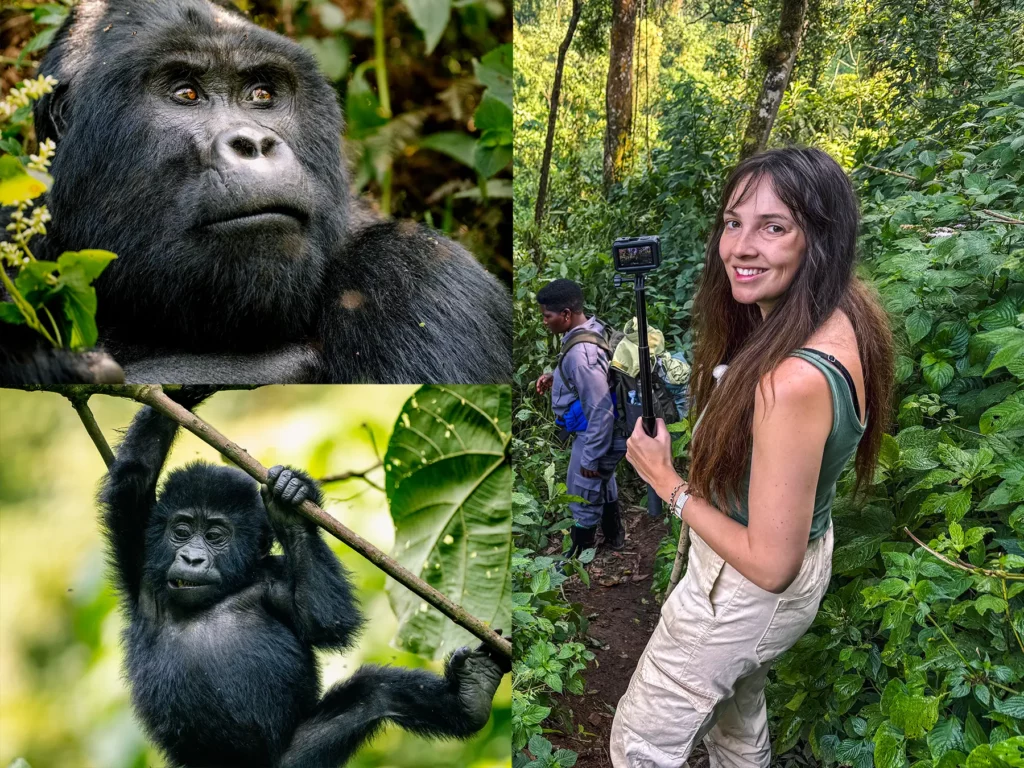
The journey south to Bwindi Impenetrable Forest, Uganda’s premier gorilla trekking destination, typically takes most of day four, allowing arrival with enough daylight to settle in before an early start the following morning. Day five delivers the itinerary’s first major highlight, gorilla trekking itself, a demanding but extraordinary hike through dense forest terrain culminating in an hour spent in close proximity to a habituated mountain gorilla family, an experience most travellers describe as the single most memorable part of their entire trip.
Day Six: Crossing Into Rwanda
From Bwindi, the itinerary crosses the border into Rwanda, typically routing toward Musanze and Volcanoes National Park, the gateway to Rwanda’s own gorilla trekking programme. This border crossing day, while primarily a travel day, offers a chance to observe the landscape shift gradually from Uganda’s terrain into Rwanda’s distinctively terraced, densely cultivated hillsides, a visual introduction to the country before its own activities begin the following day.
Day Seven: A Second Gorilla Trek or Golden Monkeys
With a second gorilla trekking permit, travellers can choose to repeat the experience within Volcanoes National Park itself, observing a different gorilla family in Rwanda’s own section of the Virunga massif. Travellers who prefer variety over repetition often opt instead for golden monkey trekking, a lighter, less physically demanding primate encounter offering close views of one of the region’s most visually striking and playful primate species, set against the same dramatic volcanic backdrop.
Day Eight: Lake Kivu or a Volcano Hike
The itinerary’s flexible eighth day can be shaped around individual traveller preferences. Adventure-focused travellers might tackle the Mount Bisoke crater lake hike, a demanding but genuinely rewarding single-day trek to a volcanic summit lake. Travellers prioritising relaxation after several demanding days of trekking often prefer a transfer to Rubavu on Lake Kivu instead, trading forest terrain for sandy beaches and calm, swimmable water, a welcome physical and mental reset before the trip’s final stretch.
Day Nine: Kigali
The return journey to Kigali allows time for the capital’s most essential stop, the Kigali Genocide Memorial, offering crucial historical context for understanding modern Rwanda’s remarkable recovery and development since 1994. The remainder of the day can be spent exploring Kigali’s markets, restaurants, and increasingly notable art and craft scene, a fitting, reflective close to the trip’s more demanding wildlife and trekking activities.
Day Ten: Departure
The final day is typically reserved for departure from Kigali International Airport, timed around outbound flight schedules, bringing a ten-day journey spanning two countries, four distinct landscapes, and two separate gorilla trekking experiences to a close.
Booking Considerations
Given how central gorilla trekking is to this itinerary, both Uganda and Rwanda permits should be secured well in advance, ideally several months ahead of travel given how limited daily availability is in both countries. Cross-border logistics between Uganda and Rwanda are generally straightforward for travellers with the appropriate visas arranged beforehand, and most operators handle this transition as a standard part of a combined itinerary rather than a complex additional undertaking.
A Genuinely Complete East African Gorilla Trekking Experience
For travellers with the time to commit a full ten days, this Uganda and Rwanda combination delivers one of the most complete and well-rounded safari experiences available anywhere in East Africa, savannah wildlife, chimpanzee tracking, two separate gorilla trekking encounters, volcanic scenery, and a capital city visit that adds essential historical depth to the whole trip. Structured around a proven 10-day Uganda and Rwanda itinerary, this remains one of the most consistently recommended ways to experience both countries’ very best in a single, well-paced journey.
Packing for Two Distinct Climates
This itinerary moves between Uganda’s warmer savannah lowlands and the considerably cooler, wetter conditions found at altitude in both Bwindi and Volcanoes National Park, and packing should account for this range rather than assuming a single climate throughout the trip. Layered clothing works best, allowing quick adjustment between warm daytime game drive conditions and the genuinely cold, damp mornings typical of forest trekking at higher elevation. Waterproof outer layers are essential for both gorilla trekking days regardless of season, given how frequently misty or wet conditions factor into forest terrain at this altitude, and sturdy, broken-in hiking boots matter considerably more here than for a standard savannah-only safari itinerary.
Physical Preparation for This Itinerary
With two separate primate trekking days, a chimpanzee tracking excursion, and the option of a demanding volcano hike, this itinerary carries a genuinely more active physical profile than a purely vehicle-based savannah safari. Travellers benefit from arriving with reasonable general fitness, built through regular walking or hiking in the weeks before departure, particularly given how variable gorilla trekking difficulty can be depending on where a specific gorilla family happens to be located on any given day. Trekking poles, while not essential, are worth considering for travellers concerned about the steep, occasionally muddy terrain encountered across both countries’ forest trekking days.
Budgeting for the Full Ten Days
Gorilla trekking permits in both Uganda and Rwanda represent the largest single cost within this itinerary, and Rwanda’s permits in particular carry a significantly higher price point than Uganda’s, a detail worth factoring into overall trip budgeting from the outset. Beyond permits, accommodation across this itinerary can span a wide range of standards, from comfortable mid-range lodges to considerably more luxurious options at both Bwindi and Volcanoes National Park, giving travellers meaningful flexibility to shape overall trip cost according to preference and budget without compromising on the itinerary’s core activities.
Alternative Structures for This Route
Travellers with slightly more or less time available can adjust this core ten-day framework without losing its essential character. Compressing the itinerary to eight or nine days generally means dropping either the Kibale chimpanzee tracking day or the flexible eighth day at Lake Kivu or Bisoke, while travellers with an additional two or three days can extend into Rwanda’s Akagera National Park for Big Five savannah viewing, effectively combining three distinct wildlife experiences, Ugandan savannah, chimpanzee and gorilla trekking across both countries, and Rwandan savannah, within a single, longer trip.
Choosing the Right Season
Both Uganda and Rwanda can be visited for gorilla trekking throughout the year, since permits are issued regardless of season and gorilla families remain trackable in both wet and dry conditions. That said, the drier months, broadly June through September and December through February, generally offer more comfortable trekking conditions and easier road travel between destinations, making these windows the most popular and, consequently, the periods requiring the most advance permit booking to secure availability for a fixed travel date.
Working With an Experienced Operator
Given the cross-border logistics, permit coordination across two separate national gorilla trekking authorities, and the sheer number of moving pieces involved in a well-paced ten-day itinerary, most travellers find genuine value in working with an operator experienced specifically in combined Uganda and Rwanda trips, rather than attempting to coordinate each leg independently. This kind of specialised experience typically translates into smoother transitions between destinations, better-timed permit bookings, and a itinerary genuinely optimised for pacing rather than simply chained together from separate single-country packages.