
Okapi Wildlife Reserve: Tracking Africa’s Most Mysterious Animal
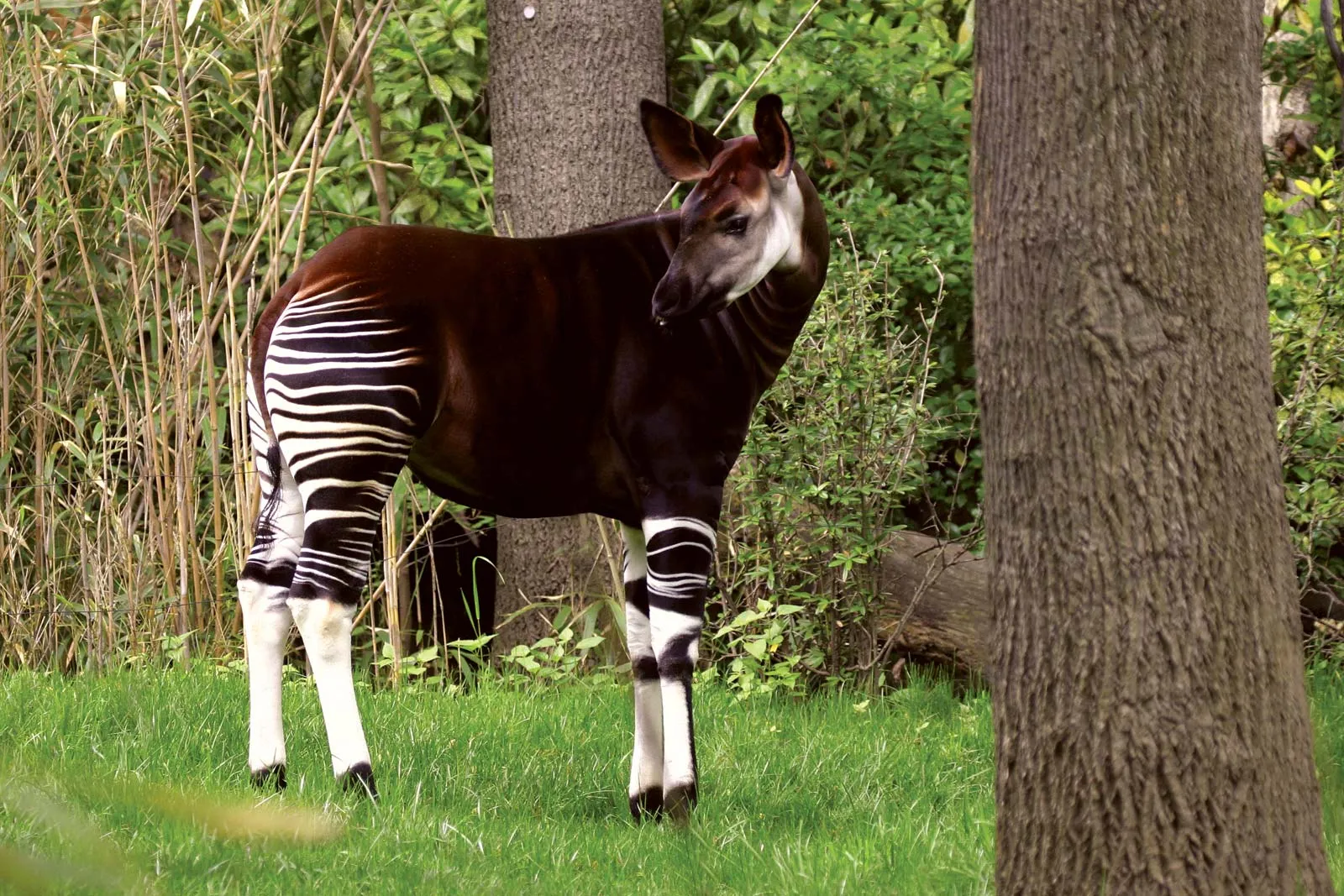
For centuries, European explorers in Central Africa returned with rumours of a striped, horse-like creature glimpsed in the depths of the Ituri Forest, dismissed by many as local myth until the species was finally confirmed by Western science in the early twentieth century. The okapi remains, even now, one of Africa’s most rarely seen large mammals, and the reserve established specifically to protect it, the Okapi Wildlife Reserve in the northeastern Democratic Republic of Congo, stands as both a conservation triumph and a sobering illustration of how fragile that protection can be.
An Animal That Defies Easy Categorisation
At first glance, the okapi seems to combine parts of several entirely different animals, the zebra-striped hindquarters, the velvety dark coat, and the long neck and giraffe-like head that give away its true taxonomic identity. The okapi is, in fact, the closest living relative of the giraffe, sharing the same distinctive elongated tongue used for stripping leaves from branches, despite looking, at a casual glance, considerably more like a forest-dwelling antelope or a peculiar hybrid of several unrelated species. This visual strangeness is part of what made the okapi such an object of fascination once its existence was finally confirmed, a genuinely bizarre-looking animal that had somehow evaded formal scientific documentation well into the modern era.
The Reserve Protecting It
Covering roughly 13,726 square kilometres, close to a fifth of the entire Ituri Forest, the Okapi Wildlife Reserve was established in 1992 and inscribed as a UNESCO World Heritage Site in 1996, recognition of both its remarkable biodiversity and its role as the single most significant protected stronghold for the okapi anywhere in the world. The reserve is estimated to hold around five thousand of the roughly thirty thousand okapi believed to survive in the wild, making it home to a genuinely significant proportion of the species’ entire remaining population within a single protected area.
Beyond the okapi itself, the reserve supports an impressive breadth of biodiversity, with over one hundred recorded mammal species and close to four hundred documented bird species, alongside dramatic natural scenery including waterfalls along the Ituri and Epulu rivers that cut through the dense forest terrain.
The Mbuti and Efe Communities
The Ituri Forest is also home to Mbuti and Efe pygmy communities, traditionally nomadic hunter-gatherer peoples with a deep, generations-old relationship to this specific forest ecosystem. Their rich musical and cultural heritage, including songs and dances rooted in their connection to the surrounding forest, represents a living cultural dimension to the reserve that exists alongside its purely biological significance, a reminder that the Ituri Forest’s story encompasses human history as well as wildlife conservation.
A World Heritage Site in Danger
Despite its ecological importance, the Okapi Wildlife Reserve has spent years on UNESCO’s List of World Heritage in Danger, a designation reflecting the genuine threats the reserve has faced from armed conflict, poaching, and instability affecting this region of the DRC. The most severe single incident came in June 2012, when an armed militia group attacked the reserve’s headquarters near the village of Epulu, killing several people including park rangers, destroying critical infrastructure, and killing all fourteen okapi held at the facility’s breeding and research station. The attack sent shock waves through the international conservation community and stands as a stark illustration of just how dangerous conservation work in this part of the DRC can be.
An Honest Picture for Prospective Visitors
Given this history, the Okapi Wildlife Reserve is not a destination that fits neatly into a conventional Central African safari itinerary. Tourism infrastructure remains limited, security conditions in this part of the DRC require careful, current assessment before any trip is considered, and travellers interested in visiting should work exclusively with specialist operators maintaining direct, up-to-date relationships with the reserve’s management and current security situation on the ground, rather than assuming access based on the reserve’s UNESCO status or general information found online.
Why the Reserve Still Matters
Despite the very real challenges facing it, the Okapi Wildlife Reserve continues to function as the single most important protected area for a species that remains, even a century after its formal scientific discovery, genuinely difficult to observe in the wild. Conservation organisations working in partnership with the DRC’s protected areas authority continue efforts to protect the reserve’s okapi population, its broader biodiversity, and the Mbuti and Efe communities whose lives remain closely tied to this same forest, work that continues largely out of view of the wider world despite its genuine significance.
The Okapi’s Continued Mystery
Even within a well-studied reserve, the okapi retains much of the elusive character that kept it hidden from Western science for so long. Solitary, deeply shy, and adapted to moving quietly through dense forest cover, okapi are rarely observed by casual visitors even within areas where their presence is well documented, and most confirmed sightings come through the patient, specialised work of researchers and trackers rather than passing encounters. This enduring elusiveness is, in its own way, part of what continues to draw scientific and conservation attention to the species, an animal that remains genuinely difficult to study closely even now, decades after it was first properly identified.
A Conservation Story Worth Understanding
For travellers unable to visit the reserve directly, given the genuine security and logistical realities involved, the Okapi Wildlife Reserve’s story remains worth understanding as part of a broader picture of conservation across Central Africa, a reminder of both the remarkable biodiversity this region holds and the genuine human cost that protecting it can carry in areas affected by conflict and instability. The okapi’s continued survival, in numbers still meaningful enough to matter, stands as a quiet testament to the conservationists and rangers who have continued this work despite the very real dangers involved.
How the Okapi Was Finally Confirmed
The formal scientific confirmation of the okapi came in 1901, following years of speculation among European explorers and naturalists who had heard local accounts and glimpsed partial evidence, hooves, skin fragments, and secondhand descriptions, without ever securing conclusive proof of a living animal. British colonial administrator Harry Johnston, working with information and specimens gathered with the help of Mbuti guides deeply familiar with the forest, finally supplied the evidence needed to formally describe the species, and the okapi’s scientific name, Okapia johnstoni, still honours his role in that confirmation. This relatively late formal discovery, at a time when most of the world’s large mammals had already been catalogued by Western science, cemented the okapi’s reputation as one of the last major zoological discoveries of its kind.
Okapi Biology and Behaviour
Okapi are solitary browsers, feeding on leaves, buds, and fruit gathered using a long, dexterous tongue capable of reaching high branches and even cleaning their own eyes and ears, a trait shared with their giraffe relatives. Unlike giraffes, however, okapi have adapted specifically to dense, closed-canopy forest rather than open savannah, a habitat difference that explains much of their physical divergence from their more famous long-necked cousins despite the close evolutionary relationship. Their striped hindquarters are thought to serve as camouflage in the dappled, shifting light of the forest floor, breaking up their outline and helping young okapi in particular stay close to and visually track their mothers while moving through dense vegetation.
Captive Breeding and Global Conservation Networks
Beyond the wild population protected within the reserve itself, okapi are held in a number of zoos and conservation breeding programmes around the world, forming part of a broader international effort to maintain genetic diversity and public awareness of the species outside its native range. These captive populations, coordinated through international conservation breeding programmes, serve both an educational function, introducing millions of zoo visitors globally to a species most will never have the opportunity to see in the wild, and a genuine conservation safety net function, maintaining a managed population base separate from the wild reserve population facing ongoing threats in the DRC.
The Broader Ituri Forest Ecosystem
The Okapi Wildlife Reserve sits within the wider Ituri Forest, one of the significant remaining blocks of intact Congo Basin rainforest, itself part of the second-largest contiguous rainforest system on Earth after the Amazon. This broader ecological context matters, the reserve does not function in isolation but as part of a much larger forest system whose overall health depends on coordinated conservation efforts extending well beyond the reserve’s own boundaries, involving multiple protected areas, government agencies, and international conservation partners working across a landscape far larger than any single reserve could meaningfully protect alone.
Supporting Okapi Conservation From Afar
For the many travellers unable to visit the reserve directly given current security realities, supporting established conservation organisations working directly with the Okapi Wildlife Reserve and the broader Ituri Forest ecosystem offers a meaningful way to contribute to the species’ continued survival without requiring travel to the region itself. These organisations fund ranger salaries, anti-poaching operations, community engagement programmes with the Mbuti and Efe, and the ongoing research needed to understand and protect the reserve’s okapi population over the long term, work that continues regardless of how few outside visitors are able to witness it firsthand. Travellers drawn to the DRC’s remarkable wildlife more broadly can find more accessible entry points into the country’s conservation landscape through destinations such as Virunga National Park, while carrying an appreciation for the okapi and its story into that wider Congo Basin experience.