
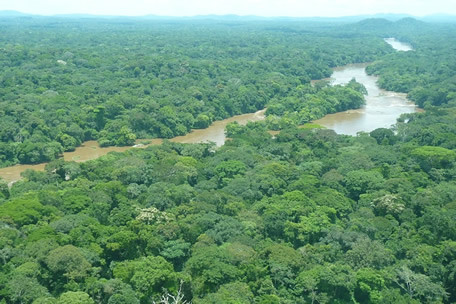
Maiko National Park: The DRC’s Most Remote Wildlife Refuge
Deep within the Democratic Republic of Congo’s eastern rainforest, far from any established travel route, sits a national park that few travellers, even seasoned Central African safari veterans, will ever set foot in. Maiko National Park holds a distinction genuinely unmatched anywhere else in the country, it is the only protected area in the DRC home to all three of the nation’s most significant endemic species simultaneously, and yet it remains almost entirely absent from mainstream tourism itineraries, a park defined every bit as much by its scientific and conservation significance as by its genuinely near-total inaccessibility.
A Park Built Around Three Endemic Species
Maiko’s ecological importance rests on a genuinely rare and remarkable combination of species found together nowhere else. The park currently shelters an estimated eight hundred Grauer’s gorillas, also known as eastern lowland gorillas, one of the largest remaining populations of this critically endangered subspecies found anywhere in its range. Alongside the gorillas, Maiko protects okapi, the elusive, striped-legged relative of the giraffe that remains one of Africa’s most rarely photographed large mammals, and the Congo peafowl, a strikingly coloured bird found nowhere else on Earth and among the more recent large bird species to be formally described by Western science. No other national park anywhere within the DRC brings all three of these remarkable species together within a single protected boundary, a fact that gives Maiko outsized conservation significance despite its near-total absence from typical travel itineraries.
Beyond the Headline Species
Maiko’s dense rainforest also supports African forest elephants, eastern chimpanzees, leopards, and the endemic aquatic genet, a small, semi-aquatic carnivore found in a limited range within this specific region of the Congo Basin. This breadth of wildlife reflects the park’s position within one of the most biologically intact stretches of Central African rainforest remaining anywhere on the continent, largely a consequence of the very inaccessibility that has kept large-scale human development and extraction industries at bay.
Why So Few Travellers Ever Visit
Maiko’s remoteness is not a marketing exaggeration, it is a genuine, defining characteristic of the park. Access typically requires four-wheel-drive vehicles navigating a single rough track connecting the town of Bafwasende to a handful of small villages within or near the park boundary, a route that becomes considerably more difficult during the rainy season. There is no tourist accommodation inside the park itself, and visitors intent on spending time within its boundaries must arrive fully self-sufficient, camping equipment, food supplies, and a realistic understanding that this is not a destination set up for casual or spontaneous visitation in any sense.
An Honest Assessment for Prospective Visitors
It would be misleading to present Maiko as a straightforward addition to a Congo itinerary in the way Virunga National Park or even Kahuzi-Biega might be. This is genuinely one of the most unexplored, least visited protected areas found anywhere across the African continent today, and travellers considering a visit should approach it with the seriousness and preparation of a genuine expedition rather than a standard wildlife safari. Specialised operators with direct experience organising trips into this specific region are essential, both for logistics and for navigating the security and access considerations that come with travelling through this part of eastern DRC.
Who Maiko Actually Appeals To
Given these realities, Maiko is not a destination for first-time visitors to Central Africa, nor for travellers working within a standard two or three week safari itinerary. It appeals almost exclusively to a genuinely narrow category of dedicated adventure travellers, researchers, conservationists, and specialist wildlife photographers with both the time and the risk tolerance to undertake a genuinely demanding, logistically complex expedition into one of the least-touched wilderness areas remaining on the continent. For this specific audience, Maiko offers something increasingly rare anywhere in Africa, a landscape and wildlife community still operating largely outside the influence of organised tourism.
Conservation Challenges Facing the Park
Maiko’s remoteness, while a significant barrier to tourism, has not fully insulated it from the broader pressures facing protected areas across the DRC’s eastern regions, including illegal mining, poaching, and the periodic instability that has affected large parts of this area over recent decades. Conservation organisations working within and around Maiko face genuinely difficult operating conditions, and the park’s continued protection depends heavily on international support and partnership given the DRC government’s own limited resources for managing such a remote and challenging protected area.
Best Time to Consider a Visit
For the small number of travellers and researchers who do make the journey, the drier months roughly spanning June through August generally offer somewhat more manageable road conditions along the park’s single access route, reducing though by no means eliminating the logistical difficulty of reaching the park’s interior. Even during these more favourable months, any trip to Maiko should be planned as a significant undertaking requiring specialist logistical support rather than a standard booking arranged through conventional tourism channels.
A Reminder of What True Wilderness Still Looks Like
In an era when even Africa’s most celebrated wildlife destinations increasingly grapple with the pressures of mass tourism, Maiko National Park stands as a genuine reminder of what largely undisturbed Central African rainforest still looks like, home to gorillas, okapi, and a bird found nowhere else on Earth, protected as much by its own remoteness as by any formal conservation infrastructure. For the rare traveller equipped and prepared to reach it, Maiko offers an encounter with the Congo Basin’s wilderness in something close to its rawest, least mediated form.
The Okapi: A Species Discovered Late
The okapi’s story adds a particular layer of intrigue to Maiko’s significance. Formally described by Western science only in the early twentieth century, remarkably late for a large mammal, the okapi remained something close to a cryptid rumour among European explorers for years before its existence was properly confirmed. Its distinctive striped hindquarters, unmistakable giraffe-like features, and deeply reclusive, solitary behaviour in dense forest cover make it one of the most rarely photographed large mammals anywhere in Africa even today, and Maiko’s population represents one of the more significant strongholds for the species within its already limited and fragmented Congo Basin range.
The Congo Peafowl’s Unusual Discovery
The Congo peafowl carries its own remarkable backstory, first identified by ornithologists not through a live sighting in the wild but through a single feather noticed in a museum collection, initially misattributed entirely before its true significance as a wholly undescribed species was finally recognised. This unusual path to formal discovery, decades after most of the world’s larger bird species had already been catalogued, reflects just how poorly explored this particular stretch of Central African rainforest has historically been, a pattern that continues to shape how little is still known about Maiko’s full biodiversity even today.
Grauer’s Gorilla Conservation Status
Grauer’s gorillas, the subspecies protected within Maiko, have experienced a severe population decline over recent decades, driven by a combination of habitat loss, poaching, and the broader instability that has affected large parts of eastern DRC. Current population estimates place the subspecies among the most critically endangered great apes anywhere in the world, making Maiko’s estimated population of roughly eight hundred individuals a genuinely significant proportion of what remains of this particular subspecies globally. This context transforms Maiko from simply a remote, hard-to-reach park into one of the more consequential strongholds for a great ape subspecies whose long-term survival remains genuinely uncertain.
Research and Scientific Access
Given the practical barriers facing conventional tourism, most outside engagement with Maiko today comes through conservation and research organisations rather than travel operators, with scientific expeditions and conservation partnerships representing the primary way information about the park’s wildlife populations and ecological health continues to be gathered. Travellers with genuine research interests or professional conservation connections occasionally find pathways into the park through these organisations that would be considerably more difficult to arrange independently through standard commercial channels.
Weighing Whether Maiko Fits Your Trip
For the overwhelming majority of travellers planning a Central African safari, more accessible destinations such as Virunga National Park, with its established gorilla trekking infrastructure and Nyiragongo volcano trek, or Kahuzi-Biega National Park, offer a considerably more practical way to encounter the region’s remarkable primate diversity without the extreme logistical demands Maiko requires. Maiko remains, for now, a destination defined more by what it represents ecologically than by what it offers as a bookable travel experience, a genuine wilderness stronghold whose value lies primarily in conservation rather than conventional tourism.
That said, awareness of Maiko still matters even for travellers who will never set foot there. Understanding that a park like this exists, protecting an irreplaceable combination of species found nowhere else on the planet, adds genuine context to a broader Central African trip, a reminder of just how much biodiversity the region holds beyond the handful of destinations currently equipped to welcome visitors, and how much conservation work continues quietly, often thanklessly, in places most travellers will simply never have the chance to see for themselves.