
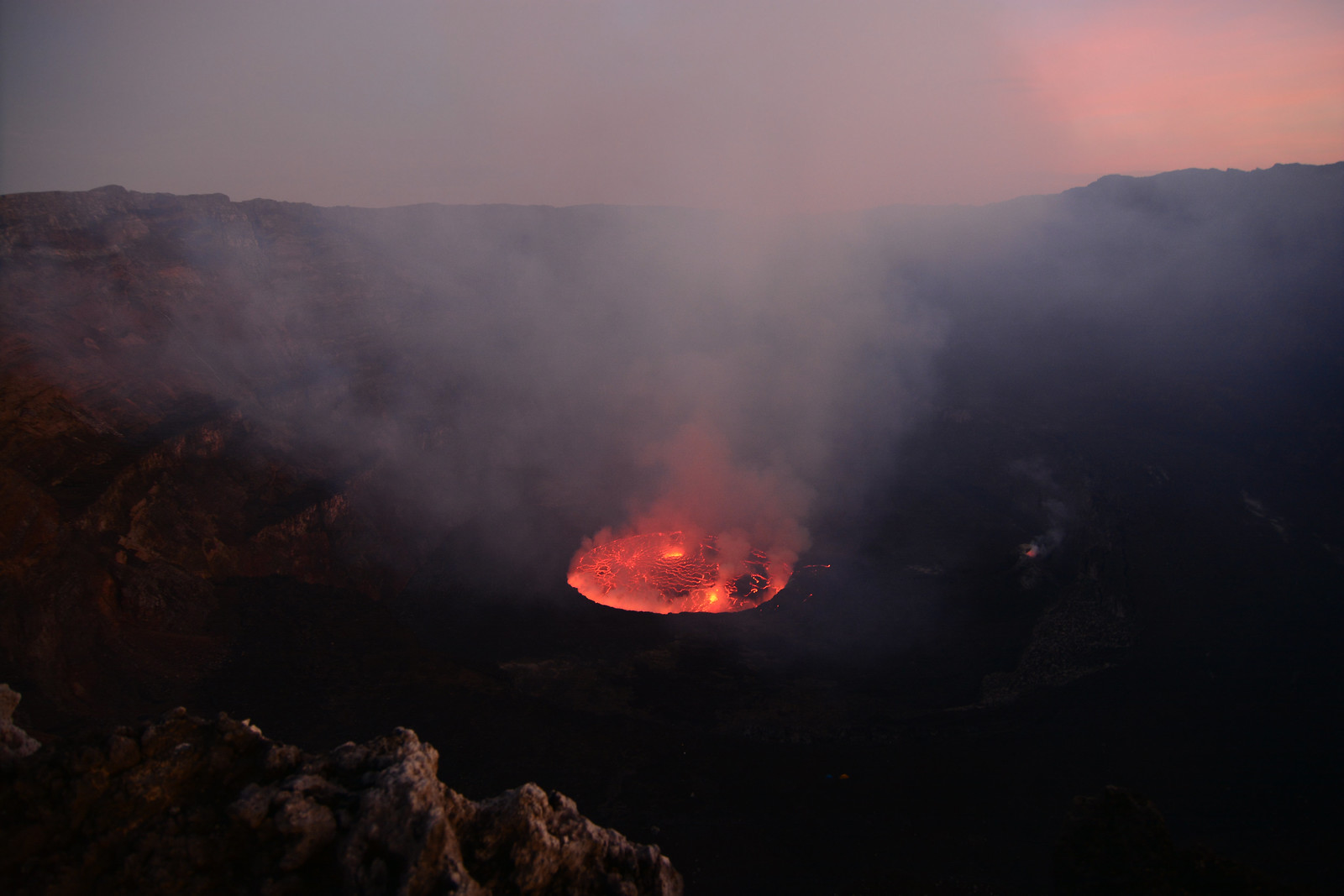
Nyiragongo Volcano: Hiking to the World’s Largest Lava Lake
Few hikes anywhere on Earth deliver a payoff quite like the summit of Mount Nyiragongo, where a trek through Virunga National Park’s forested lower slopes culminates in a direct view down into a churning, glowing lake of molten lava, the largest of its kind found anywhere in the world. This is one of the most genuinely extraordinary natural spectacles available to travellers, and for those with the right permits, fitness, and appetite for a genuinely wild corner of the Democratic Republic of Congo, it ranks among the most memorable single experiences available anywhere on the continent.
What Makes Nyiragongo’s Lava Lake So Remarkable
Nyiragongo’s crater holds a persistent, actively churning lava lake, a rare geological phenomenon found in only a small handful of volcanoes worldwide, and by most measures the largest such lake anywhere on the planet. Unlike volcanoes that erupt only periodically, Nyiragongo’s crater maintains this constantly moving pool of molten rock, visible glowing and shifting from the crater rim, particularly dramatic after dark when the surrounding darkness throws the lake’s fiery orange glow into sharp relief against the night sky.
The Trek Itself
The hike begins at Kibati Ranger Post, at an altitude of roughly 1,870 metres, and climbs steadily to the crater rim at 3,470 metres, covering approximately 6.5 kilometres each way through a landscape that shifts from forest into increasingly bare volcanic terrain as elevation increases. The ascent is broken into five distinct sections, with short breaks built in at each stage, and typically takes between four and six hours depending on group pace, fitness, and weather conditions on the day.
Most groups begin climbing around mid-morning, timed to reach the summit in the late afternoon, allowing time to settle into the overnight camp on the crater rim before darkness falls and the lava lake’s glow becomes most dramatic. The following morning, after a night spent camped within sight of one of the planet’s most active volcanic features, the descent back to Kibati takes roughly four hours.
Spending the Night on the Rim
The overnight stay is, for most hikers, the genuine centrepiece of the entire experience. Basic camping huts positioned along the crater rim allow visitors to sleep within metres of the lava lake itself, and stepping outside after dark to look down into the glowing crater ranks among the most surreal and unforgettable moments available on any trek in East or Central Africa. Some operators now offer an extended option allowing two nights on the crater rim rather than the standard single night, giving photographers and those simply wanting more time with the spectacle a longer window to experience it across different lighting and atmospheric conditions.
Permits and Costs
Access to Nyiragongo is managed through a permit system administered by the Virunga Foundation, with permits costing around three hundred US dollars per person per hike, a fee that supports the park’s broader conservation and security operations. Permits should be arranged well in advance of a planned climb, both to guarantee availability and to allow time for the logistical arrangements, porters, camping equipment, and ranger escorts, that a Nyiragongo expedition requires.
Fitness and Preparation
While shorter in overall duration than some of the region’s multi-day volcano treks, Nyiragongo’s climb should not be underestimated. The steady, sustained elevation gain over a relatively short distance makes for a genuinely demanding ascent, and hikers arriving without reasonable prior fitness often find the final stretches considerably more taxing than the earlier sections of the climb. Warm layered clothing is essential for the overnight stay, given how dramatically temperatures drop at altitude after dark, a stark contrast to the tropical warmth typical of the DRC’s lower elevations.
Rangers, Porters, and Support
Every Nyiragongo expedition is accompanied by armed park rangers, both as a security precaution given the park’s location in a region with a complex security history, and as standard practice for navigating volcanic terrain that carries genuine hazards of its own. Porters are available to carry gear, food, and camping equipment up the mountain, an option most hikers take advantage of given how much lighter the climb becomes without a full overnight pack, allowing more energy and attention to be devoted to the trek itself and the reward waiting at the summit.
Understanding the Security Context
Eastern DRC, including the region surrounding Virunga National Park, has experienced periods of instability, and travellers considering a Nyiragongo climb should research current conditions carefully and book only through reputable operators working directly with Virunga National Park’s official management, who maintain close, current visibility into the security situation and adjust trekking availability accordingly. The park has, at various points, suspended tourism activities entirely in response to security developments, and travellers should treat any planned Nyiragongo trip with appropriate flexibility, confirming current status close to the planned travel date rather than assuming availability based on older information.
Combining Nyiragongo With Gorilla Trekking
Virunga National Park also hosts mountain gorilla trekking on the Congolese side of the Virunga massif, and some itineraries combine both experiences into a single, longer expedition covering both the lava lake summit and a gorilla trekking permit within the same trip. This combination delivers two of the most extraordinary wildlife and natural phenomena experiences available anywhere in Africa within a single, if logistically demanding, itinerary, appealing to travellers specifically seeking out the most intense and memorable experiences the continent has to offer rather than a more conventional safari circuit.
A Genuinely Extraordinary Natural Spectacle
Few natural phenomena anywhere on Earth match the raw, immediate drama of standing at the rim of an active volcano looking down at a churning lake of molten rock, and Nyiragongo remains one of the very few places in the world where this experience is genuinely accessible to travellers willing to undertake the trek, secure the appropriate permits, and accept the additional planning and security considerations that come with visiting this particular corner of the Democratic Republic of Congo. For those who make the journey, the payoff is, by nearly every account, worth every step of the climb.
Nyiragongo’s Volcanic History
Nyiragongo is one of Africa’s most consistently active volcanoes, and its eruption history includes several significant events that have directly affected the nearby city of Goma. A major eruption in 2002 sent lava flowing directly into parts of Goma itself, displacing large numbers of residents and reshaping sections of the city, while a further eruption in May 2021 once again forced evacuations and drew international attention to the ongoing volcanic risk this region lives alongside. This history is not merely academic background, it directly informs how closely the volcano is monitored and how quickly trekking access can be suspended if activity levels change, underscoring why current, verified information from the park authority itself matters more here than for almost any other trek in the region.
Photography at the Crater Rim
The lava lake rewards patient, well-prepared photography, and visitors serious about capturing the experience should bring a camera capable of handling extreme low-light, high-contrast conditions, given how dramatically the scene shifts between daylight and the glowing intensity of the lake after dark. A sturdy tripod is genuinely valuable here, allowing longer exposures that capture the lake’s texture and movement in ways a handheld shot in near-total darkness simply cannot achieve. Battery life deserves consideration too, given the cold overnight temperatures at altitude, which can drain camera batteries considerably faster than in warmer conditions, making spare batteries kept warm in an inner pocket a genuinely practical addition to a photographer’s packing list.
What to Expect From the Camping Experience
The huts positioned along Nyiragongo’s crater rim are basic by design, simple wooden structures offering shelter rather than any kind of luxury camping experience, and hikers should arrive with realistic expectations about the level of comfort involved. Sleeping bags rated for genuinely cold conditions are essential, and most operators either provide or strongly recommend specific gear given how sharply temperatures drop at this altitude once the sun goes down. Basic toilet facilities are available at the camp, though hikers should expect a considerably more rustic experience than typical lodge-based accommodation found elsewhere on a broader East or Central African itinerary.
Best Time of Year to Attempt the Climb
Virunga National Park’s drier months generally offer more favourable trekking conditions, with firmer trail underfoot and a reduced likelihood of the crater rim being obscured by cloud or mist, which can occasionally limit visibility of the lava lake despite reaching the summit successfully. Even during optimal conditions, weather at this altitude remains genuinely unpredictable, and hikers should treat clear crater views as a hoped-for outcome rather than a guaranteed one, regardless of how carefully the timing of the trip has been planned around the region’s broader seasonal patterns.
Why This Trek Draws Serious Adventure Travellers
Nyiragongo occupies a particular niche within African adventure travel, appealing specifically to travellers who have often already completed more conventional safari and gorilla trekking experiences and are actively seeking out something rarer and more intense. The combination of genuine physical challenge, a natural phenomenon found almost nowhere else on the planet, and the additional layer of logistical and security complexity involved in reaching it gives Nyiragongo a reputation among serious adventure travellers that few other single treks anywhere in Africa can match. For travellers exploring the wider Virunga National Park region, the Nyiragongo lava lake trek stands as one of the park’s most extraordinary and genuinely unforgettable offerings, a natural spectacle that few travellers anywhere in the world ever get the chance to witness firsthand.