
Combining Akagera and Volcanoes: Rwanda’s Perfect 7-Day Safari Itinerary
Rwanda’s two most contrasting national parks sit on opposite sides of the country, Akagera in the east, a genuine savannah landscape home to the full Big Five, and Volcanoes National Park in the northwest, defined by dense montane forest and mountain gorillas rather than open grassland. A week is enough time to properly experience both without rushing through either, and the combination delivers a Rwanda safari with a genuine range most single-park itineraries simply cannot match.
Why This Pairing Works So Well
Rwanda is often, understandably, associated almost entirely with gorilla trekking, and many first-time visitors are surprised to learn the country also holds a proper savannah park with lions, elephants, rhinos, buffalo, and leopards, the full Big Five within a single protected area. Pairing Akagera with Volcanoes National Park gives travellers both sides of what Rwanda has to offer, classic African savannah game viewing alongside the up-close primate encounters the country is internationally known for, within a single, well-structured week.
Days One and Two: Akagera National Park
Most itineraries begin in Akagera, reached from Kigali in a drive of a few hours, allowing arrival in time for an afternoon game drive on the first day. Akagera’s landscape of savannah, woodland, and wetland along the Tanzanian border supports the full Big Five following successful reintroduction programmes that returned lions and black rhinos to the park after decades of absence, alongside healthy populations of elephant, buffalo, giraffe, and a wide range of plains game.
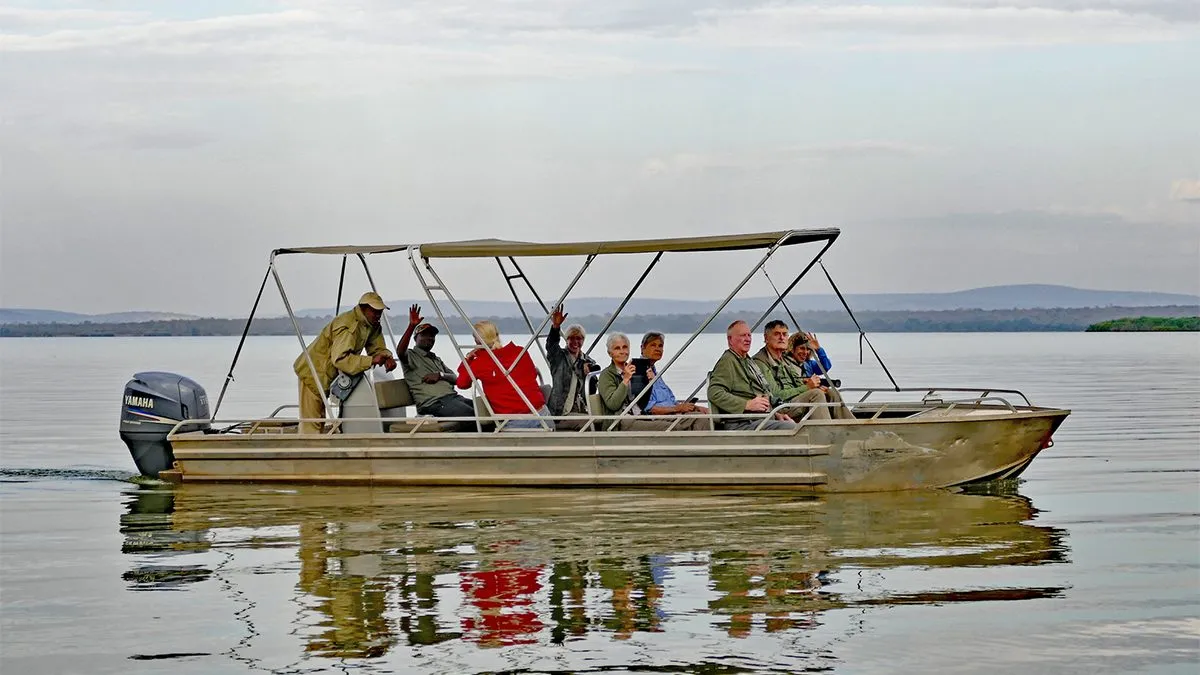
A second full day allows for both a dawn and a late afternoon game drive, the two periods when wildlife activity peaks, along with the option of a boat safari on Lake Ihema, one of several lakes within the park’s boundary, offering close encounters with hippos, crocodiles, and a strong variety of waterbirds from the safety and comfort of a boat rather than a vehicle.
Day Three: Transfer to Kigali and the Genocide Memorial
The journey from Akagera toward Volcanoes National Park naturally routes back through Kigali, and building in time here rather than treating the capital as a pure pass-through point adds meaningful depth to the itinerary. A stop at the Kigali Genocide Memorial offers essential historical context for understanding modern Rwanda, and the capital’s markets, restaurants, and increasingly notable art scene give travellers a worthwhile break between the two parks’ more demanding wildlife activities.
Days Four and Five: Volcanoes National Park and Gorilla Trekking
Continuing from Kigali to Musanze, the gateway town for Volcanoes National Park, typically takes a few hours by road. Arrival on day four allows time to settle in and rest before an early start on day five for the gorilla trekking itself, Rwanda’s headline experience and, for most travellers, the central reason the entire trip was planned in the first place. Permits should be secured well in advance given how limited daily availability is and how far ahead demand typically books up, particularly during peak travel periods.
Day Six: A Second Volcanoes Activity
With gorilla trekking permits limited to a single visit per booking, most travellers use a second day at Volcanoes National Park for a complementary activity rather than simply resting. Golden monkey trekking offers a lighter, less physically demanding primate encounter than gorilla trekking, while the Mount Bisoke crater lake hike appeals to travellers wanting a more strenuous physical challenge and one of the most rewarding single-day hikes in the park. Either option, or simply a rest day exploring the twin lakes of Burera and Ruhondo nearby, rounds out the Volcanoes leg of the itinerary before the return journey begins.
Day Seven: Return to Kigali
The final day is typically reserved for the return drive to Kigali, timed around departure flights from Kigali International Airport. Travellers with a later flight can use remaining time in the capital for last-minute shopping, a final meal, or simply reflecting on a week that covered dramatically different landscapes and wildlife within a single, relatively compact country.
Practical Considerations for This Route
The drive between Akagera and Volcanoes National Park covers a genuine distance, generally estimated between four and five hours depending on the specific route and stops along the way, and most itineraries sensibly route this leg through Kigali rather than attempting a direct cross-country transfer. Road conditions across most of this route are well maintained and largely tarmacked, making the drive itself a comfortable, if long, day of travel rather than a difficult logistical undertaking.
Booking Gorilla Permits Early
Given that gorilla trekking sits at the centre of this itinerary, permit availability should be the first logistical piece confirmed when planning a trip built around this seven-day structure, since the entire schedule effectively builds outward from a fixed trekking date. Booking permits several months in advance, particularly for travel during Rwanda’s peak season, is standard practice and helps ensure the rest of the itinerary, including Akagera timing and Kigali stops, can be structured sensibly around a confirmed trekking date rather than left to chance.
Extending or Compressing the Itinerary
Travellers with additional time can extend this core seven-day framework by adding Nyungwe Forest National Park in the southwest, home to chimpanzee tracking and a canopy walk through the forest canopy, turning the trip into Rwanda’s full three-park circuit over a longer, ten-day or so itinerary. Conversely, travellers genuinely pressed for time can compress the Akagera leg to a single night with one full day of game drives, though this leaves noticeably less room to properly experience the park’s boat safari and full range of game drive timing options.
A Week That Captures Rwanda’s Full Range
Few single-week itineraries anywhere in East Africa manage to combine genuine Big Five savannah safari with world-class primate trekking in the way this Akagera and Volcanoes pairing does, all within a country small enough that the logistics remain genuinely manageable rather than exhausting. For travellers weighing up how to structure a first Rwanda trip, this combination consistently ranks among the most complete and well-rounded options available, delivering the country’s two most distinct wildlife experiences within a single, well-paced week.
What Makes Akagera Genuinely Worth the Detour
Travellers unfamiliar with Akagera sometimes assume it functions as a minor addition alongside the far more famous gorilla trekking experience, but the park has undergone a genuinely remarkable conservation transformation over the past two decades. Once severely depleted of wildlife following the upheaval of the 1990s, Akagera has been rebuilt through careful management, anti-poaching investment, and the deliberate reintroduction of lions in 2015 and eastern black rhinos in 2017, restoring the full Big Five to Rwandan soil for the first time in decades. This recovery story adds a genuine conservation dimension to a visit, beyond simply ticking off wildlife sightings, that many travellers find adds real weight to their time in the park.
Accommodation Along the Route
Both parks offer accommodation spanning a range of budgets, from more affordable tented camps to higher-end lodges positioned to take advantage of each park’s specific scenery, savannah views over Akagera’s lakes and woodland, or misty volcanic slopes at Volcanoes National Park. Kigali, as the natural midpoint on this itinerary, offers the widest range of accommodation standards of anywhere on the route, making it a sensible place to either splurge on a night of genuine comfort or simply find a reliable, well-located base for the day spent exploring the capital between the two parks.
Weather Considerations Across the Route
Akagera’s lower-altitude savannah climate runs considerably warmer and drier than the cooler, wetter conditions typical of Volcanoes National Park’s higher elevation, and travellers should pack for both climates rather than assuming a single set of clothing will suit the entire week. Layered clothing that can adapt from warm daytime savannah conditions to cool, damp mornings on the volcanic slopes works best, alongside proper rain protection for the gorilla trekking leg specifically, given how frequently misty or wet conditions factor into forest trekking regardless of season.
Guides and Self-Drive Considerations
While self-driving between Akagera and Volcanoes National Park is possible given Rwanda’s generally well-maintained road network, most visitors, particularly first-time travellers to the country, opt for a guided itinerary with a driver-guide handling the logistics of transfers, park entries, and activity bookings across both parks. This arrangement removes a meaningful layer of planning complexity from what is already a itinerary built around fixed, non-negotiable elements like gorilla trekking permit dates, and it allows travellers to focus fully on the wildlife and scenery rather than navigation and logistics.
Budgeting for the Full Week
Gorilla trekking permits represent the single largest cost within this itinerary by a considerable margin, and travellers should budget accordingly, treating the permit fee as the anchor expense around which accommodation, park fees, and transport costs are then layered. Akagera’s park fees and activities are considerably more modest by comparison, making the savannah leg of the trip a genuinely cost-effective addition relative to the value and variety it adds to the overall itinerary.
For travellers ready to plan a trip built around Akagera National Park alongside gorilla trekking in the northwest, this seven-day structure offers a proven, well-tested framework that consistently delivers Rwanda’s full range within a single, manageable week.