
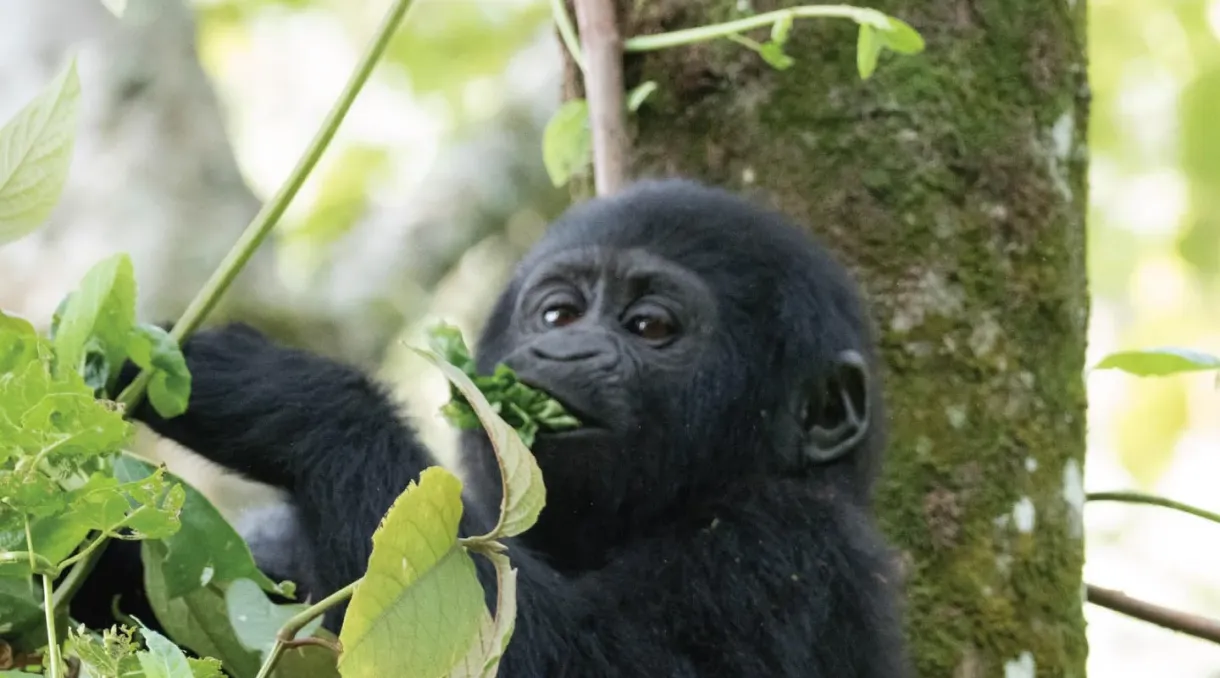
Bitukura Gorilla Family Ruhija: The Multi-Silverback Group
Deep in the cool, elevated forests of Bwindi Impenetrable National Park, the Ruhija sector offers one of the most distinctive gorilla trekking experiences in East Africa. Among its habituated families, the Bitukura gorilla group stands out for a rare and fascinating feature in mountain gorilla society: the presence of multiple silverbacks living together peacefully within one family structure.
This makes Bitukura one of the most scientifically interesting and behaviorally unique gorilla groups available for trekking in Bwindi.
The Origin of the Bitukura Family
The Bitukura family was habituated in 2008 after a relatively fast and successful habituation process compared to some older groups in Bwindi. Its name comes from a nearby river in the Ruhija sector, reflecting the group’s strong connection to the high-altitude forest landscape and its water systems.
What makes Bitukura especially notable from the beginning is that it formed under unusual social circumstances. Instead of a single dominant silverback controlling the group, Bitukura evolved into a rare multi-male, multi-silverback family where several mature males coexist.
This is uncommon in mountain gorillas, where dominance usually results in a single silverback leading a group.
The Multi-Silverback Structure Explained
In most gorilla families, one silverback dominates and leads the group. However, the Bitukura family is different.
It is known for having multiple silverbacks who coexist within the same social unit. These males are not necessarily equal in dominance, but they maintain a stable and unusually peaceful relationship compared to typical gorilla rivalries.
Within Bitukura, you may find:
A primary dominant silverback
Subordinate silverbacks
Blackbacks transitioning into full adulthood
This structure provides a rare opportunity to observe how gorilla leadership and hierarchy can function without constant conflict.
Why This Structure Is Rare
In gorilla society, mature males typically compete for dominance. When tensions rise, this often leads to group splits or the formation of new families.
The Bitukura group challenges this pattern.
Instead of breaking apart, multiple males have remained within the same group, creating a more complex and layered hierarchy. Scientists and researchers find this particularly valuable because it offers insight into alternative social arrangements within mountain gorillas.
For visitors, it means there is more to observe than just one leader.
Location: Ruhija’s High-Altitude Forest
The Bitukura family is located in the Ruhija sector of Bwindi Impenetrable National Park, one of the highest and coolest regions of the park.
Ruhija is characterized by:
High elevation terrain
Dense montane forest
Cool, misty conditions
Less tourist traffic compared to Buhoma or Rushaga
This environment shapes the trekking experience significantly. The forest feels quieter, the air is cooler, and visibility is often softened by mist.
Trekking Experience to Bitukura
Tracking the Bitukura family typically involves moderate trekking conditions, though altitude can make the experience feel more demanding than expected.
Expect:
Gradual climbs through forest trails
Occasional steep or slippery sections
Dense vegetation limiting long-distance visibility
Because gorillas move unpredictably, trek duration can vary. Some groups may be found relatively quickly, while others require longer tracking through the forest.
The cooler temperatures in Ruhija often make walking more comfortable despite the physical effort.
Group Composition and Behavior
The Bitukura family is a relatively large and stable group with a unique internal structure.
It typically includes:
Multiple silverbacks
Adult females
Juveniles and infants
What makes this group particularly interesting is how its members interact across different male leaders.
You may observe:
Coexistence between silverbacks without constant aggression
Shared movement across the forest
Females interacting across sub-groups
Juveniles moving freely between clusters
This creates a layered social environment that is different from more strictly hierarchical families.
Behavior in the Field
During a one-hour visit, Bitukura offers a rich behavioral experience.
Because of the multi-silverback structure, there is often:
Subtle positioning among males
Non-aggressive displays of dominance
Coordinated group movement
Simultaneous activities happening in different parts of the group
Despite the complexity, the group is generally stable and calm during visitor encounters, thanks to habituation and careful ranger management.
Photography in Bitukura
Photographing the Bitukura family can be highly rewarding but requires adaptability.
Challenges include:
Dense forest cover limiting light
Multiple subjects spread across different areas
Frequent movement within the group
Advantages include:
Variety of subjects and interactions
Unique multi-silverback compositions
Atmospheric mist and forest conditions
For photographers interested in behavior rather than just portraits, Bitukura offers strong storytelling potential.
Conservation and Scientific Importance
The Bitukura family is important not only for tourism but also for research and conservation understanding.
Its multi-silverback structure provides valuable insights into:
Gorilla social flexibility
Hierarchy and coexistence
Conflict avoidance mechanisms
Group stability dynamics
This makes Bitukura one of the more studied groups in Bwindi, contributing to long-term conservation knowledge.
Tourism revenue from visits supports:
Park protection
Anti-poaching efforts
Local community development
Comparing Bitukura with Other Ruhija Families
Ruhija has two main habituated families: Bitukura and Oruzogo.
Bitukura is known for:
Its multi-silverback structure
More stable, calm interactions
Scientific and behavioral uniqueness
Oruzogo is known for:
Higher energy levels
More playful and active behavior
Stronger visual activity for visitors
This makes Bitukura more suitable for visitors interested in observation and behavior, while Oruzogo appeals more to those seeking activity and movement.
Who Should Choose Bitukura
The Bitukura family is best suited for:
Visitors interested in gorilla social structure and behavior
Travelers seeking a quieter trekking experience
Photographers focused on composition and interaction
Returning trekkers looking for something different from standard group dynamics
It may be less ideal for those seeking highly active, fast-moving encounters.
Rules and Responsible Trekking
As with all gorilla trekking experiences in Bwindi Impenetrable National Park, strict rules apply.
Visitors must:
Maintain a minimum distance of 7 meters
Limit viewing time to one hour
Follow ranger instructions at all times
Avoid trekking if unwell
Keep noise levels low
These rules ensure the safety and wellbeing of both gorillas and visitors.
The Experience in Perspective
Encountering the Bitukura family feels different from most gorilla treks.
Instead of a single dominant figure, you are observing a complex system of relationships. Movement is not always centered around one leader, but distributed across several mature males and their interactions.
This creates a more analytical and reflective experience. You are not just watching gorillas-you are observing how alternative social structures can function in the wild.
The Bitukura Gorilla Family in the Ruhija sector of Bwindi Impenetrable National Park offers one of the most unusual and intellectually engaging gorilla trekking experiences in Uganda.
Defined by its rare multi-silverback structure, shaped by high-altitude forest conditions, and valued for its behavioral insights, this group stands apart from more typical gorilla families.
For visitors who want to go beyond simple wildlife viewing and understand the deeper mechanics of gorilla society, Bitukura delivers a uniquely rewarding experience.
It is not just a gorilla family.
It is a living example of social complexity in the wild.