
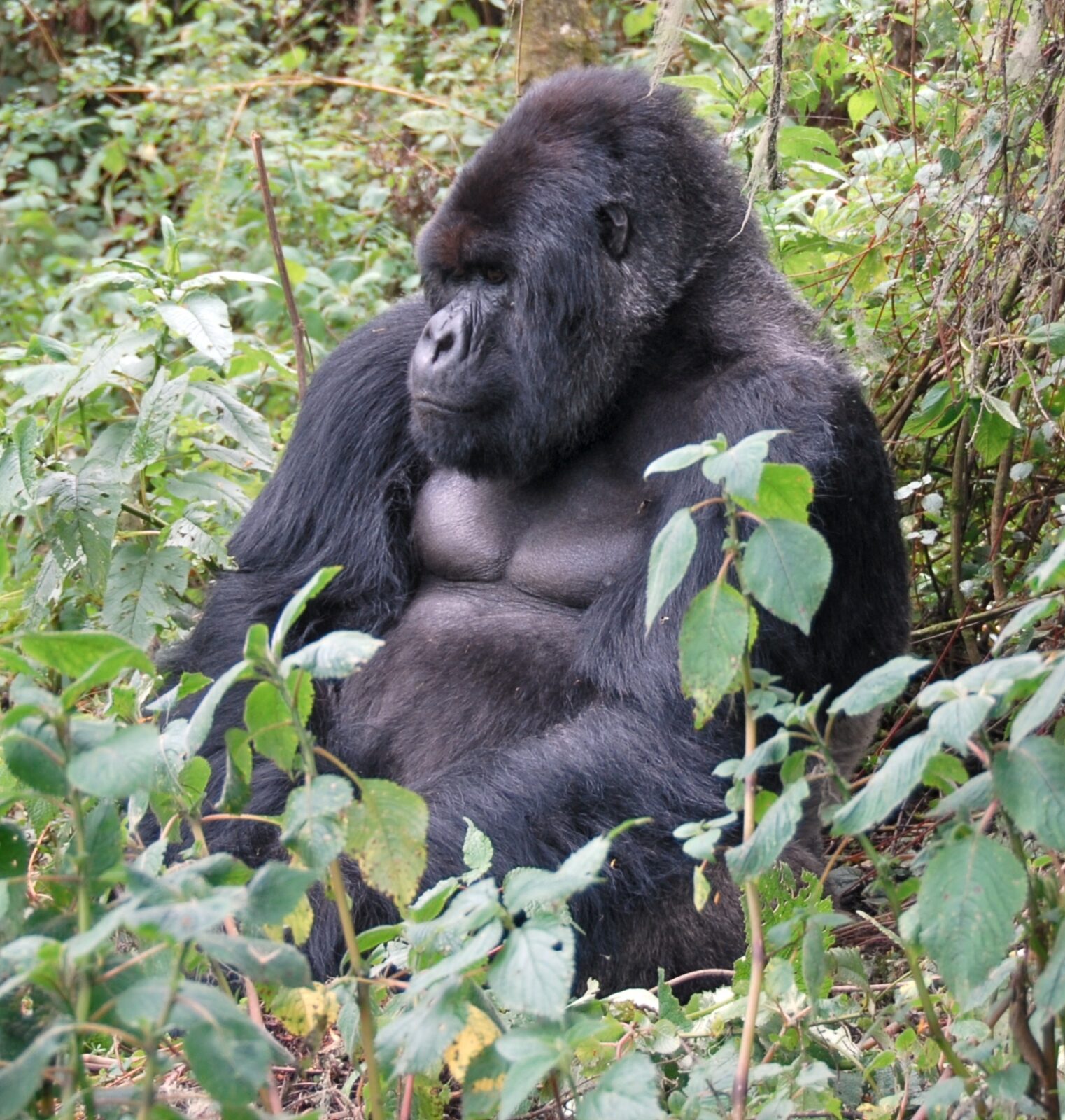
It seems like an obvious idea for capturing spectacular aerial footage of Bwindi’s canopy or a gorilla family from above, and it’s a question nearly every photography-minded trekker asks at some point. Gorilla safari drone ban: why drones are forbidden near gorillas comes down to a combination of wildlife protection, safety, and park regulation, and the reasoning is worth understanding rather than treating the rule as arbitrary red tape.
Modern consumer drones are lightweight, affordable, and genuinely capable of striking footage, which makes it an entirely reasonable idea to want to bring one. Understanding exactly why it isn’t permitted helps that disappointment land as informed acceptance rather than confusion once you arrive and discover the rule firsthand.
The Rule Itself
This restriction is enforced consistently and taken seriously by park staff, reflecting years of accumulated experience with exactly this kind of well-intentioned but disruptive technology showing up among visitors eager to capture something spectacular for their own content.
Drones are prohibited within Uganda’s and Rwanda’s national parks, including Bwindi Impenetrable Forest and Volcanoes National Park, without special research or conservation-related permission that ordinary trekkers and even most professional visiting photographers won’t be granted. This isn’t a soft guideline – it’s an enforced regulation, and bringing a drone with the intention of flying it during your trek is likely to result in it being confiscated or you being asked to leave it secured elsewhere entirely.
Why Drones Genuinely Disturb Gorillas
Researchers studying wildlife responses to drones across many species have documented elevated stress hormones, flight responses, and disrupted feeding and social behaviour, evidence that informs conservation policy well beyond gorilla trekking specifically and underpins why this restriction is taken so seriously by park authorities.
Mountain gorillas, like many wild animals, can perceive an unfamiliar buzzing object overhead as a potential threat, triggering stress responses, defensive behaviour, or a family scattering and fleeing the immediate area. Unlike human trekkers approaching predictably on the ground, following rules the gorillas have become accustomed to over years of habituation, a drone represents a genuinely novel, unpredictable stimulus that habituation processes haven’t accounted for.
Broader Wildlife and Conservation Concerns
This precautionary approach reflects a broader conservation philosophy that prioritises minimising human interference across an entire ecosystem, not just the specific species that happen to draw tourist attention, since disruption to one part of a habitat rarely stays perfectly contained to that one part alone.
Beyond gorillas specifically, drones pose a documented disturbance risk to a wide range of wildlife across many conservation contexts, from nesting birds abandoning eggs to other primates and mammals altering natural behaviour patterns in response to aerial disturbance. Park authorities managing habitats this ecologically sensitive have strong, well-evidenced reasons to restrict drone use broadly, not solely as a gorilla-specific rule.
Security and Anti-Poaching Considerations
This dimension of the restriction is rarely mentioned in visitor-facing materials, which tend to emphasise the wildlife-disturbance rationale, but conversations with park security staff make clear it’s a genuine, additional factor behind how strictly the rule is enforced.
Drones also raise security concerns in a region where anti-poaching enforcement is an ongoing, serious operation. An unrestricted drone flying over sensitive park areas could inadvertently or deliberately compromise ranger positions, tracking operations, or security protocols, adding another practical reason behind the restriction beyond wildlife disturbance alone.
What About Professional Film and Research Crews?
Major nature documentary productions that have featured aerial gorilla habitat footage over the years typically went through months of formal application and coordination to secure that access, a process well beyond what an individual trekker hoping to capture personal content could realistically replicate.
Documentary and research teams do occasionally receive special permission for drone use under tightly controlled conditions, typically involving specific permits, approved flight plans, experienced operators, and direct oversight from park authorities. This is a genuinely different process from anything an ordinary trekker or even most independent professional photographers can access, requiring formal applications well in advance and a clearly justified research or conservation purpose.
What You Can Actually Do Instead
Some of the most celebrated gorilla photography ever published relies entirely on ground-level technique – patience, positioning, understanding of light within dense forest canopy, and a genuine eye for composition – proving that aerial access was never actually necessary to produce genuinely striking, memorable images.
Ground-level photography and videography remain fully permitted within the standard rules around distance and flash, and skilled photographers consistently produce remarkable images of gorillas and the forest without any aerial component at all. For genuine aerial perspective on the region, scenic flights and helicopter tours operating outside the immediate park boundaries offer a legal way to capture landscape and canopy views, just not directly over active gorilla trekking areas.
What Happens If You Bring a Drone Anyway
Border and customs officials in Uganda and Rwanda are also increasingly aware of drone import and use rules generally, meaning issues can potentially surface before you’ve even reached the park, at entry points where officials are trained to ask about and inspect this kind of equipment specifically.
Park authorities and your operator will typically ask you to leave a drone secured at your lodge or vehicle rather than carrying it on the trek itself, and attempting to fly one within the park despite the rule risks confiscation, fines, and potentially jeopardising your trekking permit or future access. It’s simply not worth testing this rule, however tempting the shot might seem in the moment.
A Wider Pattern Across Protected Areas Worldwide
Gorilla trekking parks aren’t unusual in this respect – drone restrictions have become increasingly common across sensitive wildlife and conservation areas globally, from national parks in the Americas to marine protected areas, as authorities everywhere have grappled with similar disturbance and safety concerns as drone technology has become more affordable and widespread among ordinary travellers rather than remaining a specialist tool.
Understanding this as part of a broader, sensible global pattern, rather than a uniquely restrictive rule specific to gorilla trekking, may help make the restriction feel less arbitrary if it initially strikes you as an unwelcome limitation on your trip.
Frequently Asked Questions
Can I fly a drone at my lodge, outside the park boundary?
This depends on the specific lodge and local regulations outside the park itself, which are generally less restrictive than within protected park boundaries, though it’s worth checking with your specific lodge before assuming it’s permitted.
Is the drone ban the same across Uganda, Rwanda, and the DRC?
The core restriction on unauthorised drone use within gorilla trekking parks applies consistently across all three countries, though specific enforcement details and permit processes for authorised exceptions vary by national park authority.
Will my drone be confiscated permanently if I bring it accidentally?
Typically not, if you simply leave it secured rather than attempting to use it – most operators and lodges will safely store an unused drone for the duration of your trek without any lasting consequence.
For photography approaches that work within park rules, this guide to photography-focused safaris covers ground-level techniques and equipment recommendations that produce genuinely excellent results without needing aerial access.