
Gorilla Safaris Uganda vs Congo: Why Uganda Wins for Safety
Two Countries, One Rare Wildlife Experience
Mountain gorilla trekking is possible in only three countries in the world: Uganda, Rwanda, and the Democratic Republic of Congo. Among these, Uganda and Congo offer some of the most important gorilla habitats in Africa, especially within the Virunga ecosystem and Bwindi Impenetrable Forest.
While both Uganda and Congo deliver authentic gorilla encounters, they differ significantly in terms of safety, infrastructure, tourism stability, and overall travel reliability. For most international travelers, Uganda is widely regarded as the safer and more predictable destination.
Understanding this difference is not about wildlife quality, which is excellent in both countries, but about the broader travel environment surrounding the experience.
Uganda: Stable, Organized, and Tourism-Friendly
Uganda has built a strong reputation as one of Africa’s most stable gorilla trekking destinations. The country has invested heavily in conservation tourism, park protection, and structured visitor management systems.
Gorilla trekking in Uganda takes place mainly in Bwindi Impenetrable National Park and Mgahinga Gorilla National Park. These parks are well-established, professionally managed, and supported by trained rangers, clear trekking protocols, and reliable tourism infrastructure.
Security in and around gorilla trekking areas is generally stable, with consistent ranger patrols, regulated access points, and strong coordination between tourism authorities and local communities.
Road networks leading to gorilla parks, while sometimes long and rural, are regularly used by tourism operators and supported by experienced safari logistics teams.
The overall travel experience in Uganda is predictable, structured, and designed to support international tourism.
Congo: Wild, Remote, and Politically Unpredictable
The Democratic Republic of Congo offers gorilla trekking primarily in Virunga National Park and Kahuzi-Biega National Park. These regions are home to both mountain gorillas and eastern lowland gorillas, making Congo biologically very important.
However, Congo’s tourism environment is far more complex. The country has experienced long-standing political instability in certain regions, armed group activity in eastern provinces, and occasional security disruptions near protected areas.
While Virunga National Park has an exceptionally dedicated conservation team and highly trained rangers, the broader regional security situation can change unpredictably.
This means that gorilla trekking in Congo often requires more caution, flexible planning, and acceptance of higher risk compared to Uganda.
Safety Infrastructure and Park Protection
Uganda’s gorilla parks operate under a highly organized national tourism authority system with consistent funding, clear regulations, and well-established visitor procedures.
Ranger patrols are well-coordinated, and tourist routes are clearly defined and monitored. Emergency response systems are integrated into the trekking experience, and visitor safety is treated as a top priority.
In Congo, park protection is often more complex due to external security pressures. Virunga National Park has one of the most committed conservation teams in Africa, but they operate in a more volatile environment where external risks are harder to control.
This does not mean gorilla trekking is unsafe at the moment of encounter in Congo, but the surrounding regional stability is less predictable.
Travel Logistics and Accessibility
Uganda offers relatively smoother travel logistics for international visitors. Most travelers arrive through Entebbe International Airport or Kigali in Rwanda before crossing into Uganda gorilla regions.
Tour operators are experienced in managing long-distance road transfers, accommodation coordination, and permit logistics. The system is well developed and designed for tourism efficiency.
Congo, on the other hand, involves more complex logistics depending on the trekking region. Travel routes may be less predictable, and conditions can change due to security advisories or infrastructure limitations.
This makes Uganda more accessible and easier to plan for most international travelers.
Tourist Experience and Comfort Level
Uganda provides a more comfortable and structured safari experience overall. Lodges near gorilla parks range from budget to luxury, and tourism services are well developed.
Visitors can expect:
- Clear trekking schedules
- Professional ranger briefings
- Reliable accommodation options
- Established safari circuits
- Strong tourism support systems
Congo offers a more raw and adventurous experience. Lodges and infrastructure may be more limited in some areas, and the experience often feels more expedition-like than comfort-oriented.
For some travelers, this adds appeal. For others, it increases uncertainty.
Wildlife Experience: Is There a Difference?
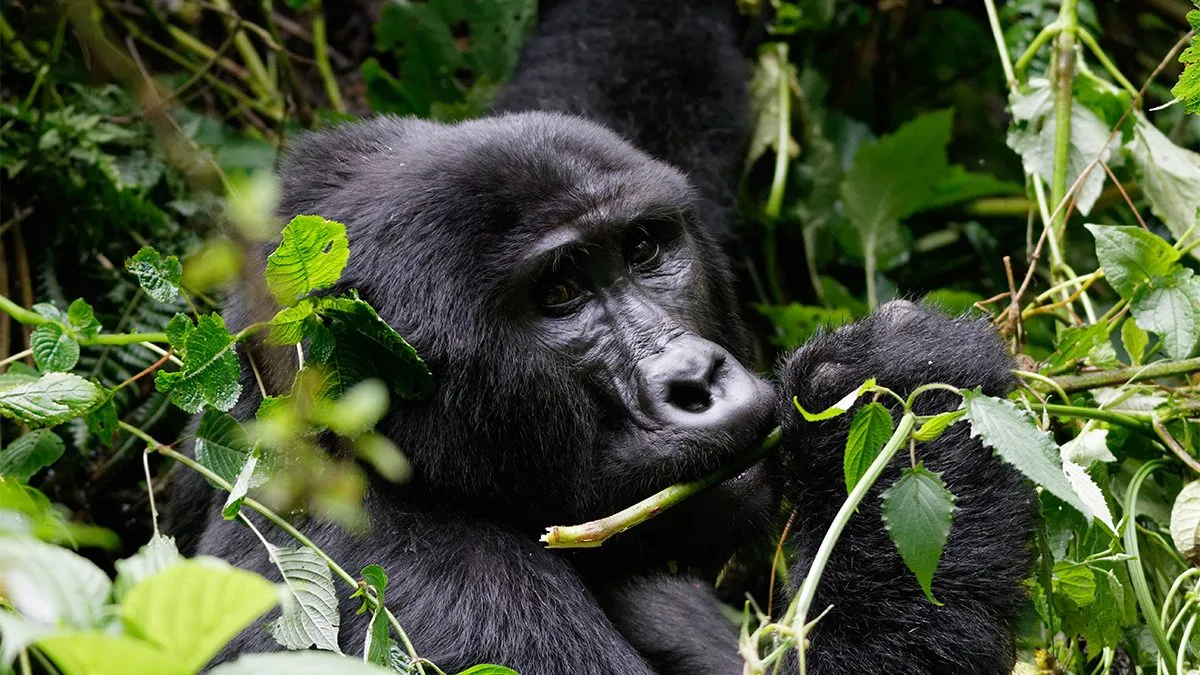
From a strictly wildlife perspective, gorilla encounters in Uganda and Congo are very similar. Mountain gorillas do not recognize national borders, and their behavior, social structure, and interactions are consistent across the region.
Both destinations offer:
- Close-up gorilla viewing
- One-hour regulated encounters
- Experienced ranger guidance
- Small trekking groups
- Strict conservation protection
The difference is not the gorillas, but the environment in which you reach them.
Risk Perception vs Reality
It is important to distinguish between perception and on-the-ground trekking conditions.
In Congo’s main trekking areas, gorilla encounters themselves are carefully managed and generally safe when permitted. Conservation teams are highly experienced and deeply committed to protecting both wildlife and visitors.
However, external regional instability can influence travel advisories and accessibility, which affects overall risk perception.
Uganda benefits from long-term tourism stability, making it a lower-risk destination for planning, logistics, and visitor confidence.
Conservation and Tourism Stability
Uganda’s gorilla tourism model is highly structured and economically integrated with conservation. Revenue from permits directly supports park protection, local communities, and long-term wildlife conservation programs.
This stable tourism economy helps reinforce safety systems and encourages continued investment in infrastructure.
Congo also relies on conservation tourism, but fluctuating security conditions can make long-term tourism planning more challenging.
Why Uganda Is Preferred for Safety
Uganda is generally considered safer for gorilla trekking because it offers:
Consistent political stability in trekking regions
Well-developed tourism infrastructure
Predictable travel logistics
Strong ranger and park protection systems
Reliable access to gorilla trekking permits
Established international tourism reputation
This combination creates a more dependable experience for international travelers who prioritize safety and planning certainty.
Where Congo Still Appeals to Adventurous Travelers
Despite its challenges, Congo remains attractive for certain types of travelers.
It appeals to those seeking:
- Remote and less visited trekking experiences
- Strong conservation expedition environments
- Lower visitor numbers
- A more rugged, off-the-beaten-path feel
For highly experienced wildlife travelers and conservation-focused visitors, Congo offers a rare and powerful sense of wilderness.
Both Uganda and Congo offer authentic mountain gorilla trekking experiences, but they differ significantly in safety, infrastructure, and travel reliability.
Uganda stands out as the safer and more predictable destination due to its stable tourism systems, organized park management, and well-established visitor infrastructure. It is the preferred choice for most international travelers, especially first-time gorilla trekkers.
Congo provides a more remote and adventurous experience, but with higher levels of uncertainty due to regional security conditions.
Ultimately, the gorillas are equally extraordinary in both countries. The difference lies in how safely and comfortably you can reach them, and for that reason, Uganda remains the leading choice for safety-focused gorilla safaris.