
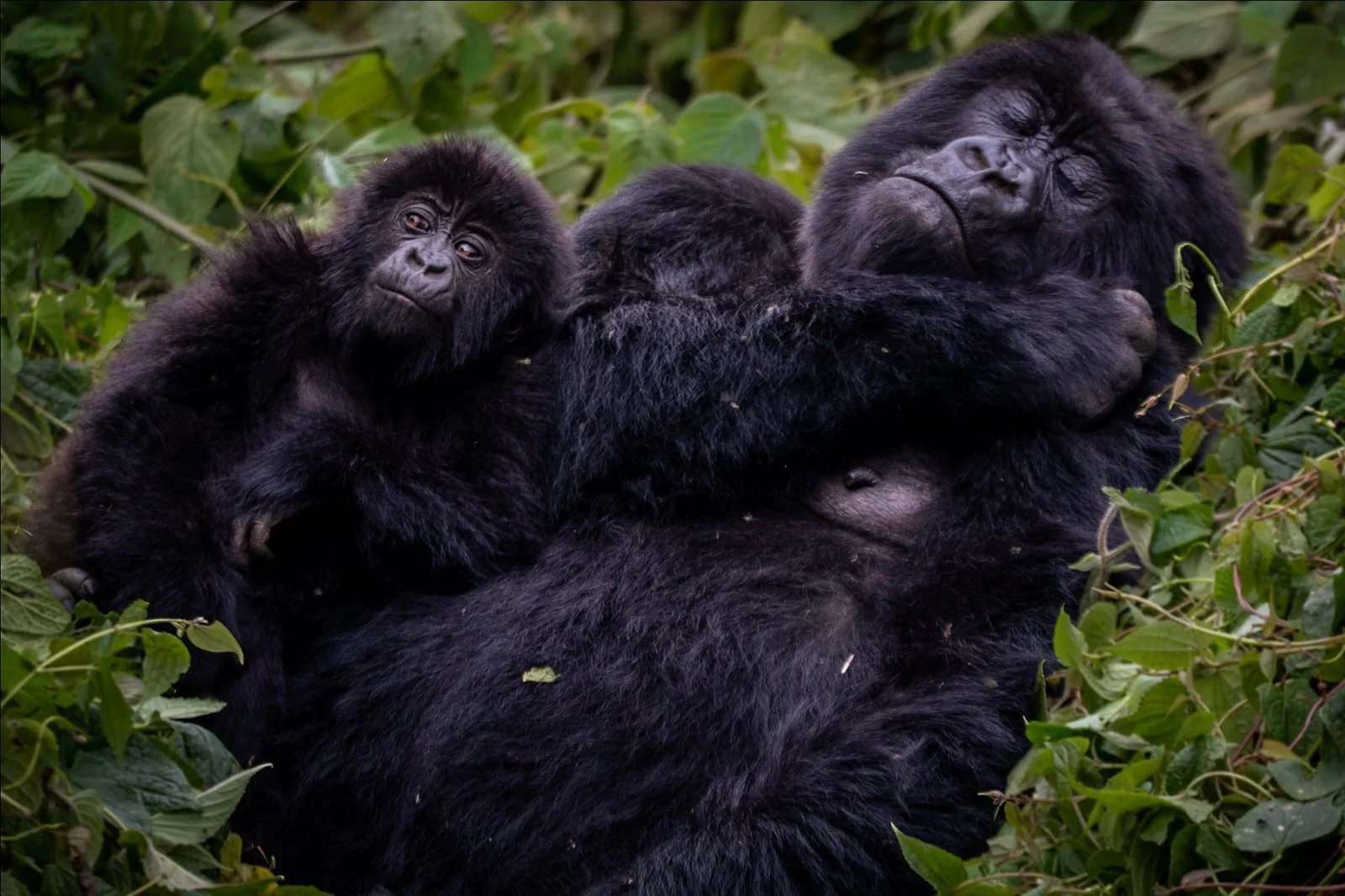
Hirwa Gorilla Family Rwanda: The Lucky Group on Sabyinyo
In the volcanic highlands of Volcanoes National Park, where mist rolls across bamboo forests and the slopes of ancient volcanoes shape every step of the journey, the Hirwa gorilla family has earned a name that immediately captures attention. “Hirwa” means “lucky” in Kinyarwanda, and this group is often described as one of the most fortunate and symbolically significant gorilla families in Rwanda’s conservation story.
The Hirwa family is not only known for its behavior and composition but also for its extraordinary history of formation, movement, and survival across different habitats.
The Meaning Behind “Hirwa”
The name Hirwa reflects the idea of luck, fortune, and positive destiny.
It was given to the group because of the unusual circumstances surrounding its formation and survival. In gorilla conservation, group formation is often shaped by conflict, competition, or splitting from larger families. In contrast, Hirwa’s emergence was seen as unusually successful and stable despite its complex origins.
The name captures this sense of resilience and fortunate continuity.
Origin and Formation of the Hirwa Family
The Hirwa family was formed through a natural split process involving individuals from existing gorilla groups within the Virunga ecosystem.
Over time, a silverback named Munyinya emerged as the leader of this new group, bringing together females and juveniles from different origins to establish a stable family unit.
What makes Hirwa particularly notable is that it was one of the few groups to successfully establish itself outside a single traditional lineage, instead forming through a combination of individuals from different groups.
This gave the family a unique social composition from the beginning.
Movement Between Uganda and Rwanda
One of the most remarkable aspects of the Hirwa family’s history is its cross-border movement.
At one point, the group was known to move between Rwanda and Uganda, reflecting the fact that mountain gorillas do not recognize political boundaries. Their habitat spans across the Virunga volcanic range, which extends through Rwanda, Uganda, and the Democratic Republic of Congo.
This movement contributed to the group’s reputation as adaptable and resilient, reinforcing the meaning behind its name.
Location in Volcanoes National Park
Today, the Hirwa family is primarily associated with the southern slopes of Volcanoes National Park, particularly around the Sabyinyo volcano area.
This region is characterized by:
High-altitude rainforest
Bamboo zones and Hagenia woodland
Cool temperatures and frequent mist
Steep volcanic terrain
The environment is both visually striking and physically demanding, offering a classic Virunga trekking experience.
Trekking Experience to Hirwa
Trekking the Hirwa family typically involves moderate to challenging conditions depending on their movement on the day.
Expect:
Steep volcanic slopes
Dense bamboo forest sections
Muddy and uneven trails
Variable trekking durations
Because gorillas move in search of food, their exact location can shift, meaning some treks may be shorter while others require extended hiking.
The altitude adds an additional layer of physical effort, especially during steep climbs.
Group Structure and Composition
The Hirwa family is a medium-sized gorilla group with a stable but dynamic structure.
It typically includes:
A dominant silverback
Several adult females
Juveniles
Infants
The group’s composition reflects its mixed origins, which contributes to its genetic and social diversity.
Despite its complex formation, the group has maintained stability over time.
Behavior and Group Dynamics
Hirwa is generally known for balanced and steady behavior.
Visitors may observe:
Coordinated movement through forest terrain
Strong maternal care for infants
Juvenile play activity within safe boundaries
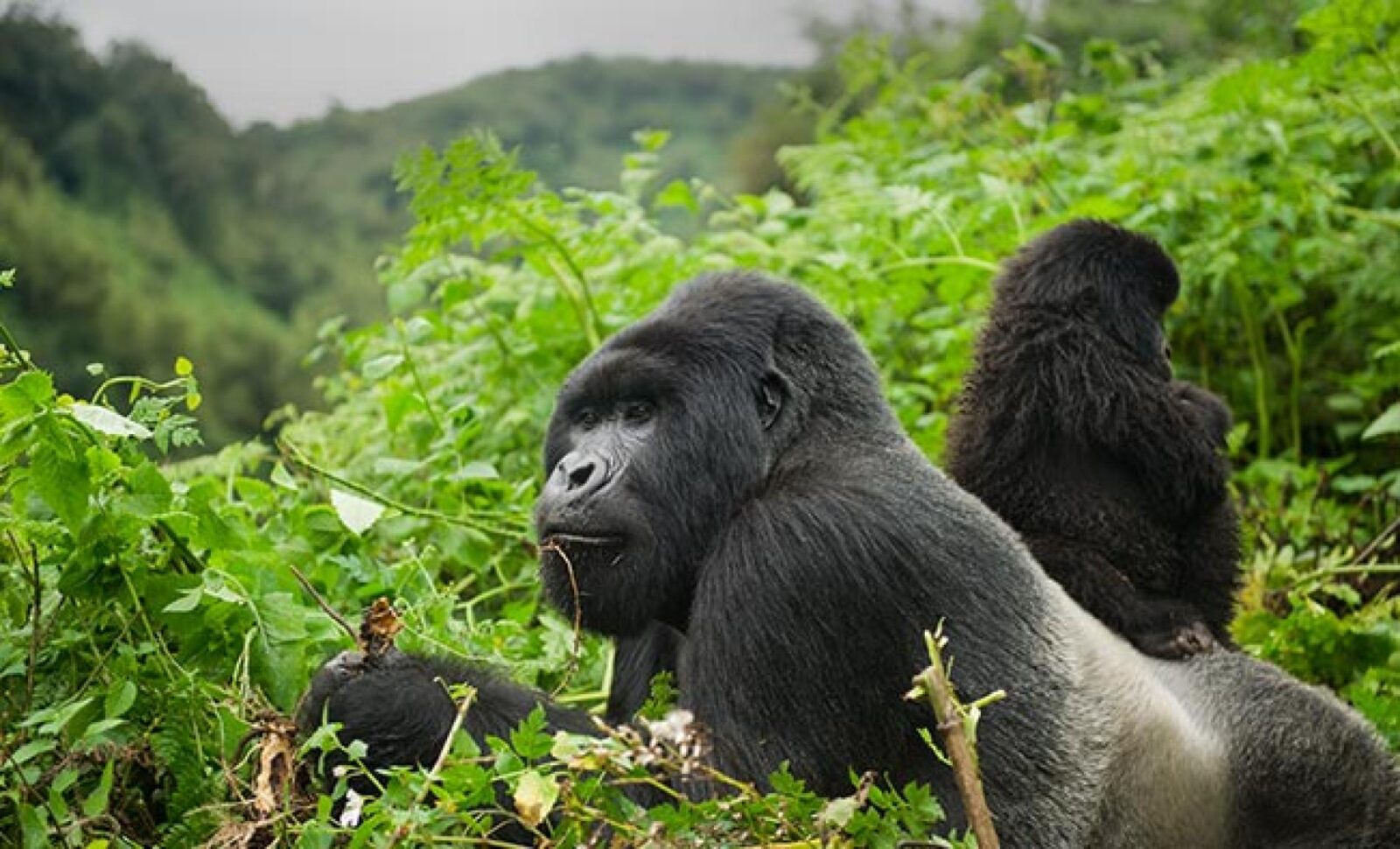
A calm but attentive silverback presence
Compared to more aggressive or highly energetic groups, Hirwa tends to display moderate activity levels, making it easier to observe individual behaviors.
The Role of the Silverback
The silverback plays a central role in maintaining the unity of the Hirwa family.
His responsibilities include:
Protecting the group from external threats
Maintaining cohesion among members
Guiding movement through the forest
His leadership style is typically firm but not overly aggressive, contributing to the group’s overall stability.
Photography Conditions
Hirwa offers strong opportunities for photography, particularly for visitors interested in behavior and natural interactions.
Advantages include:
Balanced group size for clear framing
Varied interactions among individuals
Beautiful volcanic and forest backdrops
Challenges include:
Dense vegetation affecting visibility
Changing weather conditions
Limited open space in some areas
Photographers who adapt to natural lighting and forest conditions can capture compelling images.
Conservation Significance
As part of Volcanoes National Park, the Hirwa family contributes to Rwanda’s globally recognized mountain gorilla conservation success.
Tourism associated with the group supports:
Anti-poaching operations
Habitat protection
Community development programs
Scientific monitoring of gorilla populations
Its cross-regional history also highlights the importance of transboundary conservation across the Virunga ecosystem.
Comparing Hirwa with Other Sabyinyo-Area Groups
In the Sabyinyo region of Volcanoes National Park, several gorilla families offer different trekking experiences.
Some groups are known for:
Smaller size and quieter behavior
Highly stable long-term structures
Shorter trekking routes
Hirwa stands out for:
Its mixed-origin formation
Balanced group dynamics
A history of movement across borders
Moderate trekking challenge
This makes it a flexible option for visitors seeking both accessibility and behavioral richness.
Who Should Choose the Hirwa Family
The Hirwa group is best suited for:
Visitors interested in unique gorilla history
Travelers who want a balanced trekking experience
Photographers seeking both structure and activity
Those comfortable with moderate hiking conditions
It may be less ideal for those seeking extremely short treks or highly dramatic behavioral displays.
Rules and Responsible Trekking
As with all gorilla trekking experiences in Rwanda, strict conservation rules apply.
Visitors must:
Maintain a minimum distance of 7 meters
Limit viewing time to one hour
Follow ranger instructions at all times
Avoid trekking if unwell
Keep noise levels low
These rules are essential for protecting gorillas and ensuring safe, sustainable tourism.
The Experience in Perspective
Encountering the Hirwa family feels like observing a story of adaptation and survival.
The group’s history of formation, movement, and stability gives the experience a deeper narrative layer. You are not just observing a gorilla family-you are witnessing the result of complex ecological and social processes across a shared landscape.
This makes the encounter both visually engaging and intellectually meaningful.
The Hirwa Gorilla Family in Volcanoes National Park stands out as one of the most historically interesting and balanced gorilla groups in the Virunga region.
Defined by its “lucky” origins, shaped by cross-border movement, and stabilized within the Sabyinyo volcanic landscape, it offers a trekking experience that combines accessibility, behavior, and conservation significance.
For visitors seeking a well-rounded gorilla encounter with a unique backstory, Hirwa remains one of the most compelling choices in Rwanda.
It is not just a gorilla family.
It is a symbol of adaptation and continuity in the wild.