
Gorilla Safari and Boat Cruise: Combining Gorillas with the Nile
A gorilla safari combined with a boat cruise is one of the most rewarding wildlife combinations in Uganda because it blends two completely different ecosystems into a single journey: the dense, misty rainforests of southwestern Uganda and the powerful river systems of the north. This contrast is what makes the experience exceptional. On one side, you track mountain gorillas in the forests of Bwindi Impenetrable National Park, and on the other, you drift along the Nile while observing large mammals, crocodiles, and aquatic birdlife.
The combination works so well because it balances intensity with relaxation, forest immersion with open-water scenery, and close-range primate encounters with broad landscape wildlife viewing.
The Core Idea Behind the Gorilla and Nile Combination
This itinerary is built around contrast. Gorilla trekking is physically demanding, emotionally intense, and highly immersive. It requires patience, stamina, and focus as you move through dense rainforest in search of a single gorilla family.
A Nile boat cruise, especially on the Victoria Nile within Murchison Falls National Park, offers the opposite experience. Instead of hiking, you are seated on a boat moving steadily along a wide river, observing wildlife from a stable platform.
Together, these two experiences create a complete safari rhythm: effort followed by ease, forest followed by river, silence followed by open wildlife viewing.
Gorilla Trekking: Deep Forest Immersion
Gorilla trekking in Bwindi is the centerpiece of the combination. The forest here is ancient, dense, and steep, with thick vegetation that creates a highly immersive environment. The experience begins early in the morning with a briefing from rangers, followed by allocation to a specific gorilla family.
The trek itself can vary significantly in duration depending on gorilla movement. Some groups are found within an hour, while others require several hours of hiking through uneven terrain. The landscape is physically challenging, but also rich in biodiversity, with birds, monkeys, and unique plant species along the way.
Once the gorillas are located, the experience becomes strictly regulated. You are allowed one hour in their presence, maintaining a respectful distance while observing their natural behavior. This is often the most emotionally powerful part of the entire safari, as you witness family interactions, feeding, grooming, and resting in a completely natural setting.
After the trek, there is a strong sense of physical exhaustion combined with emotional impact. This is where the second half of the journey-the Nile cruise-becomes important.
Transition from Forest to River Ecosystem
After gorilla trekking in Bwindi, travelers typically transition northward toward the Nile basin. This shift is not just geographical; it is ecological. You move from high-altitude rainforest to savannah and riverine ecosystems.
This transition highlights Uganda’s ecological diversity. Within a relatively short travel span, the landscape changes dramatically-from mist-covered mountains to open plains and wide water systems.
The change also affects pace. The forest demands effort and concentration, while the river environment encourages relaxation and observation.
The Nile Boat Cruise Experience
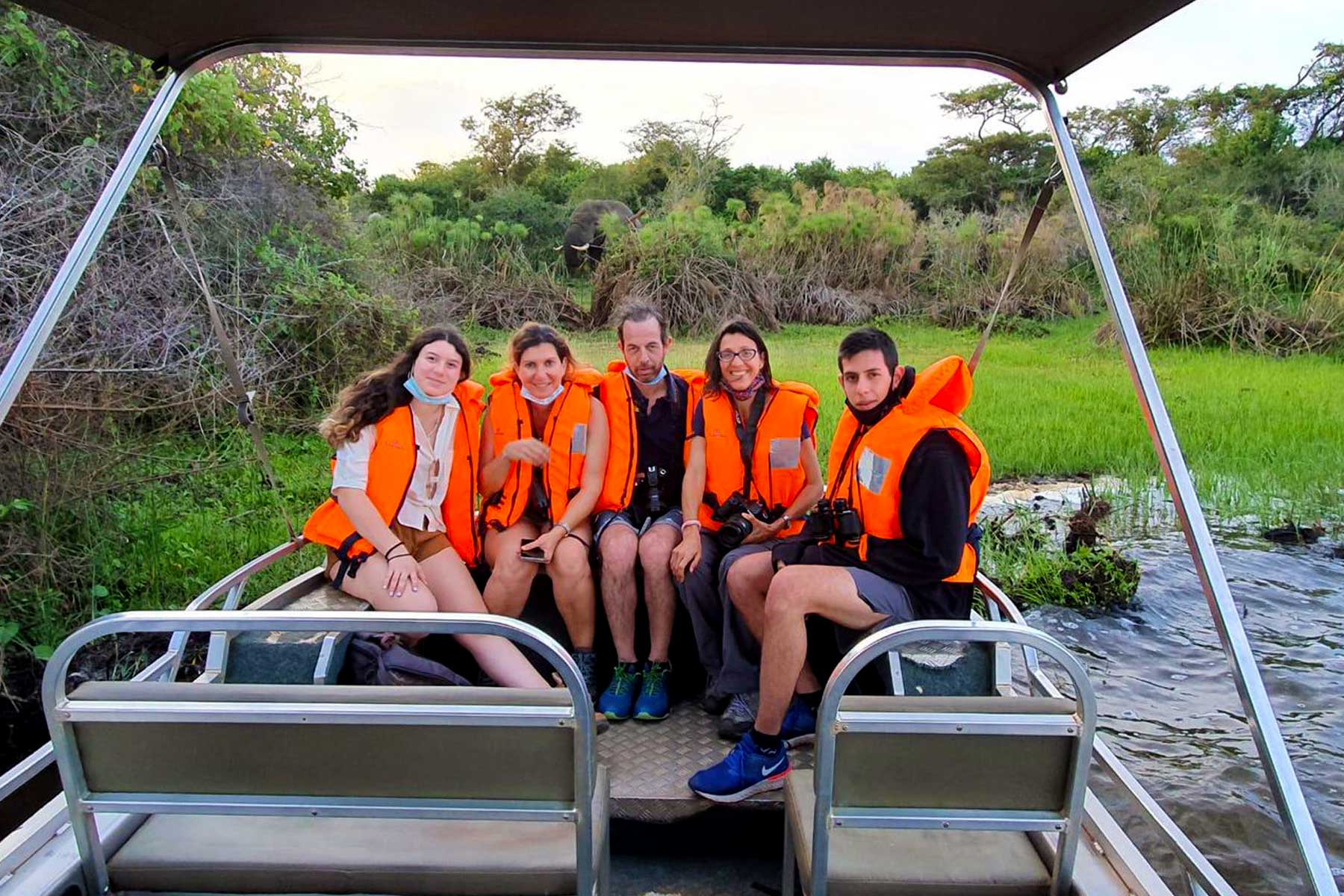
The boat cruise component of the safari usually takes place on the Victoria Nile section of Murchison Falls National Park. This stretch of river is one of the most wildlife-rich aquatic environments in East Africa.
The cruise typically moves upstream or downstream along the Nile, offering continuous wildlife viewing along the riverbanks. The slow movement of the boat allows for extended observation of animals in their natural habitat without disturbing them.
Wildlife Along the Nile
One of the defining features of the boat cruise is the density of wildlife along the riverbanks. Large mammals frequently come to the water’s edge to drink, cool off, or graze.
Elephants are often seen bathing or crossing near the river. Hippos are a constant presence, usually submerged in pods during the day with only their eyes and ears visible above water. Nile crocodiles are commonly observed sunning themselves along sandbanks, sometimes in large groups.
The birdlife is equally impressive. Species such as African fish eagles, kingfishers, herons, and bee-eaters are frequently seen. The river environment provides ideal conditions for bird photography and observation due to the open sightlines and predictable animal behavior.
The Rhythm of the Boat Cruise
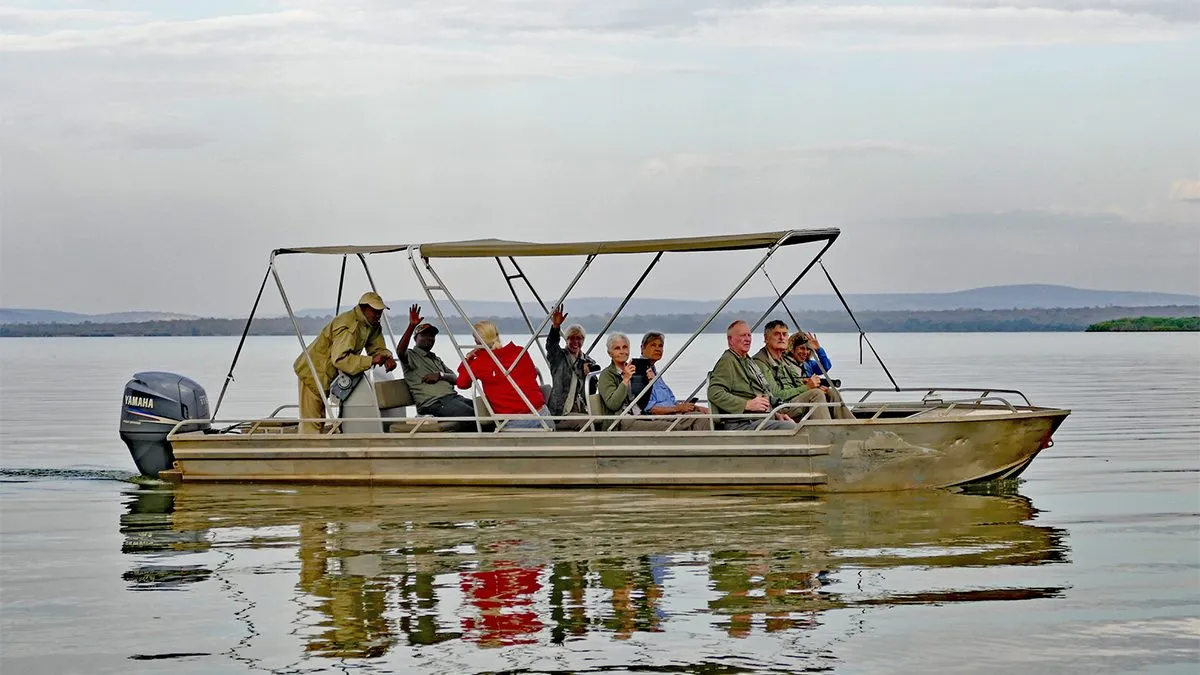
Unlike the unpredictable nature of forest trekking, the boat cruise follows a steady rhythm. The boat moves at a controlled pace, allowing passengers to scan both sides of the river continuously.
Guides provide commentary on animal behavior, geography, and ecological relationships. This interpretive layer enhances understanding of how river systems support large concentrations of wildlife.
The cruise often culminates near the base of Murchison Falls, where the Nile is forced through a narrow gorge before plunging downward. This section adds a dramatic geological element to the experience.
Emotional Contrast Between Gorilla Trekking and Nile Cruise
One of the most interesting aspects of combining these two experiences is the emotional contrast.
Gorilla trekking is intense, close, and immersive. It requires effort and focus, and the emotional response is often deep and reflective. The encounter with gorillas is quiet, grounded, and deeply personal.
The Nile cruise, by contrast, is expansive and relaxing. It allows you to decompress after the physical demands of trekking while still engaging with wildlife. The emotional tone shifts from intensity to calm observation.
This balance is what makes the combination so effective. It prevents safari fatigue and creates a more rounded experience.
Logistics of Combining the Two Experiences
Planning a gorilla and boat cruise safari requires careful routing. Most itineraries begin in southwestern Uganda with gorilla trekking in Bwindi or nearby sectors. From there, travelers move north toward Murchison Falls for the boat cruise.
The journey between these regions can be long, but it is part of the overall experience, offering a gradual transition through Uganda’s varied landscapes.
Lodges are typically selected to match this flow, starting with forest-based accommodation near gorilla trekking zones and ending with river or savannah lodges near the Nile.
Why This Combination Works So Well
The strength of this combination lies in its ecological and experiential diversity. Few safari itineraries offer such a sharp contrast between environments within a single trip.
Gorilla trekking provides depth, intimacy, and physical engagement. The Nile cruise provides breadth, relaxation, and large-scale wildlife viewing.
Together, they offer a more complete understanding of Uganda’s natural systems, from rainforest primates to river-based megafauna.
Final Perspective
A gorilla safari combined with a Nile boat cruise is not just a multi-activity itinerary. It is a structured journey through two of Uganda’s most important ecosystems.
In the forests of Bwindi, you experience one of the closest encounters with endangered primates on earth. On the Nile, you witness one of Africa’s most powerful river systems supporting dense concentrations of wildlife.
The contrast between these environments is what defines the experience. One is quiet and enclosed, the other open and dynamic. One demands effort, the other offers rest. Together, they create a balanced and deeply rewarding safari that reflects the ecological richness of Uganda in a single journey.