
Gorilla Safari and Mountain Hiking: Gorillas Plus the Rwenzori
A gorilla safari combined with mountain hiking is one of the most physically rewarding and ecologically diverse travel experiences in Uganda. It brings together two very different landscapes and two distinct types of adventure: the dense, ancient rainforest of Bwindi Impenetrable National Park where mountain gorillas live, and the dramatic alpine environment of the Rwenzori mountain range, often called the “Mountains of the Moon.”
This combination is designed for travelers who want more than wildlife viewing alone. It is for those who want to experience both primates in their natural rainforest habitat and high-altitude trekking in one continuous journey, moving from tropical jungle to glacier-carved peaks within the same country.
The Core Concept: From Rainforest to Alpine Wilderness
The idea behind combining gorilla trekking with mountain hiking is based on ecological contrast. In Bwindi, you are surrounded by dense vegetation, humidity, and low-altitude rainforest ecosystems. In the Rwenzori Mountains, conditions shift dramatically into alpine terrain, rocky ridges, glacial valleys, and extreme altitude zones.
Few destinations in Africa offer such a sharp environmental transition within a single itinerary. This makes the experience not just physically diverse but also scientifically interesting, as you move through multiple ecological zones in a short period of time.
Gorilla Trekking in Bwindi: The Rainforest Foundation of the Journey
The gorilla trekking portion of the safari takes place in Bwindi, a UNESCO-recognized rainforest ecosystem known for its exceptional biodiversity and steep terrain. The forest is thick, humid, and layered with vegetation that often limits visibility, creating an immersive jungle experience.
The day begins early with a ranger briefing where trekkers are assigned to a specific gorilla family. Groups are kept small to minimize environmental impact and ensure controlled interaction. The trek itself can vary widely depending on gorilla movement patterns, sometimes lasting a short hour, other times extending into several hours of hiking through dense forest.
Once the gorillas are located, the experience becomes highly structured. Visitors are allowed a limited time in their presence, during which they observe natural behaviors such as feeding, grooming, resting, and group interaction. The atmosphere is typically calm but emotionally powerful, as the proximity to such intelligent and endangered animals creates a strong sense of connection.
After the trek, travelers often experience physical fatigue but also a deep sense of fulfillment. This becomes an important transition point before entering the next phase of the journey: mountain hiking.
Transitioning from Forest to Mountains
The journey from Bwindi to the Rwenzori region marks a significant shift in both landscape and climate. The dense tropical rainforest gradually gives way to open highland areas and eventually to the foothills of the Rwenzori range.
This transition is not just geographical but also experiential. Gorilla trekking is grounded, enclosed, and forest-focused, while mountain hiking is expansive, vertical, and altitude-driven. Travelers move from tracking wildlife on footpaths to ascending multi-day mountain routes through changing ecological zones.
The change in environment also affects preparation. Gear, pacing, and physical conditioning become more important as altitude increases and oxygen levels decrease.
The Rwenzori Mountains: Africa’s High-Altitude Challenge
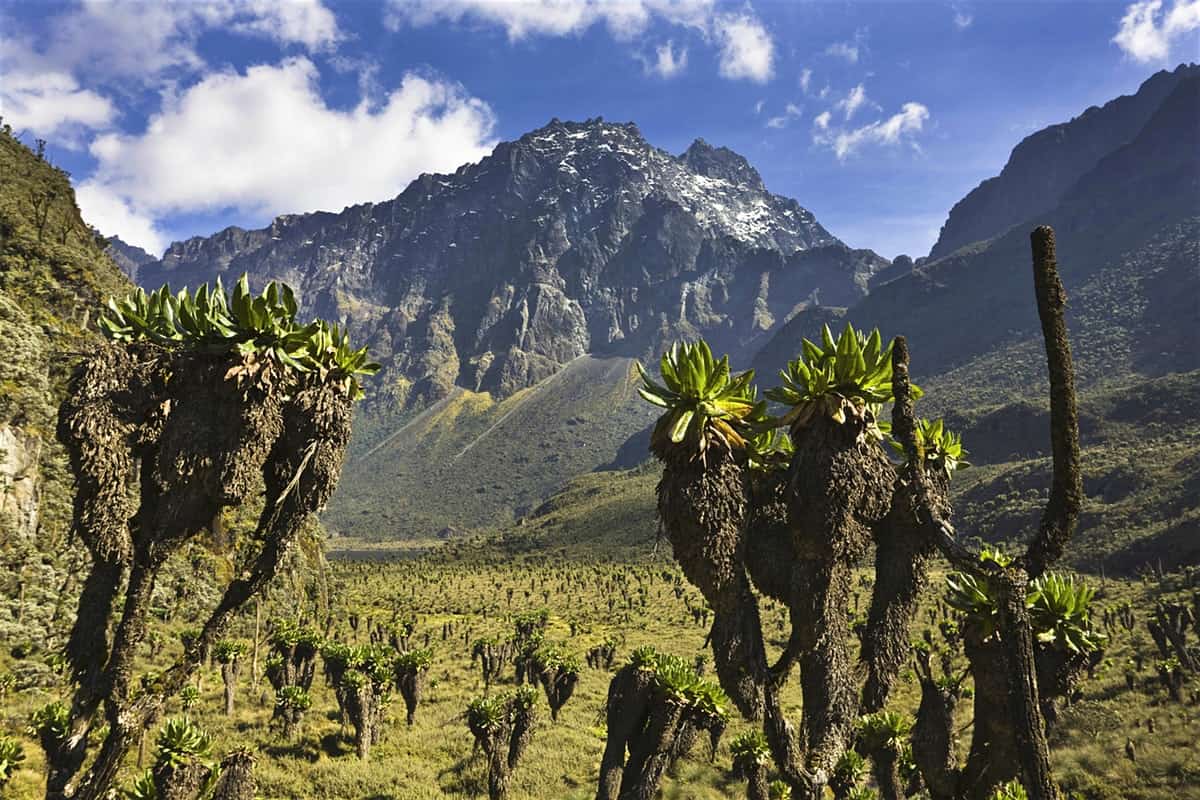
The Rwenzori Mountains are one of Africa’s most unique mountain systems. Unlike volcanic peaks such as Kilimanjaro or Mount Kenya, the Rwenzoris are block-fault mountains characterized by steep ridges, deep valleys, and permanent snow at higher elevations.
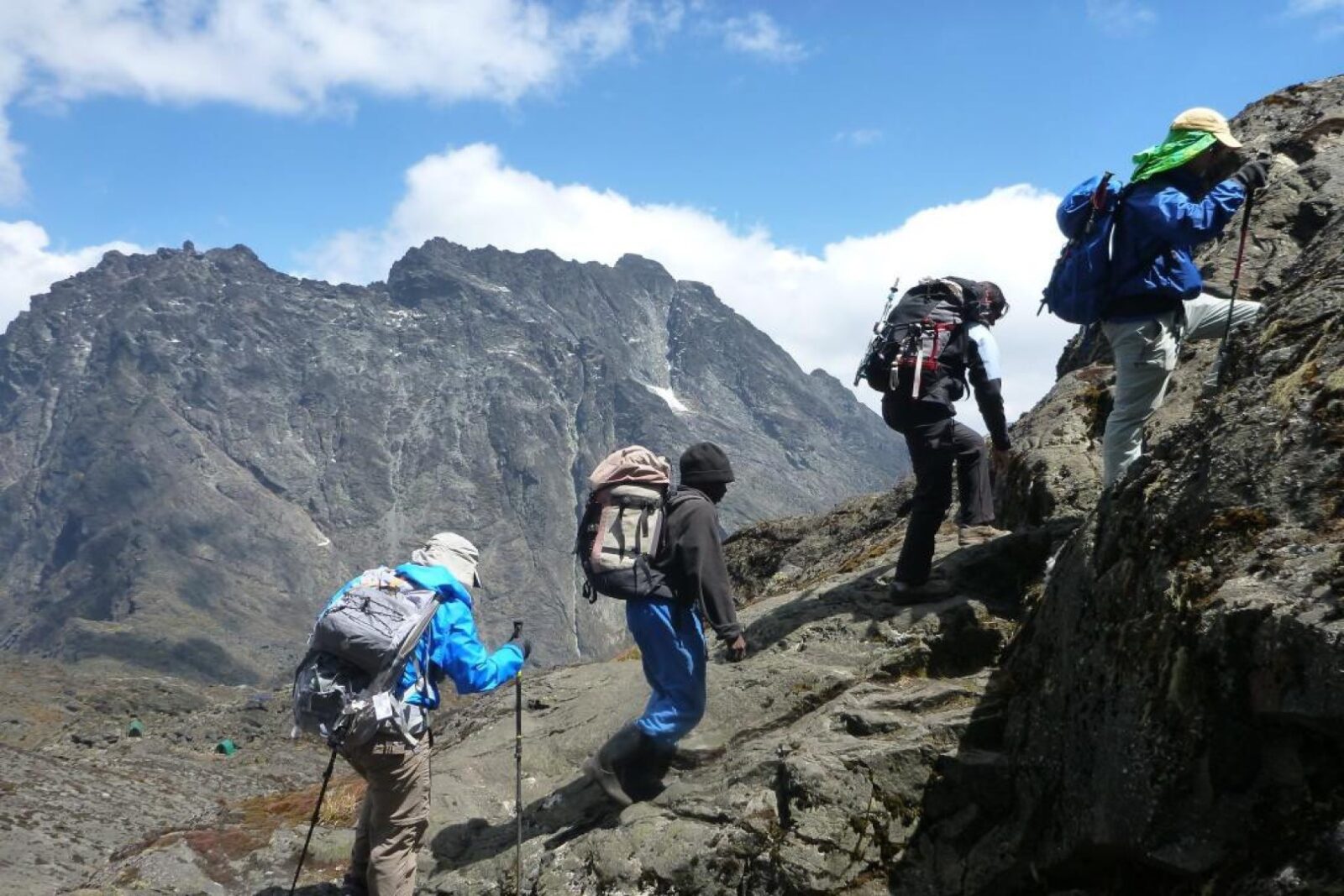
Hiking here is not a single-day activity. It is typically a multi-day expedition that involves trekking through multiple ecological zones, each with distinct vegetation and climate conditions. These include montane forest, bamboo zones, heather zones, and alpine regions.
As altitude increases, the environment becomes more extreme. Temperatures drop, terrain becomes more rugged, and vegetation becomes sparse. This progression creates a layered hiking experience that feels like moving through different worlds within the same mountain system.
Physical Demands and Endurance Requirements
Combining gorilla trekking with Rwenzori hiking creates one of the most physically demanding safari combinations in East Africa. Gorilla trekking alone involves steep ascents, uneven terrain, and long walking hours in humid conditions. The Rwenzori hikes add altitude stress, prolonged exertion, and multi-day endurance requirements.
Proper preparation is essential. Fitness levels must be sufficient to handle both forest trekking and high-altitude hiking. Acclimatization becomes particularly important in the Rwenzori region, where altitude sickness can occur if ascent is too rapid.
However, the challenge is also what makes the experience meaningful. Each stage builds physical resilience while rewarding effort with increasingly dramatic landscapes.
Ecological Diversity Along the Journey
One of the most striking aspects of this combination is the ecological diversity it reveals. Bwindi represents one of the oldest rainforest ecosystems in Africa, rich in primates, birds, insects, and plant species adapted to humid forest conditions.
The Rwenzori Mountains, by contrast, contain rare Afro-alpine vegetation, glaciers, and endemic species adapted to extreme altitude. Giant lobelias, heathers, and moss-covered landscapes dominate the mid to high elevations, creating surreal scenery.
Moving between these ecosystems allows travelers to experience a vertical slice of biodiversity that is rarely accessible in such a short timeframe anywhere else in Africa.
Emotional Contrast Between the Two Experiences
The emotional tone of gorilla trekking is often quiet, grounded, and intimate. It is about presence, observation, and connection with a single gorilla family in a controlled forest setting.
Mountain hiking in the Rwenzoris is more expansive and internal. It is about endurance, progression, and personal challenge. The emotional reward comes not from a single encounter but from gradual ascent and the achievement of reaching higher elevations.
Together, these experiences create a balance between external connection and internal accomplishment.
Logistics and Route Planning
A combined gorilla and Rwenzori itinerary requires careful logistical planning. Gorilla trekking is typically conducted first, allowing travelers to complete the physically demanding forest experience before moving into high-altitude hiking.
Travel between Bwindi and the Rwenzori region involves long road transfers through western Uganda, often passing through towns and highland landscapes that gradually shift in elevation.
Accommodation also changes significantly. Forest lodges near Bwindi are replaced by mountain base camps and trekking lodges designed to support multi-day expeditions.
The Role of Guides and Porters
Guides and porters play a critical role in both parts of the journey. In Bwindi, guides interpret gorilla behavior, track movements, and ensure safe observation distances. In the Rwenzori Mountains, guides become essential for navigation, altitude management, and route safety.
Porters are particularly valuable in both environments. They assist with carrying equipment, providing stability on difficult terrain, and supporting trekkers physically and logistically throughout the journey. Their role often significantly improves the overall experience.
Safety and Environmental Responsibility
Both gorilla trekking and Rwenzori hiking are highly regulated activities. In Bwindi, strict rules govern proximity, group size, and interaction with gorillas to protect their health and reduce stress.
In the Rwenzori Mountains, environmental protection focuses on minimizing trail impact, managing waste, and preserving fragile alpine ecosystems.
Responsible tourism is central to both experiences. Fees contribute directly to conservation efforts, community development, and park management systems that protect these ecosystems long-term.
Final Perspective
A combined gorilla safari and mountain hiking experience in Uganda is one of the most diverse adventure itineraries available in Africa. It merges two extremes of natural environments: the dense, living rainforest of Bwindi and the high-altitude, glacier-carved landscapes of the Rwenzori Mountains.
What makes this combination powerful is not just the contrast in scenery, but the contrast in experience. One is about close observation of endangered primates in a tightly regulated ecosystem. The other is about endurance, elevation, and personal challenge in a remote mountain environment.
Together, they create a journey that is both outwardly exploratory and inwardly transformative, offering a rare opportunity to experience Uganda’s natural heritage in its fullest ecological and emotional range.