
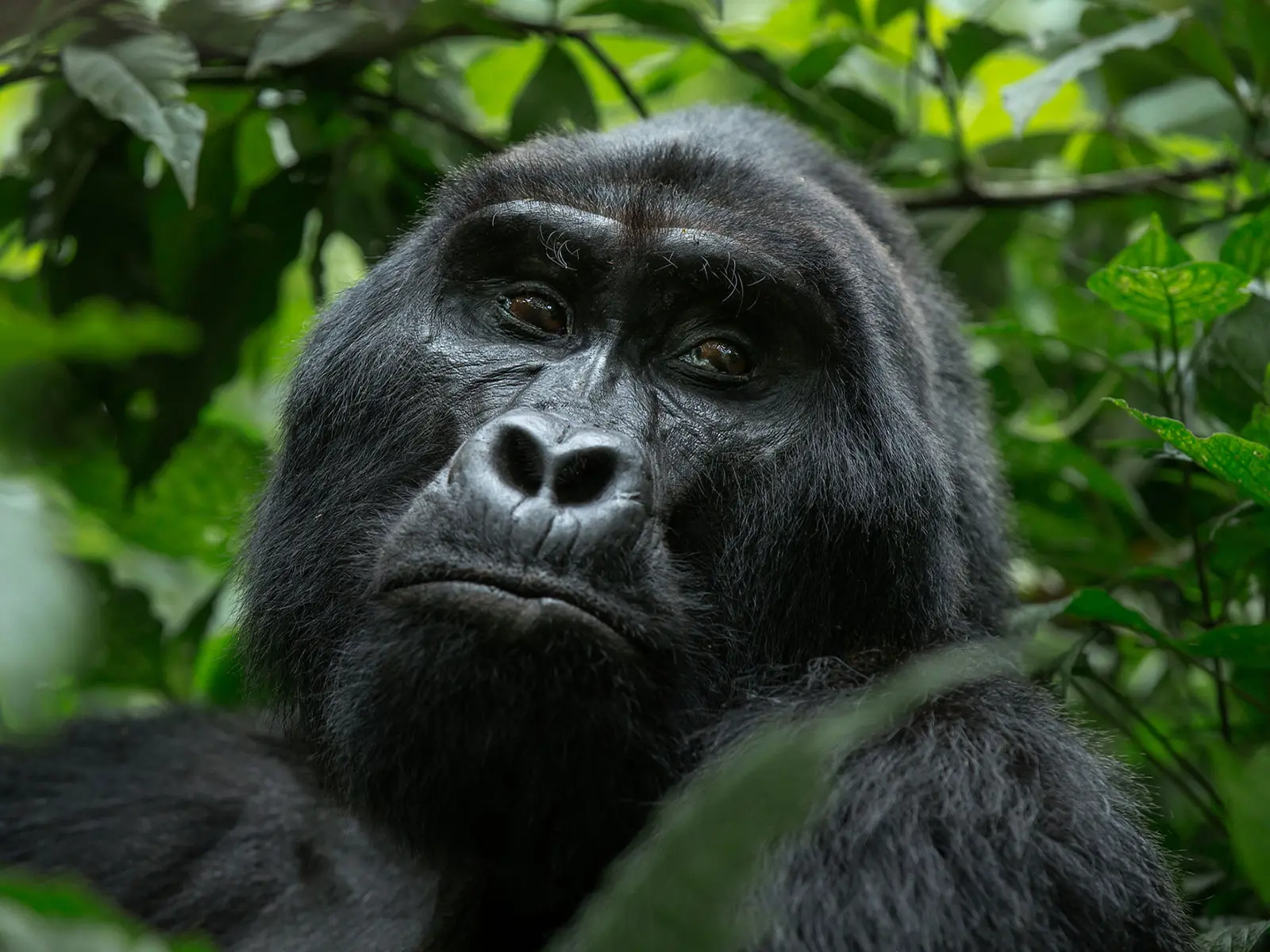
Mountain Gorilla Safari: Species Facts Every Trekker Must Know
A mountain gorilla safari is not just a wildlife encounter. It is an immersion into one of the most studied, protected, and socially complex primate species on Earth. In the misty volcanic forests of Volcanoes National Park, trekkers come face-to-face with a species whose biology, behavior, and conservation history are tightly interwoven with human scientific effort and long-term protection.
Understanding the species before trekking changes the experience significantly. What may look like simple forest movement is actually structured social life shaped by dominance, kinship, and survival in a fragile high-altitude ecosystem.
Who Are Mountain Gorillas?
Mountain gorillas (Gorilla beringei beringei) are one of two subspecies of eastern gorilla. They are found only in two isolated populations in East-Central Africa: the Virunga volcanic range and Uganda’s Bwindi Impenetrable Forest.
They are fully adapted to:
Cool, high-altitude rainforest
Dense vegetation and steep terrain
Low-temperature mountain environments
Unlike lowland gorillas, mountain gorillas have thicker fur, larger bodies, and adaptations that allow them to survive in colder climates.
Where You See Them on Safari
The most famous trekking destination is Volcanoes National Park, which protects part of the Virunga mountain range.
Other populations exist in Uganda and the Democratic Republic of Congo, but Rwanda is known for:
Easier accessibility
Well-organized trekking systems
High habituation success rates
This makes Rwanda one of the most reliable places in the world to see mountain gorillas in their natural habitat.
Gorilla Social Structure: The Silverback System
Mountain gorillas live in family groups led by a dominant male known as a silverback.
Each group typically includes:
One dominant silverback (leader and protector)
Several adult females
Infants and juveniles
Sometimes subordinate males (blackbacks)
The silverback is central to group survival. He decides movement, mediates conflict, and protects the group from external threats.
Unlike many mammals, gorilla groups are stable social units rather than loose aggregations.
Intelligence and Behavior
Mountain gorillas are highly intelligent primates with complex emotional and social behavior.
They demonstrate:
Problem-solving abilities
Memory of social relationships
Emotional bonding between mothers and infants
Play behavior in juveniles
Conflict resolution without constant aggression
One of the most striking aspects for trekkers is their calmness. Despite their strength, they are generally non-aggressive unless threatened.
Diet and Feeding Habits
Mountain gorillas are primarily herbivores.
Their diet includes:
Leaves and shoots
Stems and bark
Wild fruits (seasonally)
Bamboo shoots in high-altitude zones
Because vegetation is abundant in their environment, they spend a large portion of the day feeding.
This feeding behavior shapes trekking encounters, as gorillas are often observed resting or slowly moving between feeding sites.
Daily Life in the Forest
A typical gorilla day follows a structured rhythm:
Early morning feeding after waking
Midday rest and grooming
Afternoon movement to new feeding areas
Evening nesting in fresh leaf nests
Each individual constructs a new nest every night, either on the ground or in trees depending on age and strength.
Communication and Vocalization
Gorillas communicate using a wide range of sounds and body language.
Common signals include:
Grunts and barks for coordination
Chest beating for display and communication
Soft vocalizations between mothers and infants
Postural signals for dominance or reassurance
Chest beating is often misunderstood as aggression. In reality, it can signal identity, excitement, or social display rather than conflict.
Growth and Family Life
Infant gorillas are highly dependent on their mothers for several years.
Key stages include:
Infancy (0–3 years): constant maternal care
Juvenile stage (3–6 years): increased independence and play
Sub-adult stage: learning social roles and group behavior
Females often remain in their natal group until adulthood, while males eventually leave or attempt to form their own groups.
Lifespan and Survival
Mountain gorillas can live up to 35–40 years in the wild, though survival depends on environmental stability and protection.
Key threats historically included:
Habitat loss
Poaching
Human-wildlife conflict
Disease transmission
Conservation efforts have significantly improved population stability, making mountain gorillas one of the few great ape species with a slowly increasing population trend.
Conservation Success Story
The survival of mountain gorillas is considered one of the greatest conservation success stories in modern wildlife history.
In places like Volcanoes National Park, long-term protection has involved:
Intensive ranger patrol systems
Strict tourism regulation
Community conservation programs
Continuous scientific monitoring
Tourism revenue directly supports protection efforts, creating a model where wildlife value is linked to survival.
Gorilla Trekking Experience Explained
A mountain gorilla safari typically involves hiking through forest terrain with trained rangers to locate a habituated gorilla family.
Once found, visitors spend a strictly limited time observing them.
The experience includes:
Tracking footprints and feeding signs
Guided movement through dense forest
Close but regulated observation of a gorilla family
One hour of controlled viewing
This structured system ensures minimal disturbance while allowing sustainable tourism.
Safety and Human Interaction
Mountain gorillas are generally peaceful toward humans due to habituation.
However, strict rules exist:
Maintain at least 7 meters distance
Avoid direct eye contact for prolonged periods
No sudden movements or loud noises
No trekking when ill
These rules protect both gorillas and humans from stress and disease transmission.
Why Habituation Matters
Habituation is the process that allows wild gorillas to become comfortable with human presence without losing natural behavior.
It involves:
Years of gradual exposure
Monitoring behavioral responses
Ensuring groups remain stable under observation
Without habituation, gorilla trekking would not be possible.
Physical Environment of Their Habitat
The gorilla habitat in Volcanoes National Park is defined by:
Volcanic soil and rugged terrain
High rainfall and dense vegetation
Rapidly changing weather conditions
Elevations often above 2,000 meters
This environment shapes both gorilla behavior and trekking difficulty.
What Makes Them Unique Among Primates
Mountain gorillas differ from other primates in several key ways:
They live in stable family groups
They show low aggression compared to other great apes
They have strong maternal bonding systems
They rely heavily on social cohesion for survival
Their calm nature is one of the reasons they are suitable for regulated tourism.
Why Understanding the Species Matters Before Trekking
Knowing gorilla biology and behavior transforms the trekking experience.
Instead of seeing “animals in the forest,” trekkers begin to understand:
Social relationships within the group
Leadership roles and decision-making
Emotional behaviors and interactions
Ecological dependence on forest systems
This deeper understanding turns the encounter into an interpretive experience rather than just observation.
A mountain gorilla safari in Volcanoes National Park is one of the most significant wildlife experiences available anywhere in the world.
It combines rare species biology, complex social behavior, and one of the strongest conservation success stories in modern history.
For trekkers, understanding the species is not optional-it is essential.
Because what you encounter in the forest is not just a primate.
It is a highly intelligent, socially structured species whose survival depends on careful human stewardship and global conservation commitment.