
Gorilla Safari Night Walk Bwindi: What Animals Come Out After Dark
A night walk experience around Bwindi Impenetrable National Park is one of the least understood yet most fascinating extensions of a gorilla safari. While gorilla trekking dominates daytime activity, the forest transforms completely after sunset. The sounds change, the movement shifts, and a different layer of biodiversity emerges-one that is rarely seen during standard daytime trekking.
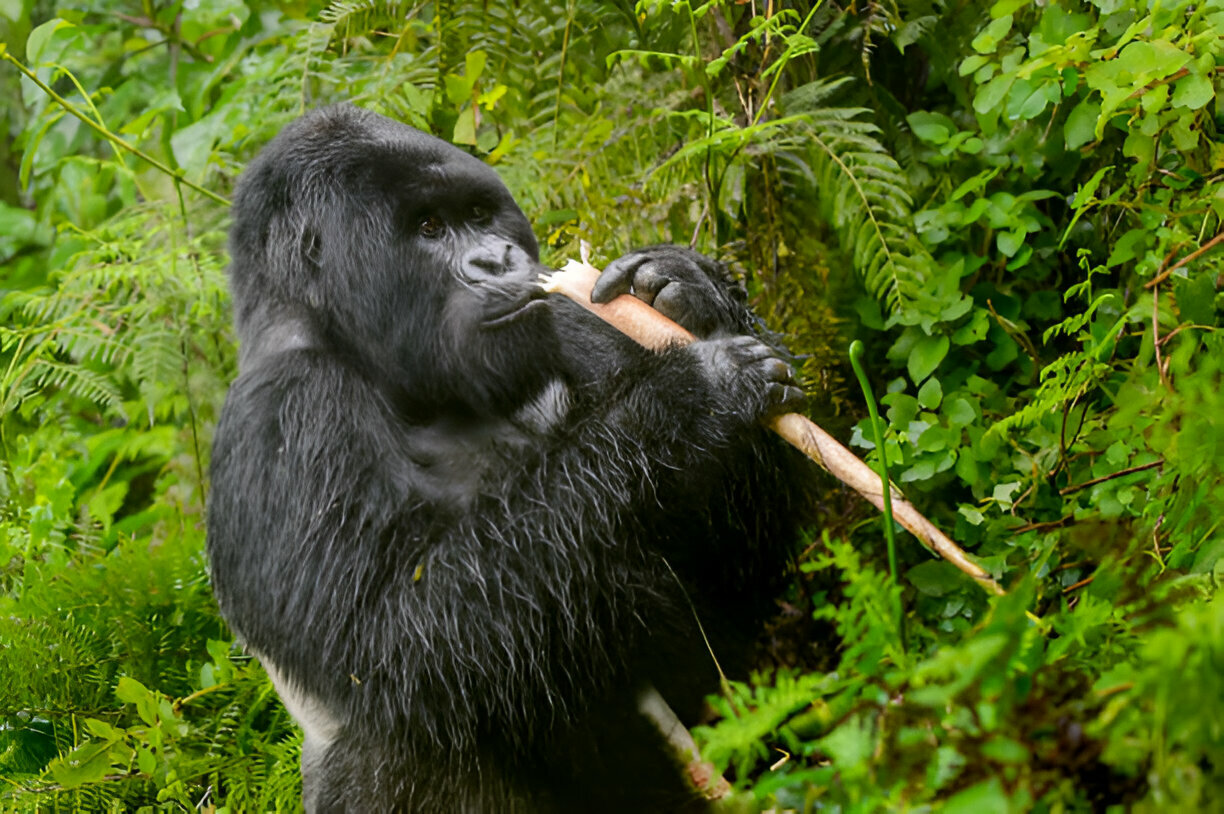
A night walk is not about gorillas, since mountain gorillas nest and remain largely inactive after dusk. Instead, it reveals the nocturnal ecosystem of Bwindi, a rainforest that continues to function with a completely different cast of species once darkness settles.
The Transformation of Bwindi After Sunset
As daylight fades, Bwindi transitions from a visually dense rainforest into a sound-driven environment. The thick canopy that once filtered sunlight becomes a barrier that amplifies darkness. Visibility drops sharply, and human senses shift from sight to hearing and torchlight observation.
The forest floor, which felt familiar during the day, becomes unpredictable at night. Every rustle, call, or movement carries more weight because visibility is limited. This is when nocturnal animals begin to take advantage of the reduced disturbance, emerging to feed, hunt, or move between territories.
Night walks are typically conducted along designated trails near lodge zones or forest edges, guided by trained rangers who understand both animal behavior and safety protocols.
Nocturnal Primates: The Gentle Night Movers
One of the most commonly observed groups during night walks are nocturnal primates, particularly bush babies. These small primates are highly active after dark and are often spotted using eye-shine reflection when light hits them.
Bush babies move rapidly through trees using powerful hind legs, feeding on insects, fruits, and tree gum. Their large eyes are adapted for night vision, making them efficient nocturnal foragers. While they are not as famous as gorillas, they represent an important part of Bwindi’s ecological balance.
Occasionally, pottos may also be observed. These slow-moving primates are more secretive and tend to freeze when exposed to light, blending into branches with remarkable camouflage. Spotting one requires patience and a trained guide who knows where to look.
Nocturnal Birds: Silent Hunters of the Night
Bwindi is also home to several nocturnal bird species, the most notable being owls. These birds of prey are highly adapted to the darkness, using acute hearing and silent flight to hunt small mammals.
During night walks, you may hear their calls echoing through the forest before seeing them. Their presence is often detected through sound rather than sight, adding an auditory layer to the experience.
Nightjars are another group commonly associated with Bwindi’s nocturnal birdlife. These ground-nesting birds are often heard more than seen, producing repetitive calls that define the nighttime soundscape of the forest.
Insects and Amphibians: The Loudest Voices of the Night
While larger animals are more elusive, the most noticeable activity during a Bwindi night walk often comes from insects and amphibians. Frogs become highly vocal after rainfall or in humid conditions, creating a continuous chorus that fills the forest.
Insects such as crickets, cicadas, and beetles dominate the auditory environment. Their combined sounds form a rhythmic background that defines the nighttime identity of the forest.
Some insects are also visually striking under torchlight, reflecting light in unexpected ways or revealing unique patterns and colors that are not easily seen during the day.
Small Mammals: The Hidden Foragers
Small mammals play a significant role in Bwindi’s nocturnal ecosystem. Species such as rodents and tree-dwelling mammals become active as they search for food and navigate the forest floor.
These animals are essential to the food chain, serving as prey for nocturnal predators such as owls and small carnivores. Although they are not always easy to spot, trained guides often detect their presence through movement, sound, or subtle disturbances in vegetation.
Their activity highlights the forest’s continuous cycle of life, where even after human visitors leave during the day, ecological processes continue uninterrupted.
Reptiles: Cold-Blooded Night Activity
Reptiles also become more visible during night walks, particularly in warm and humid conditions. Some species of snakes may be encountered as they move through the forest in search of prey or suitable resting spots.
While encounters are rare and typically safe when guided properly, they add an element of caution and awareness to the experience. Chameleons and geckos may also be observed, especially near vegetation where insect activity is high.
Reptiles in Bwindi are generally not aggressive toward humans and tend to avoid confrontation, relying instead on camouflage and stillness for protection.
The Role of Rangers in Night Walks
Night walks in Bwindi are strictly guided experiences led by experienced Uganda Wildlife Authority rangers. Their role is not only to ensure safety but also to interpret the forest in real time.
Rangers use flashlights strategically, avoiding excessive light that could disturb animals while still allowing observation. They identify species based on sound, movement patterns, and habitat knowledge developed over years of experience.
Their expertise transforms the walk from a simple observation exercise into an interpretive journey through the forest’s nocturnal dynamics.
Safety and Ethical Considerations
Night walks are carefully regulated to minimize disturbance to wildlife. Movement is restricted to designated areas, and group sizes are kept small. This ensures that nocturnal animals are not overwhelmed by human presence.
Flash photography is not permitted, and noise levels are kept to a minimum. The goal is to observe natural behavior without altering it. This ethical framework is essential in a sensitive ecosystem like Bwindi, where even small disturbances can affect animal behavior.
The Sensory Experience of the Night Forest
Unlike daytime trekking, where visual observation dominates, night walks engage multiple senses in a different way. Hearing becomes the primary tool for understanding the environment, followed by limited visual cues from torchlight.
The forest feels more enclosed, more intimate, and at times more mysterious. Sounds travel differently, and even small movements become significant. This sensory shift creates a heightened awareness of the ecosystem’s complexity.
For many visitors, this is one of the most memorable aspects of a Bwindi safari, not because of what is seen, but because of how the forest is experienced.
Connection to the Broader Gorilla Safari Experience
Although gorillas themselves are not part of night walks, the experience complements the broader safari narrative. After spending time with mountain gorillas during the day, the night walk reveals how the same ecosystem supports a completely different set of species after dark.
This dual perspective deepens understanding of Bwindi as a living system rather than a single-species destination. It highlights the interdependence of nocturnal and diurnal life within the rainforest.
Final Perspective
A night walk in Bwindi Impenetrable National Park is not about dramatic sightings or guaranteed encounters. It is about subtlety, patience, and ecological awareness. The animals that emerge after dark-bush babies, owls, frogs, insects, and elusive mammals-represent a hidden layer of biodiversity that completes the forest’s identity.
For travelers who have already experienced gorilla trekking, the night walk adds depth and contrast. It shifts the focus from the iconic to the overlooked, from the visible to the hidden, and from structured encounters to natural unpredictability.
In the end, it reveals a simple but powerful truth: Bwindi does not sleep. It only changes form.