
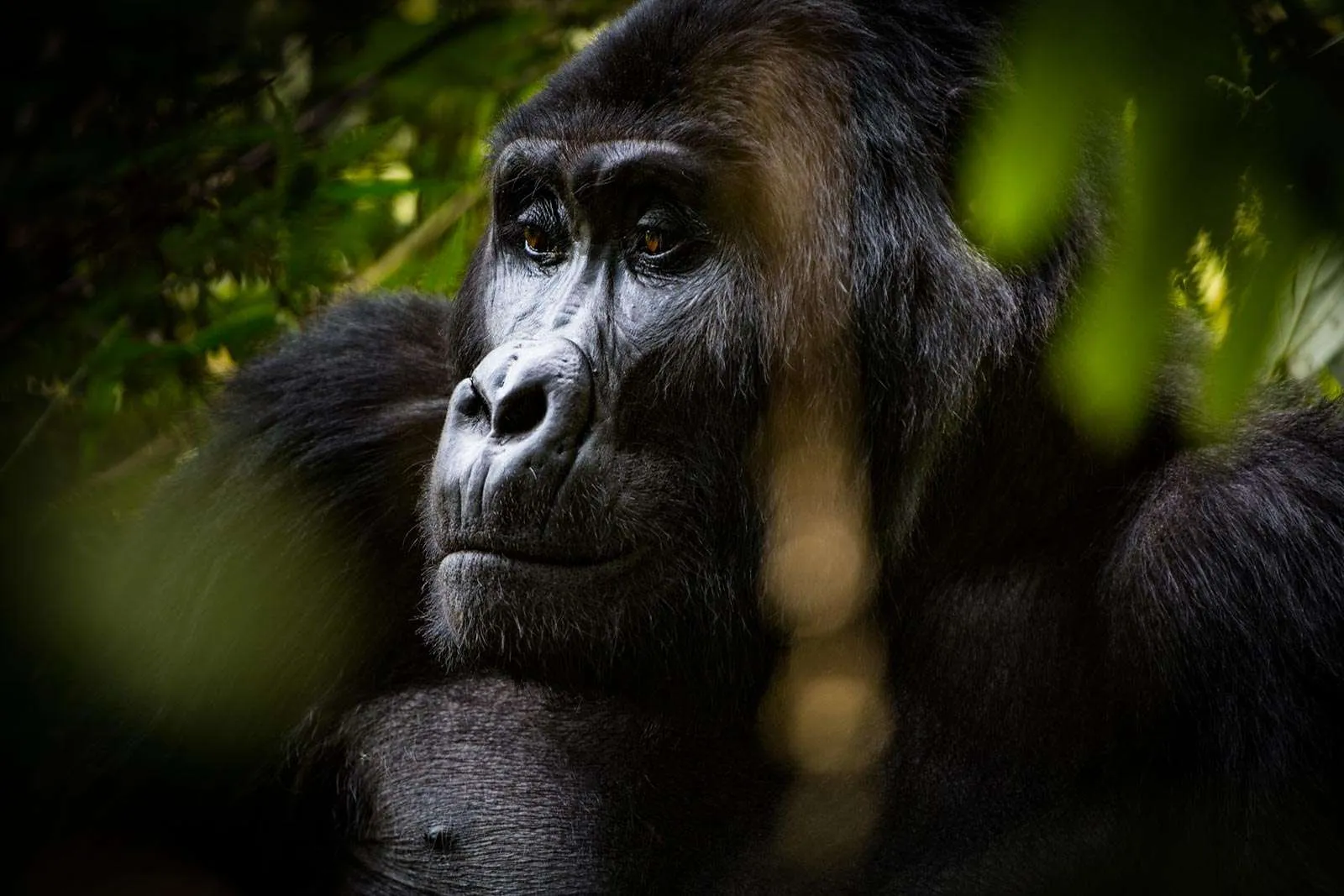
Gorilla Trekking Conservation Fees: Where Does Your $800 Actually Go?
Nearly every traveler researching a Uganda gorilla trip eventually asks some version of the same question: what am I actually paying for at that price. Gorilla trekking conservation fees are, understandably, one of the first things a first-time visitor questions when comparing an $800 Uganda gorilla permit against the price of an entire week-long safari elsewhere in Africa. The number can feel abstract until it is broken down into what it actually funds, and once you see the breakdown, the figure reads less like a simple entry ticket and more like a direct, itemized contribution to keeping an endangered species alive and a whole regional economy functioning around it.
The Rough Breakdown
Roughly three-quarters of every permit fee flows directly into conservation activity across Bwindi Impenetrable National Park and Mgahinga Gorilla National Park: ranger salaries, anti-poaching patrol logistics, veterinary care for habituated gorilla families, and the ongoing habitat protection and monitoring work that keeps the parks functioning day to day, whether or not a single tourist happens to be trekking on a given morning. A further meaningful share, generally cited as around twenty percent of park entry fees plus an additional fixed contribution per permit, flows specifically into revenue-sharing programs with communities bordering the park. The remainder covers Uganda Wildlife Authority’s broader administrative and operational costs, the infrastructure, staffing, and logistics that keep the whole permit and booking system running smoothly for the tens of thousands of visitors trekking each year.
What the Conservation Share Actually Pays For
The conservation-designated majority of your permit fee funds work that is easy to describe in the abstract but genuinely expensive to sustain in practice. Ranger salaries and equipment, the daily patrols that locate and disable poachers’ snares before they harm any animal, gorilla or otherwise, represent an ongoing, year-round cost that does not pause during low season or between trekking permits. Veterinary intervention capacity, the ability to treat an injured or sick gorilla directly in the field rather than simply monitoring from a distance, requires specialized training, equipment, and standing readiness that only sustained funding can maintain. Habitat protection and monitoring, tracking gorilla family movements, health, and population trends across both parks, similarly represents continuous work rather than a one-time cost covered by an early investment years ago.
This funding model explains directly why Uganda’s mountain gorilla population has grown from roughly 300 individuals in Bwindi in the early 2000s to more than 450 today, a genuine conservation success story that conservationists consistently credit to sustained ranger patrol work, veterinary care, and habitat protection made possible by tourism revenue rather than any single intervention alone. Few endangered great ape populations anywhere in the world can point to comparable growth over the same period, which makes the funding model behind it, permit fees translated directly into protection work, worth understanding rather than dismissing as an abstract cost of doing business. It is a useful counterpoint to raise with travelers who assume conservation fees are largely symbolic or absorbed into general government revenue, since the population trend itself is a fairly direct, measurable outcome of where this specific money has actually gone.
The Community Revenue-Sharing Piece
The community-directed portion of your permit fee addresses a different but equally important part of the conservation equation: the economic incentives facing people who live alongside the park’s boundary. Revenue-sharing funds have gone toward schools, health centers, and local infrastructure projects in communities bordering Bwindi and Mgahinga, a deliberate strategy to ensure that people living closest to the gorillas see tangible, ongoing benefit from their continued protection rather than experiencing the park purely as a restriction on land they might otherwise farm, log, or hunt. This model directly reduces the economic pressure toward poaching and illegal forest use, since a household benefiting from tourism-funded infrastructure has a clearer, more immediate stake in the park’s continued success than one that sees only the restrictions and none of the return.
How This Compares to Rwanda and Congo’s Fee Structures
Rwanda’s gorilla permit, priced at $1,500, nearly double Uganda’s rate, follows a broadly similar allocation logic but with a considerably larger conservation and infrastructure budget behind it, reflecting Rwanda’s deliberate high-value, lower-volume tourism strategy across Volcanoes National Park. A larger share of Rwanda’s fee has gone toward substantial infrastructure investment, improved roads, expanded ranger capacity, and a well-funded revenue-sharing program that has become something of a model referenced by other African conservation programs. The Democratic Republic of Congo’s Virunga National Park operates with a smaller, more constrained conservation budget given the park’s history of instability and periodic closures, which has at times limited how consistently its own fee structure can fund comparable ranger and community programs, making Uganda and Rwanda the more consistently well-resourced options for travelers weighing where their conservation fee will have the most reliable impact. This is not a criticism of Congo’s conservation staff or rangers themselves, many of whom work under genuinely difficult and sometimes dangerous conditions, but rather a reflection of how much harder consistent, well-funded conservation work becomes in a region facing ongoing security instability compared to the more settled operating environment Uganda and Rwanda currently enjoy.
None of this makes one country’s fee “better” than another in a simple sense, since each reflects a different balance of visitor volume, park scale, and funding strategy, but understanding the comparison helps put Uganda’s $800 figure in useful context rather than evaluating it in isolation.
Does More of the Fee Reach Conservation Than It Used To?
Uganda’s gorilla permit price has risen over the years, and each increase has generally been framed by Uganda Wildlife Authority specifically around funding needs, rising ranger salary and equipment costs, expanded veterinary capacity, and growing community program budgets as both the gorilla population and the surrounding human population have grown. This is worth knowing because it reframes periodic price increases not simply as visitors paying more for the same experience, but as the funding model scaling alongside genuinely expanding conservation responsibilities, more gorillas to protect, more rangers needed to protect them, and more communities engaged in the revenue-sharing system as habituated families and trekking sectors have expanded over the past two decades.
Why This Matters When Comparing Prices
Understanding where the money actually goes reframes how the $800 figure should be evaluated against cheaper-sounding alternatives elsewhere or against travelers’ initial sticker shock. Uganda Wildlife Authority has consistently resisted pressure to significantly undercut its pricing relative to Rwanda’s considerably higher rate, in part because permit revenue is not simply profit margin, it is the direct operating budget for the entire protection system described above. A lower permit price, absent some other funding source to replace the shortfall, would mean fewer ranger patrols, reduced veterinary capacity, or diminished community programs, each of which carries real downstream risk to the very population the trekking industry depends on. Viewed this way, the fee functions less like a museum admission ticket and more like a direct, transparent contribution to a specific, ongoing conservation program with a genuinely measurable track record.
What the Fee Does Not Cover
It is worth being clear about what the gorilla permit fee itself does not include, since this is a common source of confusion for first-time trip planners. The permit covers only the trek and the associated conservation and community contribution described above; it does not include accommodation, meals, transport to and from the park, porter fees, tips, or the broader cost of an operator-arranged trip. A complete gorilla trekking trip therefore runs considerably higher than the $800 permit figure alone once lodging, ground transport, and other logistics are factored in, something worth budgeting for accurately rather than being surprised by the full trip cost after anchoring expectations purely on the permit price. Understanding this distinction also clarifies why conservation fees specifically, as opposed to total trip cost, represent such a direct, traceable contribution: the permit fee is the one line item in an entire trip budget with a genuinely transparent, well-documented allocation back to conservation and community programs.
Seeing the Impact of Your Fee Firsthand
Understanding gorilla trekking conservation fees before you travel adds real context to the experience itself, turning an abstract cost into something you can see reflected directly in the health and behavior of the family you eventually trek to find. Our page on how gorilla rangers protect Bwindi goes further into the daily patrol work this funding supports, and our piece on gorilla population growth success stories covers the broader conservation trajectory these fees have helped fund. For a full comparison of permit pricing across countries, our guide to the cost of a gorilla trekking permit in Uganda and Rwanda is worth reading alongside this piece, and our page on gorilla safari conservation touring covers how visitors can engage even more directly with this side of the park. A well-paced three-day Bwindi gorilla trekking safari is, in the end, a direct investment in the system that made your trek possible in the first place, and knowing exactly where your gorilla trekking conservation fees go tends to make that $800 feel considerably more justified by the time you actually reach the forest.