
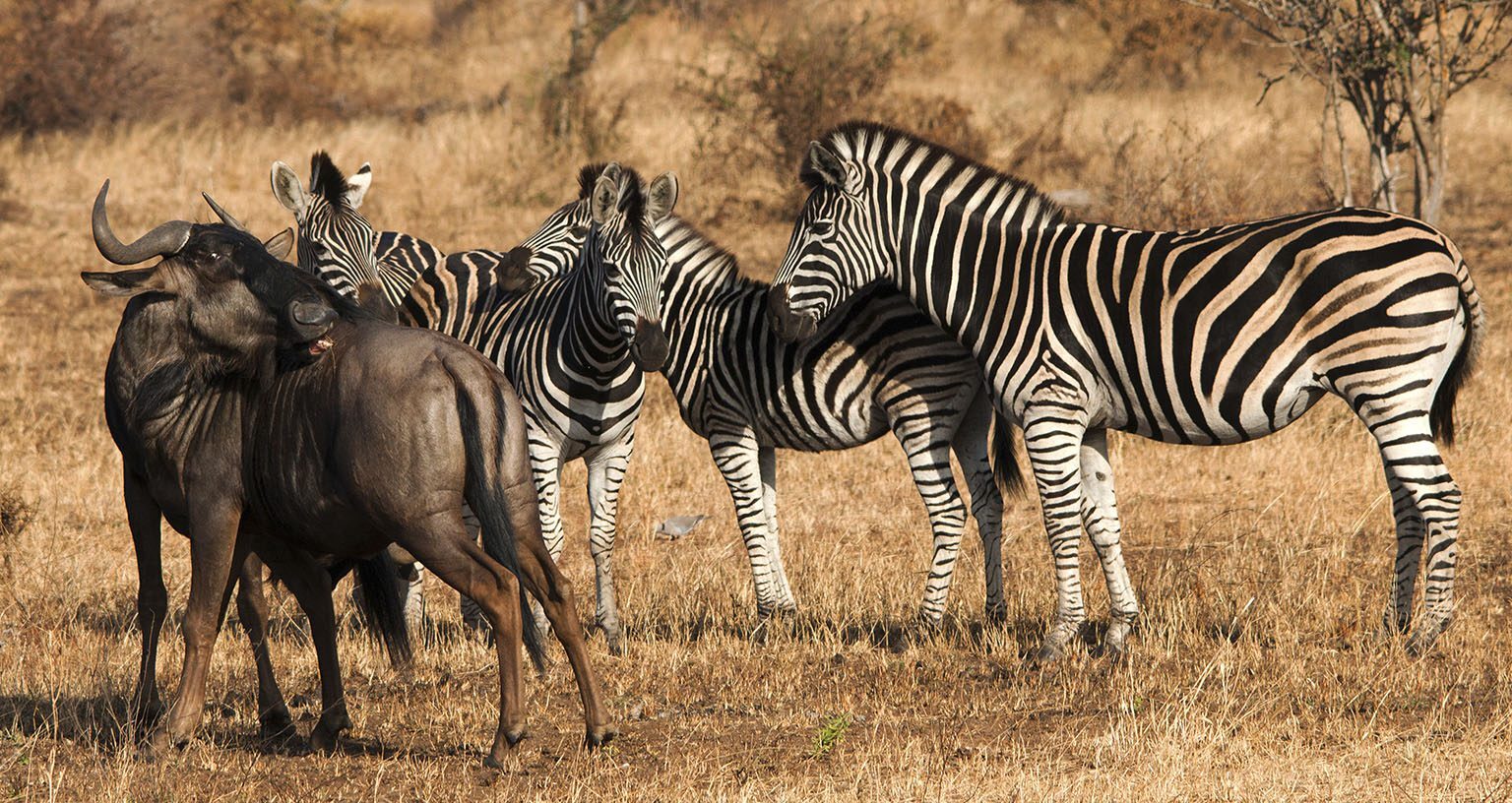
They All Looked the Same at First
On my first safari, I thought identifying zebras would be impossible.
A herd stood grazing across the savannah, and from a distance every animal appeared identical. Black stripes. White stripes. Upright mane. Similar size. Similar shape. I could recognise a zebra instantly, but distinguishing one from another seemed completely unrealistic.
As our guide parked near the herd, I asked a simple question.
“How do researchers tell them apart?”
He smiled and pointed towards a mare standing a short distance from the others.
“Look at her shoulder.”
At first, I saw nothing unusual.
Then I looked more carefully.
Nature’s Fingerprints
The closer I examined the zebra, the more obvious the differences became.
The stripes on her shoulder curved sharply backwards. Another zebra nearby had a completely different pattern, with stripes that appeared straighter and more widely spaced. A third had several narrow stripes branching into smaller lines near its neck.
No two patterns matched.
Scientists often compare zebra stripes to human fingerprints because every zebra carries a unique design from birth until death. These patterns never repeat exactly, allowing researchers to identify individual animals without tagging or capturing them.
Once I understood this, the herd no longer looked like a collection of identical animals.
It looked like a gathering of individuals.
Starting With the Face
The easiest place to begin identifying zebras is the face.
Each zebra has distinctive facial markings. Some display broad stripes running directly between the eyes, while others have narrow lines that split and curve in different directions.
Our guide encouraged us to photograph several zebras and compare the images.
Within minutes, differences that seemed invisible earlier became surprisingly obvious.
One mare had a stripe that curved around her eye before joining another line near her cheek. Another had a distinctive V shaped pattern above her nose.
After noticing these details, recognising the same animals became much easier.
The Shoulder Test
Wildlife researchers often pay special attention to shoulder patterns.
The stripes around the shoulder and upper body tend to remain clearly visible even when zebras are grazing. These markings provide reliable reference points for identification.
As the herd moved through the grass, I began focusing on this area.
One zebra displayed thick stripes with wide white spaces between them.
Another had numerous thin stripes packed closely together.
A third carried a distinctive fork shaped stripe that split into two branches near its shoulder blade.
Slowly, individuals began standing out from the crowd.
Mothers and Foals
The lesson became even more interesting when we observed a young foal standing beside its mother.
Unlike adults, young zebra foals are often born with brownish stripes rather than deep black ones. Their patterns are already unique, however, and remain with them throughout life.
For the first few days after birth, a mare often spends time alone with her foal. During this period, the youngster learns to recognise its mother’s stripe pattern, scent, and vocal calls.
This ability is essential.
In a large herd containing dozens of zebras, recognising the correct parent quickly can make a huge difference to survival.
Watching the foal stay close to its mother suddenly made perfect sense.
Why Researchers Study Stripe Patterns
Learning to recognise individual zebras is not just a fun safari activity.
Scientists use stripe identification for serious conservation work.
By photographing zebras over many years, researchers can track movements, monitor breeding success, estimate population sizes, and study social relationships.
Modern technology has made this process even more efficient. Computer software can now compare stripe patterns in the same way facial recognition systems compare human faces.
A photograph taken today can often be matched with images captured years earlier, revealing the life history of a particular zebra.
More Than Just Black and White
As I continued observing the herd, I realised that stripe patterns varied in several ways.
Some zebras had bold, thick stripes that created dramatic contrasts.
Others displayed intricate networks of narrow lines.
Certain animals had shadow stripes, faint brown stripes appearing between darker ones.
Some patterns wrapped neatly around the body, while others twisted and branched unpredictably.
Every zebra seemed to carry its own design.
The longer I looked, the harder it became to understand how I had ever thought they all looked alike.
A New Challenge
After spending nearly an hour studying the herd, our guide decided to test us.
He pointed towards a zebra feeding several metres away.
“Can you find the mare with the forked shoulder stripe?”
At first, I doubted I could.
Then I spotted her.
A few minutes later, he asked me to identify the zebra with the narrow facial stripes.
I found that one too.
What had seemed impossible earlier that morning was suddenly becoming manageable.
The secret was simply paying attention.
Where This Skill Comes in Handy
Learning to recognise individual zebras can add a completely new dimension to a safari.
Instead of seeing a herd as a single group, you begin noticing relationships and behaviours between specific animals.
You recognise the mare leading the group.
You spot the stallion keeping watch.
You identify the playful foal chasing others across the grass.
Wildlife becomes more personal and more memorable.
This is especially rewarding in places with large zebra populations such as Lake Mburo National Park and Kidepo Valley National Park in Uganda, the Maasai Mara in Kenya, and Serengeti National Park in Tanzania.
The Science Behind the Stripes
Scientists still debate the exact reasons zebras evolved their famous patterns.
Research suggests the stripes may help reduce biting insect attacks, improve temperature regulation, and make it harder for predators to focus on a single animal during a chase.
Whatever their original purpose, the stripes have become one of nature’s most effective identification systems.
Every zebra carries a pattern that is completely its own.
No registration number.
No name tag.
No collar.
Just a unique arrangement of black and white lines.
Seeing Zebras Differently
By the end of the safari, I no longer saw a herd of identical animals.
I saw individuals.
I noticed the mare with the split shoulder stripe.
I recognised the stallion with the unusually broad neck markings.
I remembered the young foal whose stripes were still brown.
The herd had transformed from a collection of lookalike animals into a community of distinct personalities.
The Day the Stripes Made Sense
As the zebras gradually disappeared into the distance, I realised something had changed.
The challenge was never learning to tell zebras apart.
The challenge was learning how to look.
Once you slow down and study the details, the differences become impossible to miss. Every stripe tells part of an individual story written across the animal’s body. What first appears to be repetition is actually extraordinary variety.
The next time you encounter a herd of zebras on safari, try choosing one animal and following its stripe pattern carefully. After a few minutes, you may find yourself doing exactly what wildlife researchers do every day.
You may discover that no two zebras are ever truly the same.