
Kigali Genocide Memorial: A Guide for Sensitive and Respectful Visitors
Most travellers arrive in Rwanda for gorilla trekking, the volcanoes, or the country’s remarkable wildlife, and few plan their itinerary around a museum visit. Yet the Kigali Genocide Memorial has become one of the most widely recommended stops for anyone spending time in the capital, not as an entertainment attraction but as a place of remembrance that offers essential context for understanding modern Rwanda, its history, its resilience, and the deliberate, ongoing work of rebuilding a nation after unimaginable loss.
What the Memorial Is
Located in the Gisozi neighbourhood overlooking Kigali, the memorial was opened in April 2004, on the tenth anniversary of the 1994 genocide against the Tutsi. It stands on a site where more than 250,000 victims are buried, making it both a documentation centre and, quite literally, a final resting place. The memorial is run in partnership between the City of Kigali and the Aegis Trust, an international organisation focused on genocide prevention, and its dual purpose, honouring the dead while educating the living, shapes every part of how the site is designed and presented to visitors.
The Main Exhibition
The memorial’s permanent exhibition walks visitors chronologically through the historical, political, and social forces that led to the 1994 genocide, drawing on survivor testimony, photographs, and archival material to build a clear and carefully documented account of what happened and why. The exhibition does not shy away from difficult material, but it is curated with evident care, guiding visitors through a narrative arc that moves from the lead-up to the genocide, through the hundred days of killing itself, and into Rwanda’s subsequent path toward justice, reconciliation, and rebuilding.
The Children’s Room
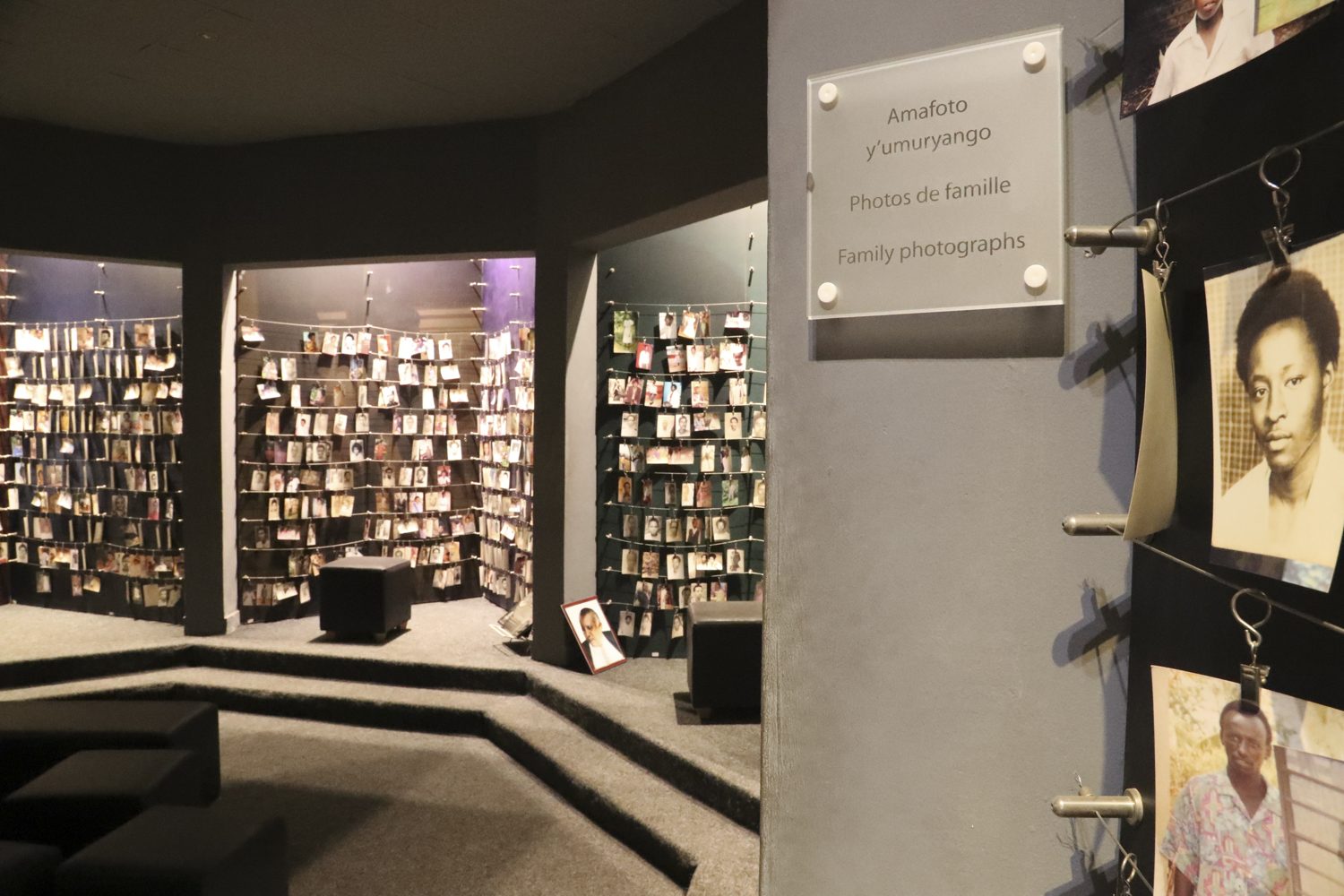
Among the memorial’s sections, the Children’s Room is widely regarded as the most emotionally difficult, and many visitors describe it as the part of the visit that stays with them longest. Large photographic portraits of individual children killed during the genocide are displayed alongside brief details of their personalities, their favourite foods, the games they liked to play, and, ultimately, how their lives ended. This deliberate humanising approach, moving from abstract statistics to specific, named individuals, is precisely the point, and visitors should be prepared for a genuinely heavy emotional experience in this particular section regardless of how much they may have already read about the genocide beforehand.
Genocide in Global Context
A separate gallery within the memorial places the events in Rwanda within a broader global history of genocide, examining the Holocaust, the Armenian genocide, the Cambodian killing fields, and the ethnic cleansing carried out during the Balkan wars of the 1990s. This section reinforces the memorial’s stated mission of genocide prevention more broadly, framing what happened in Rwanda not as an isolated historical event but as part of a recurring pattern the international community has repeatedly failed to prevent, a sobering thread that runs through the memorial’s educational purpose as a whole.
How to Prepare for the Visit
Visitors should approach a trip to the memorial with the same seriousness they would bring to any site connected to profound historical tragedy, comparable in weight to a visit to a Holocaust memorial or a former site of mass violence anywhere else in the world. Modest, respectful clothing is expected throughout the site, and photography is restricted or prohibited in several sections, particularly within the exhibition areas and the burial gardens, a policy that visitors should check on arrival and follow without exception.
Silence and a subdued demeanour are expected inside the exhibition halls, and loud conversation, phone use, or anything that could be perceived as treating the space casually is considered genuinely inappropriate given the memorial’s function as both a museum and a burial site. Many visitors find the experience emotionally overwhelming, and this reaction is neither unusual nor something to be embarrassed about, the memorial’s design anticipates and, in a sense, invites this kind of response as part of its educational purpose.
Time to Allow
A thorough visit typically takes two to three hours, covering the main exhibition, the Children’s Room, the genocide-in-context gallery, and time spent in the memorial gardens and burial areas outside. Rushing through the site diminishes the experience considerably, and visitors are generally better served allocating a full morning or afternoon rather than attempting to fit the memorial into a brief stop between other Kigali activities.
Talking With Guides and Staff
Guides at the memorial are typically well trained and, in many cases, have personal or family connections to the events being documented, and visitors who engage respectfully often come away with a considerably deeper understanding than a self-guided walk through the exhibits alone would provide. Questions are generally welcomed, though visitors should exercise sensitivity and judgement, following the guide’s lead on what level of detail and discussion feels appropriate rather than pressing for specifics that a guide may understandably choose not to share.
Why This Visit Matters Beyond the History Itself
Understanding the genocide’s history adds genuine depth to the rest of a Rwanda visit, reframing the country’s remarkable stability, cleanliness, and development, often remarked upon by first-time visitors, within the context of a deliberate, decades-long national effort at reconciliation and rebuilding following one of the twentieth century’s most devastating episodes of mass violence. Visitors who skip the memorial in favour of moving straight to gorilla trekking or the country’s scenic destinations miss an essential piece of context that shapes how modern Rwanda functions and presents itself to the world today.
Combining the Memorial With a Kigali Visit
Most visitors incorporate the memorial into a broader day exploring Kigali, often pairing it with a visit to the city’s markets, its increasingly notable art and craft scene, or simply time spent appreciating the capital’s famously clean, orderly streets. Given the emotional weight of the memorial itself, many travellers find it works best scheduled earlier in a Kigali stay, or on a day without other demanding activities planned immediately afterward, allowing time to process the experience rather than moving straight into something unrelated.
A Necessary, Not Optional, Part of Understanding Rwanda
For travellers building a Rwanda itinerary primarily around gorilla trekking and the country’s natural attractions, it can be tempting to treat the Kigali Genocide Memorial as an optional add-on rather than a core part of the trip. Most who do visit, however, describe it afterward as one of the most significant and memorable parts of their entire time in the country, not because it is easy, but because it offers an honest, unflinching, and ultimately essential understanding of what modern Rwanda has overcome, and continues to work toward, in the decades since 1994.
The Memorial Gardens
Outside the main exhibition halls, the memorial’s gardens offer a quieter, more contemplative space to process what has just been seen inside. Terraced and carefully landscaped, the gardens include the mass graves where victims are buried, along with sections dedicated to reflection and remembrance. Many visitors find themselves spending considerably longer here than they initially expected, sitting quietly rather than moving straight on to the next stop of the day, and this unhurried pause is very much in keeping with how the site is designed to be experienced rather than something to rush past on the way to the exit.
Understanding the Term “Genocide Against the Tutsi”
Visitors will notice that the memorial, along with official Rwandan government language more broadly, consistently uses the specific phrase “genocide against the Tutsi” rather than more generic terminology. This precise wording is deliberate and legally significant, reflecting both the historical accuracy of what occurred, a targeted, systematic campaign against the Tutsi ethnic group specifically, and Rwanda’s own legal and educational framework for how the genocide is discussed, taught, and remembered within the country. Understanding and respecting this terminology before visiting is a small but meaningful way to show cultural and historical sensitivity, and it reflects language used consistently throughout the memorial’s own exhibits and literature.
Practical Details for Visitors
The memorial is generally open daily, though hours can shift around specific commemoration periods, particularly during the annual mourning period each April that marks the anniversary of the genocide’s beginning, when the site takes on heightened significance for Rwandans and often sees increased visitation alongside official commemoration events. Entry to the memorial itself is typically offered without a fixed admission charge, though donations are encouraged and directly support the site’s ongoing educational and preservation work, an arrangement that reflects the memorial’s core identity as a place of remembrance first and a tourist attraction only secondarily.
An audio guide is available in multiple languages and is genuinely worth using even for visitors who typically prefer exploring museums independently, given how much additional context and testimony it adds to what could otherwise be a purely visual walk through photographs and artefacts. Allowing time to actually listen to the full audio guide, rather than skimming through quickly, meaningfully changes the depth of understanding a visitor takes away from the exhibition.
Preparing Emotionally Before You Go
It is worth acknowledging directly, before arriving, that this will likely be one of the more emotionally demanding stops on a Rwanda itinerary, and there is no need to treat that reaction as something to suppress or manage discreetly. Staff at the memorial are accustomed to visitors becoming visibly moved, and quiet spaces are available throughout the site for anyone who needs a moment away from the main exhibition areas. Travelling with others who are prepared to allow space and time for this kind of reaction, rather than rushing the visit along on a tight schedule, tends to make for a considerably more meaningful experience for everyone involved.
For travellers planning time in the capital, building a Kigali city tour around the memorial, rather than treating it as an isolated stop, situates the visit within a broader understanding of the capital’s history, culture, and remarkable transformation over the past three decades.