
Mount Bisoke Crater Lake Trek: Rwanda’s Most Rewarding Day Hike
Rwanda’s Volcanoes National Park is best known internationally for mountain gorilla trekking, but the park’s volcanic landscape offers a second, quite different kind of adventure for travellers with an extra day to spare. Mount Bisoke, one of the eight volcanoes forming the wider Virunga Massif, delivers a genuinely rewarding single-day hike culminating in a striking crater lake at its summit, a combination that has made it the most popular volcano trek in the entire park.
An Achievable Summit With a Spectacular Payoff
Mount Bisoke rises to 3,711 metres, straddling the border between Rwanda and the Democratic Republic of Congo with its summit situated on the Rwandan side. Unlike some of the region’s more technically demanding peaks, Bisoke is considered achievable within a single day for hikers with reasonable fitness, even those attempting a Virunga volcano summit for the first time, which is a large part of why it has become the signature day hike within Volcanoes National Park.
What sets Bisoke apart from a purely physical challenge is what waits at the top. The volcano’s crater holds Lake Ngezi, a strikingly blue-green crater lake roughly four hundred metres across, cradled directly within the summit itself. Reaching the rim and looking down into this water-filled crater, after several hours of steady climbing through changing vegetation zones, is the payoff that has cemented Bisoke’s reputation as one of the most visually rewarding single-day hikes anywhere in East Africa.
How the Hike Unfolds
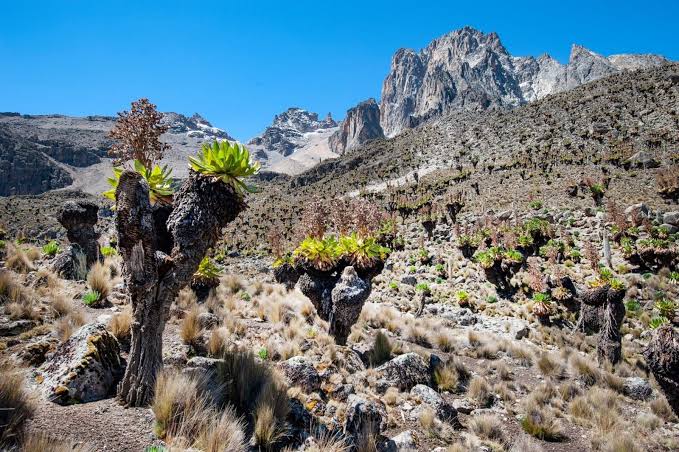
The full round trip typically takes around six hours, with the ascent itself accounting for roughly four hours and the descent a further two to three, depending on pace, weather, and how much time is spent at the summit taking in the crater lake before heading back down. The trail climbs through a sequence of vegetation zones broadly similar to those found across the wider Virunga range, beginning in cultivated farmland at the park boundary before transitioning into montane forest, bamboo, and eventually the more open, high-altitude terrain surrounding the crater itself.
Trail conditions can be genuinely challenging in sections, particularly after rain, when volcanic soil turns to slippery mud on some of the steeper stretches. Trekking poles, sturdy waterproof boots, and a reasonable level of general fitness all make a meaningful difference to how comfortably the climb goes, though guides pace the ascent to accommodate a range of fitness levels within any given group.
Wildlife Along the Way
Mount Bisoke’s lower slopes fall within the same broader ecosystem that supports Volcanoes National Park’s mountain gorilla population, and while a Bisoke hike is not a dedicated gorilla trek, encounters are genuinely possible, adding an unexpected bonus for hikers focused primarily on reaching the crater lake. Golden monkeys, the park’s other headline primate species, are encountered with considerably more regularity along the route, their playful, acrobatic movement through the bamboo zone a highlight for many hikers well before the summit comes into view.
Permits and Group Size
Like Volcanoes National Park’s gorilla trekking, the Bisoke hike operates on a permit system managed through the Rwanda Development Board, with a limited number of hikers permitted on the trail each day to manage environmental impact and maintain the quality of the experience for everyone involved. Booking in advance is strongly recommended, particularly during Rwanda’s peak travel season, given how popular this specific hike has become relative to the park’s other, less heavily promoted volcano treks.
Fitness Requirements and Preparation
While genuinely achievable for first-time high-altitude hikers, Mount Bisoke should not be underestimated simply because it is completed within a single day. The combined altitude gain and distance covered represent a serious physical undertaking, and hikers arriving with little prior preparation often find the final push toward the crater rim considerably more demanding than the earlier, gentler sections of the trail. A reasonable base level of cardiovascular fitness, built through regular hiking or similar exercise in the weeks before the trip, makes a substantial difference to how much of the hike can genuinely be enjoyed rather than simply endured.
Acclimatisation matters here too, and hikers arriving directly from sea level without any prior time spent at altitude should expect the thinner air near the summit to add a noticeable layer of difficulty beyond what the distance and elevation gain alone might suggest.
Weather and Best Time to Go
Rwanda’s drier seasons, roughly June through September and again from December into February, generally offer the most favourable conditions for the Bisoke hike, with firmer trail conditions and a better chance of clear views both along the ascent and at the crater lake itself. Cloud frequently gathers around the Virunga peaks even during drier periods, however, and hikers should be prepared for the possibility of a socked-in summit despite favourable conditions lower down the mountain, a common enough occurrence across this volcanic range that guides rarely treat it as cause for genuine disappointment, framing it instead as simply part of the mountain’s character.
What to Bring
Layered clothing is essential given the temperature range covered between the trailhead and the summit, often a difference of ten degrees or more, alongside waterproof outer layers given how quickly weather can shift at this altitude. Sturdy, broken-in hiking boots matter considerably given the trail’s occasionally steep and muddy sections, and gloves are worth packing for the colder, more exposed stretches near the crater rim. A reasonable supply of water and energy-dense snacks helps sustain the roughly six-hour round trip, since options for resupply are naturally nonexistent once the hike is underway.
Combining Bisoke With Gorilla Trekking
Many visitors to Volcanoes National Park combine a Bisoke hike with gorilla trekking during the same broader stay, though rarely on consecutive days given how physically demanding both activities are in their own right. Spacing the two activities with at least a day of rest between them tends to make for a considerably more enjoyable experience than attempting to complete Rwanda’s two most physically demanding park activities back to back, allowing muscles recovery time and reducing the risk of the second activity feeling like an endurance exercise rather than the rewarding experience it is meant to be.
A Worthy Complement to Gorilla Trekking
For travellers who have already experienced gorilla trekking and are looking for a second, genuinely different way to engage with Volcanoes National Park’s dramatic landscape, Mount Bisoke delivers a rewarding physical challenge and one of the most striking single views available anywhere in the Virunga range, a crater lake nestled at the summit of an active volcanic landscape few travellers ever get the chance to see up close. It stands as one of the more complete single-day experiences available in Rwanda, combining genuine physical achievement, wildlife encounters, and a payoff view that few other hikes in the region can match.
How Bisoke Compares to Other Virunga Volcanoes
Volcanoes National Park offers several volcano hiking options beyond Bisoke, and understanding how it compares helps travellers choose the right trek for their available time and fitness level. Mount Karisimbi, the tallest of the Virunga volcanoes on the Rwandan side, requires a two-day expedition with an overnight camp partway up the mountain, a considerably larger undertaking than Bisoke’s single-day format. Mount Sabinyo’s distinctive jagged summit, meanwhile, involves a more technical scramble across three national borders but without Bisoke’s crater lake payoff. Against these alternatives, Bisoke occupies a genuinely attractive middle ground, demanding enough to feel like a real accomplishment, achievable within a single day, and rewarded with scenery that arguably surpasses what either of the other two commonly hiked volcanoes offers at their respective summits.
Guides and the Ranger Escort
As with gorilla trekking permits, every Bisoke hike is accompanied by trained park guides and rangers, both for navigation across terrain that becomes considerably less obvious near the summit and as a safety precaution given the wildlife and occasionally unpredictable weather encountered along the route. Guides typically set a pace suited to the specific group, checking in regularly on how hikers are managing the altitude and terrain, and are generally happy to pause for photography opportunities or a longer rest at points of particular scenic interest along the ascent.
The Descent Is Not to Be Underestimated
Hikers focused entirely on the challenge of reaching the summit sometimes underestimate how demanding the descent can be in its own right, particularly on muddy or loose volcanic terrain where a controlled, steady pace matters as much on the way down as sustained effort does on the way up. Knees and ankles take a different kind of strain during a prolonged descent than during the ascent, and trekking poles genuinely earn their keep during this stretch of the hike for many visitors, reducing strain and improving stability across the trail’s less predictable sections.
Booking the Hike
Bisoke permits are typically arranged well in advance through a tour operator or directly via the Rwanda Development Board, and combining the booking process with gorilla trekking permit arrangements, where relevant, tends to streamline logistics considerably for travellers building a broader Volcanoes National Park itinerary. Given the popularity of this specific hike, travellers with fixed travel dates should treat permit booking as a priority to arrange well ahead of arrival, rather than assuming availability will be there on short notice, particularly during Rwanda’s busier travel months.
For travellers weighing up how to structure their time around Mount Bisoke and the wider Volcanoes National Park, the crater lake hike remains one of the most consistently recommended additions to a Rwanda gorilla trekking itinerary, a genuinely different kind of physical and scenic reward within the very same park.