
Mammals of Bwindi Beyond Gorillas: Elephants, Chimps & More
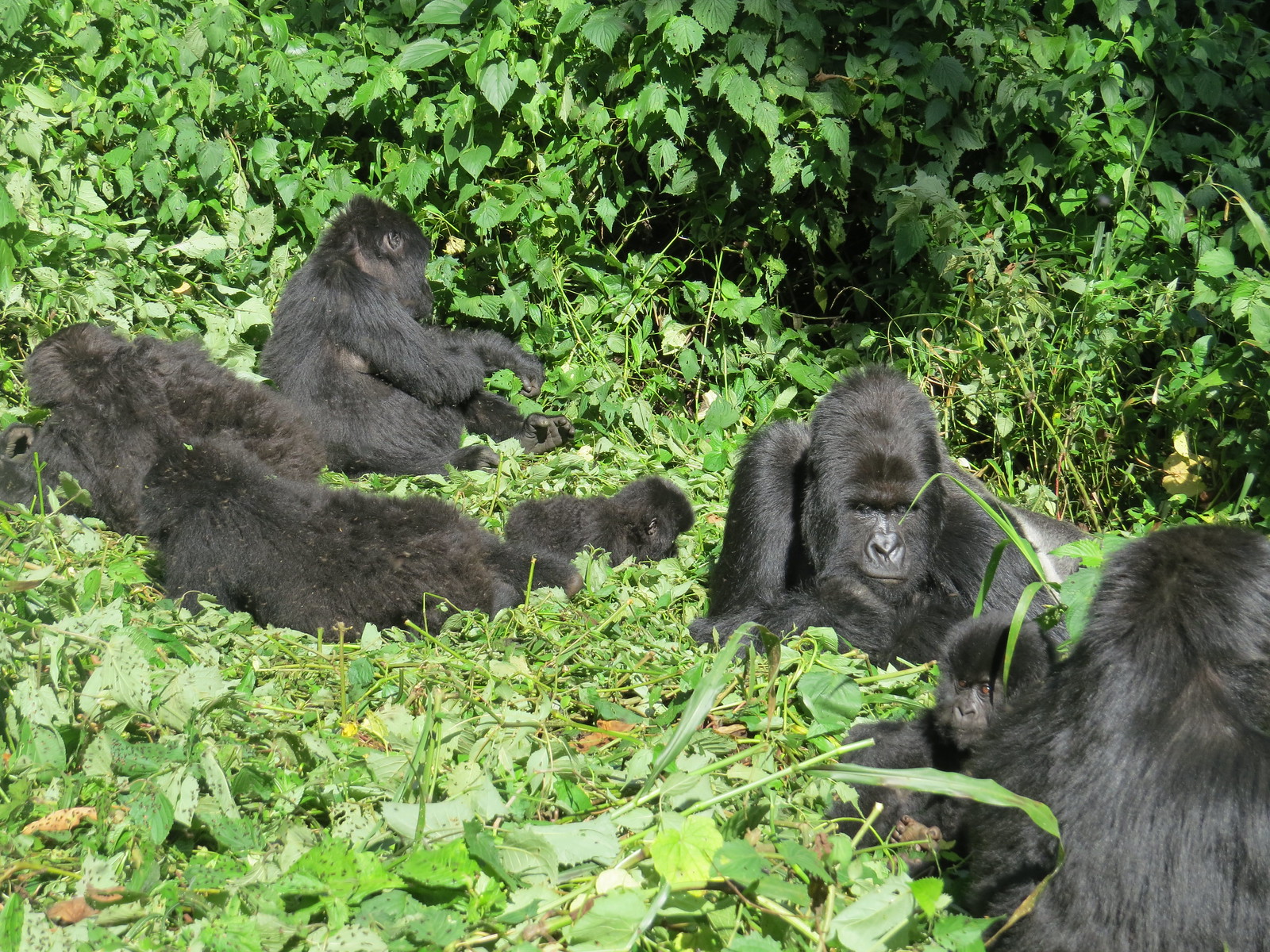
Ask nearly any first-time visitor to name Bwindi’s wildlife and the answer stops squarely at gorillas almost every single time, understandable given how thoroughly the park’s marketing and reputation center on that single species. The mammals of Bwindi extend far beyond the mountain gorillas that draw nearly every visitor here, with the park hosting roughly 120 recorded mammal species in total, including fourteen genuinely distinct primate species alone, a remarkable concentration for a single, relatively compact protected area. Most trekkers never encounter this considerably broader mammalian diversity firsthand, since a standard gorilla trek moves with purpose toward a specific, known destination rather than pausing along the way for general wildlife observation, but knowing what else shares this forest adds genuine depth to understanding Bwindi as a complete ecosystem rather than simply a backdrop for one famous species. This broader mammalian picture is also a useful corrective to a common misconception among first-time visitors, that Bwindi’s biodiversity value rests almost entirely on gorillas, when in reality the park’s conservation significance was always recognized as resting on the full ecosystem, gorillas included but never treated as the sole justification for its protected status.
Bwindi’s Secretive Forest Elephants
Perhaps the single most surprising mammal residents are Bwindi’s own forest elephants, a smaller, darker, and considerably more elusive subspecies than the savanna elephants most safari visitors picture, with a population estimated at around one hundred individuals moving through the park’s dense vegetation. These elephants are genuinely, notoriously difficult to spot given the forest’s remarkably thick cover and the animals’ own naturally shy, secretive behavior, and most visitors who do encounter direct evidence of their presence find it through tracks, dung, or damaged vegetation rather than an actual sighting. Their existence surprises many first-time visitors who arrive expecting Bwindi to be exclusively primate territory, when in fact it supports a genuinely diverse large-mammal community operating largely out of sight beneath the famous gorilla trekking routes. Forest elephants across Central Africa generally are considered genetically and physically distinct from their savanna relatives, smaller in stature, with straighter tusks and rounder ears, adaptations suited to navigating dense forest rather than open plains, and Bwindi’s population represents one of the more accessible, if still rarely seen, examples of this distinct subspecies anywhere in East Africa. Rangers and trackers who spend their days moving through the same forest occasionally cross paths with these elephants directly, and their accounts consistently describe the encounters as brief, almost fleeting, a quick glimpse of movement through dense vegetation rather than anything resembling the sustained, close viewing a savanna elephant encounter typically offers elsewhere in Uganda.
Chimpanzees Alongside Gorillas: A Genuine Rarity
Bwindi holds a genuinely rare distinction found nowhere else on Earth: it is the only single location anywhere where both mountain gorillas and chimpanzees coexist together within the exact same forest ecosystem. Unlike Bwindi’s habituated gorilla families, the park’s chimpanzee population remains largely unhabituated, meaning sightings during a standard gorilla trek are possible but genuinely unpredictable rather than a guaranteed part of the experience. Travelers who are specifically interested in reliable, dependable chimpanzee encounters generally look toward Kibale Forest National Park instead, our page on chimpanzee trekking permits covers that dedicated program in more depth, where dedicated habituation and trekking programs offer considerably more consistent, reliable viewing, but the mere fact that Bwindi hosts both great ape species within a single ecosystem underscores just how exceptional this forest’s habitat diversity genuinely is. Researchers studying the two species’ overlapping presence have noted that their generally different feeding preferences and forest-layer usage likely help explain how both apes sustain viable populations within the same relatively compact protected area without significant direct competition for the same limited resources.
The Full Primate Community
Beyond gorillas and chimpanzees, Bwindi’s fourteen primate species include several strikingly distinctive monkeys visitors occasionally encounter along trekking routes. L’Hoest’s monkey, identifiable by its white cheek fur set against a dark body and back, and the red-tailed monkey, easily recognized by its distinctive white nose, pale cheeks, and reddish-brown tail, both regularly inhabit the park’s forest canopy and understory layers. Black-and-white colobus monkeys, genuinely striking animals with dramatic white fur framing their face, shoulders, and lower back against an otherwise deep black coat, are among the more visually memorable primates trekkers sometimes spot moving through the upper canopy. Blue monkeys, De Brazza’s monkeys, olive baboons, and several smaller, harder-to-spot nocturnal primates including galagos and pottos round out this genuinely impressive primate community, most of which go entirely unnoticed by visitors focused purely on locating their assigned gorilla family. L’Hoest’s monkey in particular is considered something of an Albertine Rift specialty in its own right, found in a fairly limited range across the region, making an incidental sighting a genuine bonus worth mentioning to fellow trekkers rather than something to expect as a matter of course.
Duikers, Forest Hogs, and Bwindi’s Other Notable Mammals
Ground-dwelling mammals add further, often overlooked diversity to Bwindi’s ecosystem, including black-fronted and yellow-backed duikers, small, genuinely shy antelope species that move quickly through dense undergrowth and are, in the overwhelming majority of encounters, more often heard rustling rapidly away than actually seen clearly. Giant forest hogs and bushpigs represent the park’s considerably larger ground-dwelling mammals, while bushbuck occasionally appear grazing in the more open forest-edge areas near the park’s boundary. Carnivores present within Bwindi include the African golden cat, a genuinely rare and famously rarely observed forest predator found across only a limited part of its historical range, alongside side-striped jackals and African civets, both more commonly detected through tracks or nocturnal activity than daytime sightings during a standard trek. Genets and various mongoose species round out the smaller carnivore community, similarly elusive and similarly more often inferred from tracks and scat than actually observed directly, part of a broader pattern across nearly all of Bwindi’s ground-dwelling mammals that rewards patient, quiet observation far more than the faster pace of a standard gorilla trek typically allows for.
Why These Mammals Are So Rarely Seen
It is worth understanding why, despite this genuine abundance, most visitors leave Bwindi having seen almost nothing beyond their gorilla family and perhaps a bird or two. Bwindi’s dense, multi-layered forest structure, precisely the same vegetation complexity that makes the park ecologically rich, also makes visual wildlife detection genuinely difficult compared to open savanna environments where animals are visible from considerable distances. Many of Bwindi’s mammals are also naturally shy, nocturnal, or both, having evolved alongside human presence in the surrounding region for centuries and developed correspondingly cautious, avoidance-oriented behavior patterns as a result. This stands in genuine contrast to Bwindi’s habituated gorilla families, whose years of careful, deliberate habituation work specifically overrides that same natural wariness, a process our page on the gorilla habituation process covers in detail and one that simply has never been extended to any of the park’s other mammal species. A standard gorilla trek’s pace, moving with purpose toward a known destination rather than pausing to scan for other wildlife, further reduces the odds of incidental sightings compared to a dedicated nature walk specifically focused on general wildlife observation.
Visitors genuinely interested in Bwindi’s broader mammal community are better served booking a dedicated forest or nature walk in addition to the standard gorilla trek, ideally with a guide briefed specifically on tracking and identifying secondary wildlife rather than one focused purely on gorilla family location. Early morning and late afternoon walks tend to offer the best odds, since this is when many of Bwindi’s more elusive mammals are naturally most active. Bringing binoculars on these dedicated walks, the same equipment birders rely on, meaningfully improves the odds of a genuine sighting at distance, since much of Bwindi’s ground-level and mid-canopy mammal activity happens well before an animal would ever come close enough to be seen clearly with the naked eye alone.
Looking Beyond the Gorillas on Your Trek
Understanding this considerably broader mammalian community adds real, lasting context to time spent in Bwindi, even though most of these particular species remain genuinely difficult to spot directly during a standard gorilla trek. Our page comparing gorilla safaris against elephant-focused safaris is worth reading if Bwindi’s elephant population specifically interests you, and our guide to colobus monkey trekking covers this striking species in more detail for the region generally. A well-paced three-day Bwindi gorilla trekking safari offers a genuine chance, even if never a guarantee, of glimpsing some of this broader wildlife community alongside the gorillas that brought you here in the first place. The mammals of Bwindi, elephants, chimpanzees, a dozen other primate species, and a genuinely diverse cast of duikers, hogs, and forest carnivores, are worth remembering even on a trip built entirely around one famous silverback. Simply knowing this broader community exists changes how many visitors experience the walk itself, transforming rustling undergrowth or a distant call from background noise into a genuine, if unconfirmed, sign of the forest’s much wider cast of residents going about their day just out of sight.