
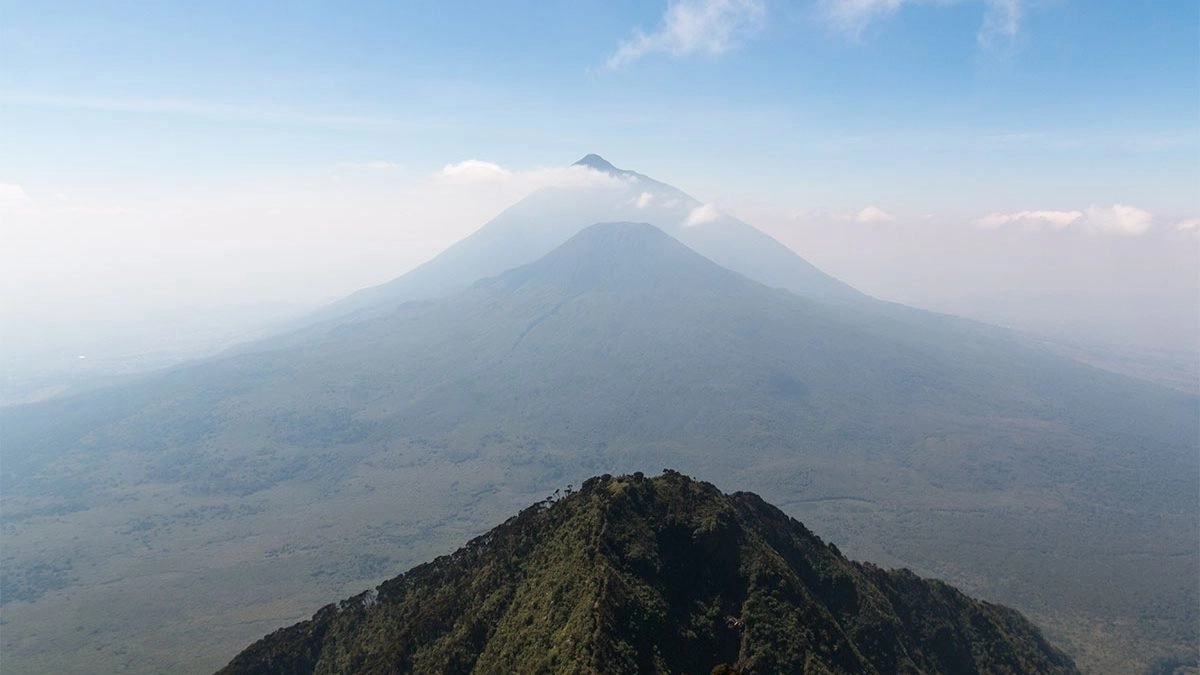
Mount Muhavura Hike: Combining Trekking and Gorillas in Mgahinga
Most travelers who book a Uganda gorilla safari never think to ask whether their trip could also include a genuine volcano summit, largely because Bwindi’s dense rainforest offers no such option. The Mount Muhavura hike changes that entire equation for travelers heading to Mgahinga Gorilla National Park instead, offering a demanding but genuinely achievable climb up to the third-highest peak of the eight Virunga volcanoes, a summit that delivers a simultaneous view across Uganda, Rwanda, and the Democratic Republic of Congo from a single vantage point few other places in East Africa can match. Combining this climb with a gorilla trek in the same trip turns a standard Mgahinga visit into something considerably more ambitious, and understanding what the hike actually demands helps travelers decide whether to add it to their itinerary with realistic expectations rather than discovering the difficulty partway up the mountain.
What Muhavura’s Name Actually Means
Mount Muhavura takes its name from a Kinyarwanda word meaning “the guide,” a reference to how the volcano’s distinctive, visible peak historically served travelers across the region as a navigational landmark long before formal trails or park infrastructure existed. At 4,127 meters above sea level, Muhavura stands as the third-highest of the Virunga chain’s eight volcanoes and the tallest point within Mgahinga Gorilla National Park itself, considerably taller than either of its two sister volcanoes within the park, Gahinga and the shared-border peak of Sabyinyo. This height, combined with the mountain’s relatively steep, direct ascent profile, is precisely what makes the climb both physically demanding and genuinely rewarding for hikers who complete it.
The Climb Itself: Distance, Duration, and Difficulty
The round-trip hike covers approximately 12 kilometers, ascending roughly 1,200 meters of elevation gain from the trailhead to the crater rim, a genuinely steep profile that Uganda Wildlife Authority and most experienced guides consider the most physically demanding of the three volcano hikes available within Mgahinga. Fit, well-prepared hikers typically reach the summit in around seven hours on a clear day, with the full round trip, including summit time and the descent, generally consuming a complete day starting with a 7 a.m. departure from park headquarters. This is not a casual half-day walk in any sense; it is a sustained, genuinely strenuous mountain hike that demands genuine cardiovascular fitness, proper footwear, and realistic pacing rather than an attempt to rush the ascent purely to reach the summit faster.
What the Trail Actually Looks Like
The route to Muhavura’s summit passes through several distinct vegetation zones as elevation increases, beginning in montane forest before transitioning into bamboo zones, then heather and moorland vegetation, and finally the sparse, rocky terrain characteristic of the upper volcanic slopes near the crater rim. This shifting landscape gives the climb genuine visual variety across its duration, distinct from the more uniform rainforest canopy most visitors associate with Bwindi’s gorilla trekking trails. Weather changes noticeably with altitude too, and hikers should expect meaningfully colder, windier conditions near the summit regardless of how warm the trailhead felt at the 7 a.m. start, making layered clothing every bit as essential here as it is for gorilla trekking itself.
What Awaits at the Summit
The genuine reward for reaching Muhavura’s crater rim is a small crater lake nestled directly at the summit alongside genuinely panoramic views stretching across three countries simultaneously, Uganda’s own Mgahinga landscape, Rwanda’s Volcanoes National Park spreading out to the south, and, on a clear day, glimpses into the Democratic Republic of Congo to the west. Few other single hikes anywhere in East Africa offer this specific triple-country vantage point, and it is a major part of why experienced regional guides consistently rank Muhavura among the more underappreciated summit experiences in Uganda’s broader adventure tourism offering. Clear-weather conditions are genuinely important for the views to deliver their full impact, since cloud cover, more common during the wetter months, can meaningfully obscure the surrounding panorama even after a successful, physically demanding ascent.
Cost and Permit Details
Mountain climbing permits for Muhavura, arranged through Uganda Wildlife Authority, cost $100 per person for foreign non-residents, $80 for foreign residents, and considerably less for East African citizens and Uganda students under the country’s standard tiered pricing structure. This fee is entirely separate from the $800 gorilla trekking permit, meaning travelers combining both activities should budget for two distinct park fees on top of standard trip costs, guide fees, transport, and accommodation. Permits are generally arranged through your tour operator alongside gorilla permit booking, though given Muhavura’s genuinely demanding profile, confirming your fitness level honestly with your operator during booking matters more here than it does for a standard gorilla trek, since operators can offer more realistic guidance about whether the climb suits your current condition.
Combining Muhavura With Your Gorilla Trek
Given how physically demanding both activities are individually, experienced operators near-universally recommend scheduling the Muhavura climb and the gorilla trek on separate days rather than attempting both within a single 24-hour period. A typical combined itinerary allocates one full day for the volcano hike and a separate day for gorilla trekking, with at least a partial rest period between the two given how much recovery a 1,200-meter ascent genuinely demands before tackling another physically unpredictable full day in the forest. Travelers with limited time sometimes ask whether the two activities can be compressed into a tighter schedule, and while technically possible for genuinely elite-fitness hikers, most operators actively discourage this approach given the real risk of exhaustion-related injury or a diminished, rushed experience on either activity.
Fitness Preparation Specific to This Climb
Preparing specifically for Muhavura, rather than assuming general gorilla trekking fitness automatically transfers, is worth taking seriously given how the two activities differ in demand. Gorilla trekking involves unpredictable but often shorter bursts of exertion over variable terrain, while Muhavura demands sustained, continuous climbing over a fixed, known distance with a clearly defined elevation target. Building in several genuine weeks of dedicated cardiovascular training beforehand, stair climbing, hill walking, or sustained hiking at home, genuinely improves the experience considerably more for this specific climb than it typically does for a standard gorilla trek, where unpredictability rather than raw endurance is the bigger variable. Hikers who have completed comparable high-altitude day hikes elsewhere generally find Muhavura’s profile familiar and manageable, while those without recent sustained-elevation experience should treat the preparation period seriously rather than assuming general fitness alone will carry them through a full seven-hour ascent.
Altitude Considerations Worth Taking Seriously
Reaching over 4,100 meters genuinely does carry altitude-related risk for some hikers, even those who consider themselves generally fit, and mild symptoms, headache, shortness of breath beyond what exertion alone would explain, occasional dizziness, are not unusual near the summit even among otherwise healthy climbers. Guides accompanying the hike are trained to recognize more serious altitude symptoms and will recommend descending if a hiker shows signs of genuine altitude sickness rather than pushing on toward the summit regardless. Staying well hydrated throughout the climb, pacing deliberately rather than rushing the steeper sections, and communicating openly with your guide about how you are feeling all matter considerably more on this specific hike than they do during a standard gorilla trek at Mgahinga’s comparatively lower elevations.
How Muhavura Compares to Uganda’s Other Volcano Hikes
Mgahinga offers two further volcano hiking options alongside Muhavura, Mount Gahinga and the shared-border peak of Sabyinyo, both generally considered less physically demanding given their lower elevation and gentler ascent profiles. Travelers weighing which volcano to prioritize should treat Muhavura as the more serious, dedicated mountain-hiking option specifically, reserved for those with genuine fitness and a real appetite for a demanding, all-day climb, while Gahinga and Sabyinyo suit travelers wanting a shorter, more moderate volcanic hike alongside their gorilla trek without committing an entire additional day to the more strenuous Muhavura profile. None of the three hikes is inherently superior to the others; the right choice ultimately depends entirely on how much time, fitness, and genuine appetite for physical challenge a given traveler brings to their Mgahinga itinerary.
Planning a Trip That Includes This Climb
Our broader page on why Mgahinga is Uganda’s most underrated gorilla destination covers the park’s volcanic terrain and golden monkey trekking alongside this climb in more depth, and our page comparing gorilla safaris in Bwindi versus Mgahinga is worth reading if you are still deciding which park suits your broader itinerary. Our overview of multi-day Mgahinga hiking and wildlife safari tours covers exactly this kind of combined gorilla-and-volcano itinerary in further detail. Whichever pace you choose, the Mount Muhavura hike stands as one of Uganda’s most genuinely rewarding, if demanding, single-day adventures, a fitting complement to a Mgahinga gorilla trek for travelers with the fitness and appetite to take on both within the same remarkable corner of the Virunga Massif. Few visitors leave having done both in a single trip, which is exactly what makes the combination worth genuine consideration rather than dismissing it as an unnecessary addition to an already complete gorilla trekking itinerary.