
What It’s Really Like Trekking Gorillas in the DRC: First-Hand Accounts
Long before the current closure, a steady trickle of adventurous travelers made the journey to Virunga specifically because so few others had, and their accounts, scattered across travel blogs, forums, and trip reports, form a genuinely valuable record worth gathering in one place. What it’s really like trekking gorillas in the DRC, based on the accounts of travelers who made the trip during the years Virunga National Park operated normally, paints a picture genuinely different from both Uganda’s and Rwanda’s more established programs, quieter, more solitary, and shaped by a distinct sense of visiting somewhere still genuinely off the beaten path. It is worth being upfront before going further: this account reflects the experience as travelers described it before Virunga’s current closure, which began when M23 captured nearby Goma in January 2025. The park remains closed to tourism as of this writing, so this piece is offered as a record of what the experience involved and, hopefully, a preview of what it may offer again once conditions allow, rather than a current booking guide.
A Different Pace From Uganda or Rwanda
Travelers who trekked in Virunga before the closure consistently described an experience with a noticeably different rhythm than Bwindi or Volcanoes National Park. Group sizes tended to feel smaller and quieter, and the surrounding infrastructure, fewer lodges, less developed tourism apparatus, less well-trodden trailheads, gave the whole experience a rawer, more solitary character. Several accounts describe walking through farmland and cultivated hillsides on the approach to the forest boundary, a genuinely different visual experience than Bwindi’s dense rainforest trailheads, before entering denser vegetation where the actual gorilla family search began. One frequently echoed sentiment across independent traveler accounts: Congo felt distinctly less like a well-oiled tourism operation and considerably more like a genuine expedition, appealing precisely to travelers who found Uganda or Rwanda’s more polished, established programs slightly too smooth for their taste. Several accounts also mention the drive or transfer to the trailhead itself as a memorable part of the experience, passing through communities and landscapes considerably less shaped by tourism infrastructure than the routes leading into Bwindi or Volcanoes National Park, giving even the logistics of getting to the forest a distinct character compared to the two more established programs.
The Encounter Itself
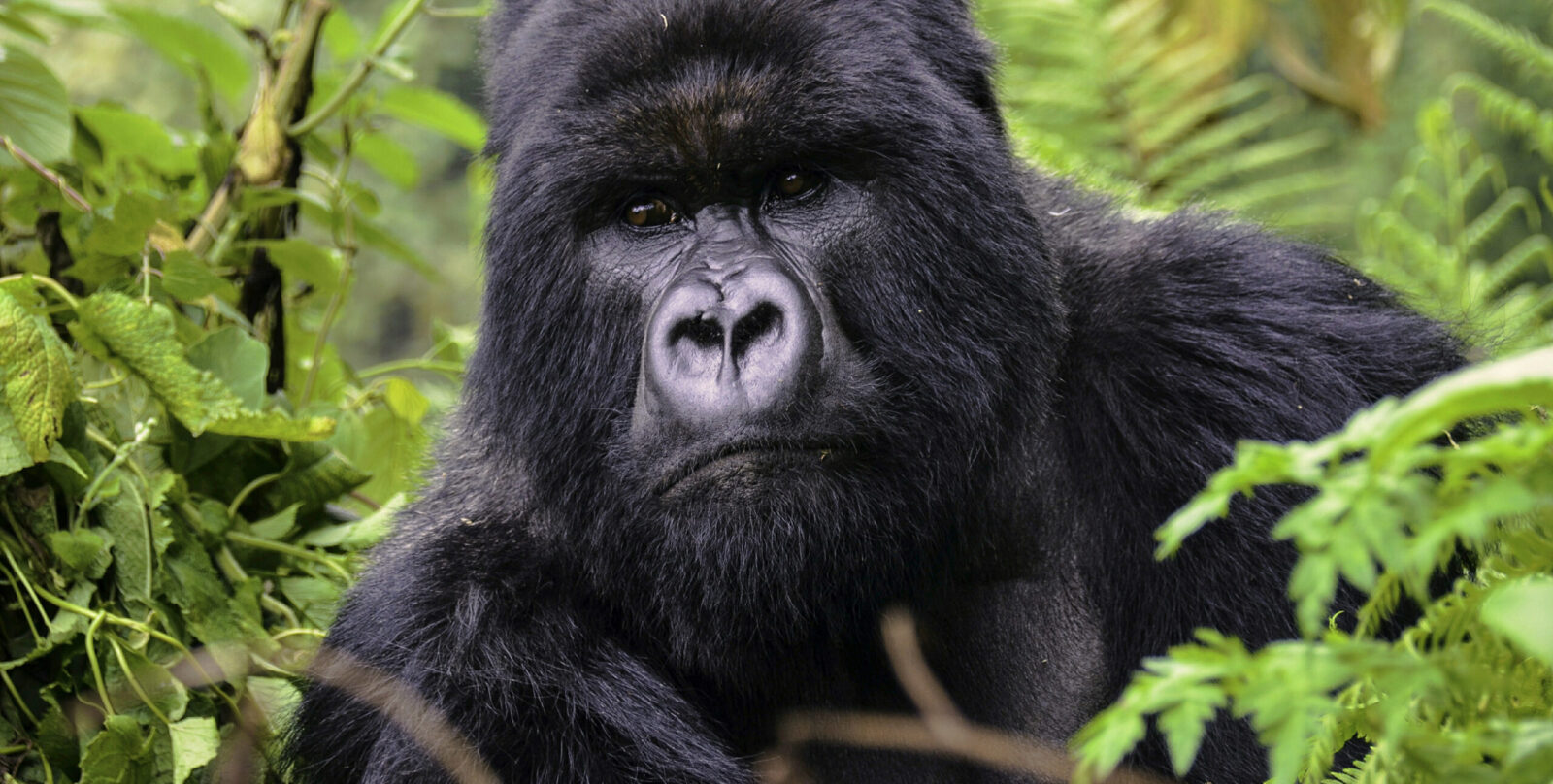
Once trackers located a family, described encounters followed a familiar shape, a guide’s sudden gesture toward a clearing, the abrupt, disorienting realization that a genuinely wild silverback sat only meters away, followed by the same kind of awed, quiet observation gorilla encounters produce anywhere in the region. Several travelers specifically noted how the smaller visitor numbers and less-trafficked trails made the moment feel more private and personal than accounts they had read of busier Uganda or Rwanda treks, for better or worse depending on individual preference for either a more communal or more solitary wildlife encounter. A number of accounts also mention the specific families encountered by name, noting how guides shared detailed histories and family dynamics during the walk in, the kind of personal, unhurried storytelling several visitors felt was easier to absorb in a smaller, quieter group setting than it might have been amid a busier, more scheduled itinerary elsewhere.
Costs, Logistics, and the Honest Trade-Offs
Historically, Congo’s gorilla permits were priced below both Uganda’s and Rwanda’s, part of why budget-conscious and adventure-focused travelers were drawn to it specifically, alongside travelers who had already done Uganda or Rwanda and wanted a genuinely different, less-visited version of the same core experience. This lower cost came paired with acknowledged trade-offs even during stable periods: less developed tourism infrastructure, a more challenging logistics picture getting into and around the region, and a security situation that required more active monitoring even in relatively calm years than either neighboring country ever demanded. Several traveler accounts specifically mention initial hesitation about security before booking, followed by feeling genuinely safe once on the ground with experienced local guides and the standard armed ranger escort, though it is worth noting these accounts predate the current, considerably more serious conflict.
Why These Accounts Matter Even Now
Reading these first-hand descriptions serves a real purpose beyond nostalgia for a currently inaccessible destination. They document what a functioning, well-run Congo gorilla trekking program looked like, evidence that the park’s tourism infrastructure and conservation model worked genuinely well when security conditions allowed, information worth preserving and understanding for whenever conditions eventually permit a return. They also offer a useful, honest baseline for travelers weighing whether Congo, once accessible again, might suit their specific travel style better than Uganda or Rwanda, since the differences described here reflect genuine, lasting character differences between the destinations rather than simply temporary security-driven changes.
What Guides and Rangers Told Visitors
A recurring thread in traveler accounts involves conversations with Congolese ranger guides themselves, many of whom spoke candidly about the genuine risks and sacrifices involved in protecting Virunga’s gorillas, given the park’s long, difficult history with militia activity even before the current crisis. Several visitors described being struck by rangers’ evident pride in their work and deep personal connection to specific gorilla families, sometimes describing individual animals by name with the kind of familiarity that comes from years of daily monitoring under genuinely difficult, sometimes dangerous conditions. This human dimension, the visible commitment of Congolese conservation staff working under circumstances considerably harder than their counterparts in Uganda or Rwanda ever faced even during stable periods, left a lasting impression on many visitors independent of the gorilla encounter itself. More than one account described leaving Virunga with a deeper appreciation not just for the gorillas themselves but for the people whose daily work, often under real personal risk, made the entire encounter possible in the first place, a sentiment that carries even more weight now given how much has changed in the region since those accounts were written. Several visitors specifically noted exchanging contact information with guides they had spent the day with, an unusually personal connection some attributed directly to the smaller group sizes and slower overall pace compared to the more streamlined operations they had experienced or read about elsewhere in the region.
Accounts also describe rangers explaining, unprompted, the specific security precautions in place, armed escort, established evacuation protocols, careful route planning, in a way that felt reassuring rather than alarming to most visitors, evidence of a well-drilled, professional operation adapted to genuinely challenging circumstances rather than an ad hoc or careless approach to visitor safety during the periods the park operated normally.
Practical Details From Traveler Accounts
Beyond the emotional and atmospheric descriptions, practical details from these accounts are worth preserving for future reference. Treks typically began around 7 a.m., similar to Uganda and Rwanda’s standard schedule, with duration ranging from under an hour to a genuinely full day depending on where trackers located the assigned family that morning, the same fundamental unpredictability that defines gorilla trekking across all three countries. Physical demands were generally described as comparable to or slightly less intense than Uganda’s Bwindi terrain, though this varied considerably by account and likely depended heavily on which specific family and route a given group encountered. Weather, malaria precautions, and the same fundamental health and disease-prevention rules that govern gorilla trekking everywhere in the region applied identically in Congo, underscoring how much of the core trekking framework, developed collaboratively across all three Virunga Massif countries, remained consistent regardless of which side of the border a given trek took place on. Several accounts also mention the sense of camaraderie among the small number of fellow travelers making the trip at any given time, a natural byproduct of visiting a destination that saw a fraction of the visitor numbers Uganda and Rwanda’s more established programs handled even in their quieter seasons.
Following This Story as It Develops
Our detailed page on whether it’s currently safe to trek gorillas in the DRC covers the present situation these historical accounts predate. Our comparison of Uganda versus Congo gorilla safaris is worth reading if you are weighing how these described differences might factor into future travel planning. For DRC gorilla trekking specifically involving the eastern lowland subspecies rather than mountain gorillas, our page on Kahuzi-Biega National Park’s eastern lowland gorillas covers a genuinely different park worth researching separately given its distinct location. For a mountain gorilla trek that is fully bookable today, a well-paced three-day Bwindi gorilla trekking safari in Uganda remains the most reliable option while Congo’s situation continues to develop. What it’s really like trekking gorillas in the DRC will hopefully, someday, become a question travelers can answer firsthand again rather than through secondhand accounts alone. Until then, these accounts remain a genuine, valuable record, written by people who experienced the park during more stable years and who, almost universally, described it as an encounter worth the extra planning and consideration it demanded even before the current crisis made that consideration considerably more serious. For now, that record lives on primarily through the scattered blogs and trip reports these accounts came from, a reminder of what tourism in this specific corner of the Virunga Massif looked like at its best.