
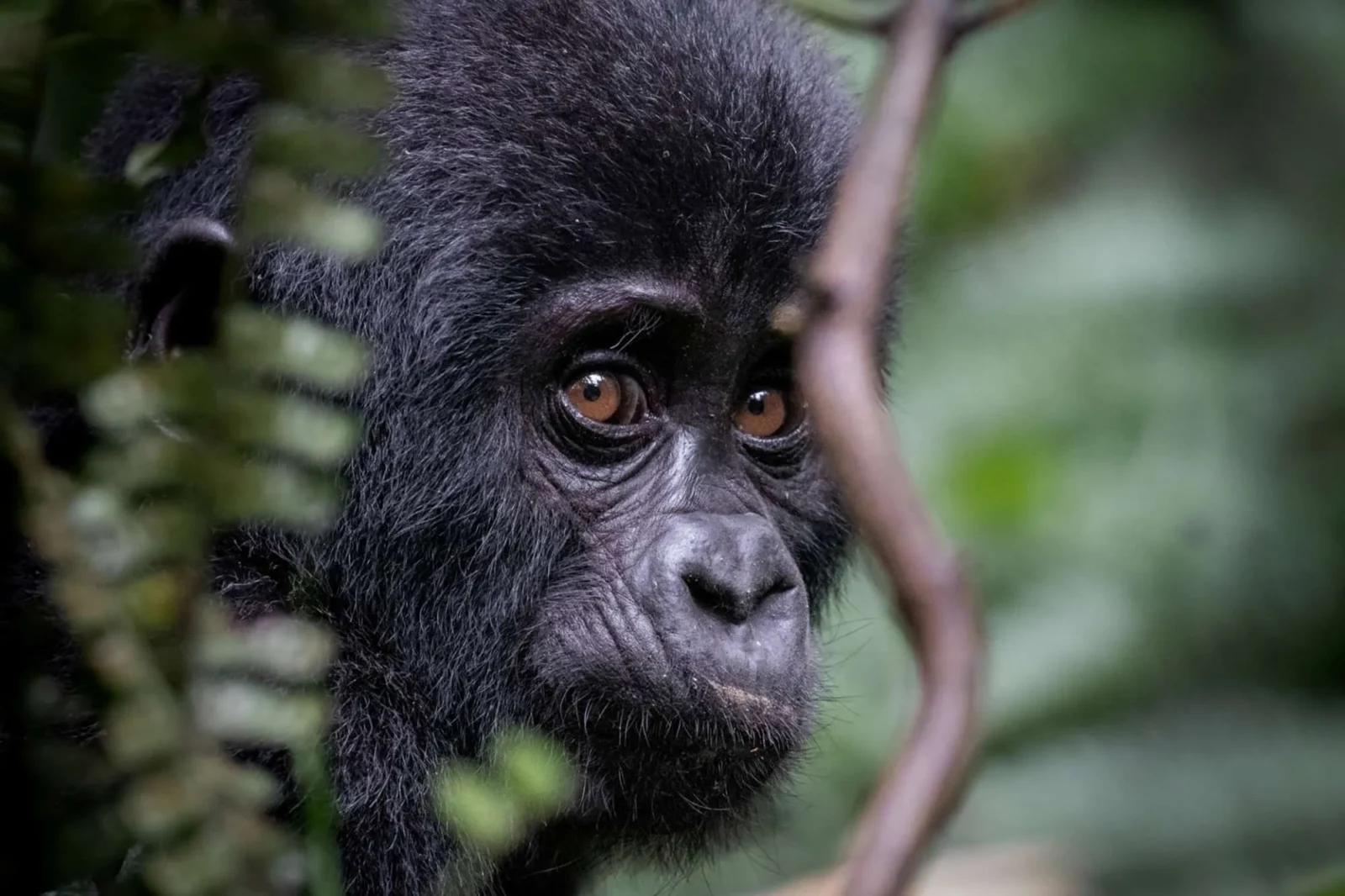
Baby Gorilla on Safari: When Are Infants Born and What to Expect
Seeing a baby gorilla in the wild is one of the most emotional and memorable wildlife experiences in Africa. For many travelers visiting gorilla destinations such as Bwindi Impenetrable National Park or Volcanoes National Park, the highlight is often not the silverback, but the tiny infant clinging to its mother’s chest or playing curiously near the group.
Baby gorillas completely change the atmosphere of a trekking encounter. They bring movement, playfulness, and family interaction that reveal the deeply social nature of gorilla life. Understanding when infants are born, how they behave, and what to expect during a gorilla trek helps travelers appreciate the experience on a much deeper level.
Do gorillas have a specific birth season?
One of the most interesting things about mountain gorillas is that they do not have a strict seasonal breeding cycle. Unlike some wildlife species that give birth during a specific time of year, gorillas can give birth in any month.
This means there is no exact “baby gorilla season” in Uganda or Rwanda. Infants may be seen at any time of the year during gorilla trekking.
However, researchers have noticed that births sometimes increase slightly during periods when food availability is high, especially in wetter months when vegetation is abundant. Even so, the pattern is not strong enough to create a predictable viewing season.
For tourists, this is excellent news because it means the possibility of seeing infants exists year-round.
How often do female gorillas give birth?
Female mountain gorillas reproduce slowly compared to many other mammals. A mother usually gives birth to one infant at a time after a pregnancy of around eight and a half months.
After birth, she may wait three to five years before having another baby. This long gap exists because the infant remains highly dependent on the mother for several years.
Twins are extremely rare among mountain gorillas, although they occasionally occur.
Because gorilla reproduction is slow, every surviving infant is incredibly important to the future of the population.
What baby gorillas look like
Baby gorillas are surprisingly small at birth, weighing roughly the same as a human baby. They are born with black hair, large expressive eyes, and tiny hands that tightly grip their mothers.
In the first months of life, infants spend most of their time attached to the mother’s chest or back. As they grow stronger, they begin exploring nearby vegetation and interacting with siblings or other juveniles in the group.
Young gorillas are highly playful. They tumble, chase each other, climb branches, and imitate adult behavior in ways that are often entertaining and surprisingly human-like.
This playful behavior is one of the reasons baby gorillas are such a highlight during trekking experiences.
What happens during a gorilla trek when infants are present
When a gorilla family includes infants, the overall group dynamic feels more active and social.
Mothers remain extremely attentive and protective, especially when infants are very young. You will often see babies nursing, sleeping against their mothers, or cautiously observing visitors from a safe position.
Older infants and juveniles are usually much more curious. They may climb trees, wrestle with other young gorillas, or move around the edges of the group while adults feed nearby.
The silverback, despite his massive appearance, is often surprisingly tolerant and protective around infants. He monitors the group constantly and intervenes if younger gorillas become too rough or wander too far.
For photographers, infant gorillas create some of the most powerful emotional moments because interactions between mothers and babies are visually expressive and intimate.
Best places to see baby gorillas
The best opportunities to see infants are in habituated gorilla families used for tourism and research.
In Uganda, Bwindi Impenetrable National Park is especially known for large family groups with multiple juveniles and infants.
Mgahinga Gorilla National Park also offers sightings, though it has fewer habituated groups.
In Rwanda, Volcanoes National Park is famous for stable gorilla families where infants are commonly seen during treks.
Because gorilla groups are constantly monitored by trackers and researchers, guides usually know in advance whether a family currently has newborns or young infants.
How gorilla infants behave around tourists
Young gorillas are naturally curious, but tourism rules require visitors to maintain a respectful distance.
Occasionally, an infant or juvenile may move closer out of curiosity. In such situations, guides instruct visitors to remain calm, avoid sudden movement, and never attempt physical contact.
Even playful infants are still wild animals, and their mothers or silverbacks remain highly protective.
Most infant behavior observed during trekking includes climbing, feeding, nursing, playing, and social interaction within the group.
Photography tips for baby gorillas
Photographing infants can be challenging because they move quickly and often stay close to their mothers in shaded forest environments.
Fast shutter speeds are useful for capturing playful movement, especially when juveniles wrestle or climb.
Patience is essential. Some of the best moments happen unexpectedly when a baby looks directly toward the camera or interacts gently with its mother.
Flash photography is not allowed during gorilla trekking because it may disturb the animals.
Why baby gorilla sightings matter for conservation
Seeing infants in the wild is more than just an emotional experience-it is also a positive sign for conservation.
Mountain gorillas were once critically endangered, with population numbers falling dangerously low during the twentieth century. Today, successful births and infant survival reflect the effectiveness of conservation efforts, anti-poaching protection, veterinary intervention, and regulated tourism.
Every surviving infant represents future population growth for a species that reproduces slowly and remains vulnerable to habitat pressure and disease.
Tourism revenue from gorilla permits directly contributes to protecting these families and their forest habitat.
What travelers should realistically expect
Not every trek guarantees close-up baby gorilla encounters. Gorilla groups move freely through dense forest, and behavior changes daily.
Some visits may involve active, playful juveniles for an entire hour, while others may focus more on resting adults.
However, because many habituated groups include multiple young gorillas, the chances of seeing infants or juveniles during trekking are generally very high.
The experience is rarely about dramatic action. Instead, it is the quiet observation of family life-mothers caring for babies, siblings playing together, and silverbacks supervising the group-that leaves the strongest impression.
Thoughts
Seeing a baby gorilla during a safari is one of the most unforgettable wildlife encounters in Africa. Their playful behavior, close family bonds, and human-like expressions create an emotional connection that few other wildlife experiences can match.
Because gorillas can give birth throughout the year, there is always a possibility of encountering infants during trekking in Uganda or Rwanda. Whether clinging quietly to their mother or tumbling through the forest with other juveniles, baby gorillas reveal the social and emotional depth of one of humanity’s closest relatives.
For many travelers, these moments become the defining memory of the entire safari experience.