
Gorilla Safari vs Chimpanzee: Key Differences on the Trail
For many travelers planning a primate safari in East Africa, one of the biggest questions is whether to choose gorilla trekking or chimpanzee tracking. Both experiences are extraordinary, but they are completely different in atmosphere, movement, forest environment, and animal behavior.
A gorilla safari is usually calm, emotional, and intimate. Chimpanzee tracking is faster, louder, and more unpredictable. One feels like quietly entering a family gathering in the forest, while the other feels like trying to keep up with highly energetic wild primates constantly moving through the trees.
Understanding the real differences between the two experiences helps travelers choose the right safari-or decide whether combining both is the best option.
The animals themselves: calm giants vs hyperactive primates
The biggest difference starts with the animals.
Mountain gorillas are large, ground-oriented primates that live in stable family groups led by a dominant silverback. They move relatively slowly, spend long periods feeding or resting, and generally remain calm around humans once habituated.
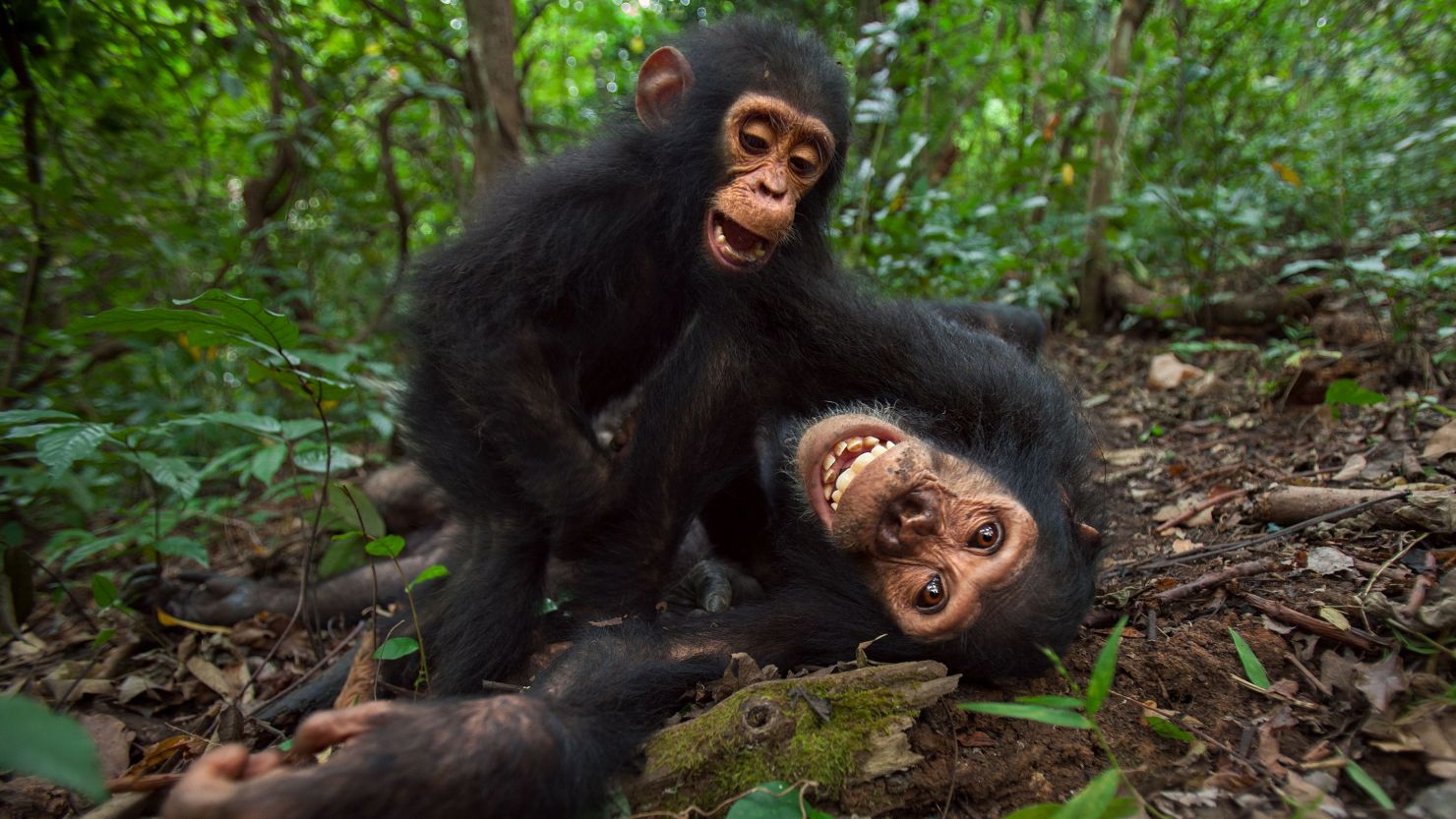
Chimpanzees are completely different. They are smaller, faster, louder, and highly energetic. They spend much more time moving through trees and can cover long distances quickly through the forest.
While gorillas often create a peaceful atmosphere during trekking, chimpanzees create a sense of constant movement and unpredictability.
Gorilla trekking experience
Gorilla trekking is most famous in places like Bwindi Impenetrable National Park, Volcanoes National Park, and Virunga National Park.
Treks begin early in the morning with guides and trackers leading small visitor groups into the forest. The hike length varies depending on where the gorilla family is located that day. Sometimes the trek is short and relatively easy, while other times it can involve steep slopes, dense vegetation, and several hours of hiking.
Once the gorillas are located, the atmosphere changes dramatically. The pace slows down, voices become quieter, and visitors spend one hour observing the group at close range.
You often see mothers nursing infants, juveniles playing, and silverbacks resting while monitoring the family. The experience feels intimate and deeply emotional because gorillas display many human-like behaviors and facial expressions.
Most gorilla encounters happen on the ground, making photography and observation relatively stable compared to chimpanzee tracking.
Chimpanzee tracking experience
Chimpanzee tracking is commonly done in places such as Kibale National Park and Nyungwe National Park.
Unlike gorillas, chimpanzees rarely stay still for long. The tracking experience is much more dynamic and physically reactive.
Trackers often locate chimps through vocalizations before visitors see them. Loud screams, pant-hoots, and crashing branches echo through the forest as groups move overhead.
Once contact is made, visitors frequently follow the chimps through dense forest while looking upward into the canopy. Chimpanzees may descend briefly to the ground, but much of the viewing happens while they climb, feed, chase, or interact in trees.
The experience feels energetic and wild, with constant movement and social drama.
Forest environment differences
The trekking environment also differs significantly.
Gorilla habitats are often high-altitude montane forests with thick vegetation, bamboo zones, and steep volcanic terrain. In places like Bwindi or Volcanoes National Park, conditions can be muddy, cool, and physically demanding.
Chimpanzee habitats are usually lower-altitude tropical rainforests with taller trees and more open canopy systems. The trails may still be challenging, but the terrain is often less steep than gorilla trekking regions.
Because chimpanzees spend more time in trees, visitors also spend much more time looking upward, whereas gorilla viewing is generally more direct and eye-level.
Difficulty comparison
Both experiences require moderate fitness, but the type of challenge is different.
Gorilla trekking is usually more physically demanding because of elevation, steep slopes, and thick vegetation. Some treks may last several hours before finding the gorilla group.
Chimpanzee tracking is often less steep but more fast-paced. Once the chimps begin moving, visitors may need to react quickly and follow changing directions through the forest.
In simple terms, gorilla trekking is slower but tougher physically, while chimpanzee tracking is lighter physically but more chaotic and energetic.
Behavior and social interaction
Gorilla families are structured and stable. The silverback controls the group, maintains order, and protects members. Interactions are usually calm, especially during feeding and resting periods.
Chimpanzees have more fluid and politically complex social systems. Dominance struggles, vocal communication, grooming alliances, and sudden aggression are more common.
This creates very different emotional atmospheres.
Gorilla trekking often feels peaceful and reflective.
Chimpanzee tracking feels intense, noisy, and unpredictable.
Photography differences
Photography conditions differ greatly between the two.
Gorillas are easier to photograph because they spend more time stationary and usually remain on the ground. The challenge is mainly low forest light.
Chimpanzees are much harder to photograph because they move rapidly and often stay high in the canopy. Fast shutter speeds and strong autofocus performance become much more important.
For photographers seeking emotional portraits and close interaction, gorillas are generally easier and more rewarding.
For action photography and behavioral dynamics, chimpanzees offer more movement and unpredictability.
Emotional experience
Travelers often describe gorilla trekking as emotional and almost spiritual. Eye contact with a gorilla, especially a silverback or mother with an infant, creates a strong psychological connection because of their calm presence and human-like behavior.
Chimpanzee tracking creates excitement rather than stillness. The energy, vocalizations, and social complexity make visitors feel immersed in a highly active wild primate society.
Neither experience is objectively better. They simply trigger different emotional responses.
Conservation importance
Both gorillas and chimpanzees face conservation threats including habitat loss, disease transmission, and human pressure.
Tourism plays a major role in funding protection efforts in parks across Uganda, Rwanda, and the Congo Basin. Gorilla permits especially generate significant conservation revenue, while chimpanzee tourism also supports rainforest protection and research programs.
Responsible tourism helps protect both species while supporting local communities connected to these forests.
Can you combine both experiences?
Yes, and many travelers do.
Uganda is especially popular for combining gorilla trekking in Bwindi Impenetrable National Park with chimpanzee tracking in Kibale National Park.
Rwanda also offers combinations involving Volcanoes National Park and Nyungwe National Park.
Combining both gives travelers a much broader understanding of primate behavior and East African forest ecosystems.
Thoughts
Gorilla safaris and chimpanzee tracking are both world-class wildlife experiences, but they are fundamentally different on the trail.
Gorilla trekking is calm, intimate, and emotionally powerful, centered around stable family groups and close observation.
Chimpanzee tracking is fast-moving, noisy, and energetic, focused on following highly active primates through the forest canopy.
Choosing between them depends on the type of experience you want. Many travelers ultimately discover that the contrast between the two is exactly what makes combining them so rewarding.