
Mountain Gorilla vs Eastern Lowland Gorilla: Safari Differences
Many travelers planning a gorilla safari assume all gorilla trekking experiences are essentially the same. In reality, seeing mountain gorillas and seeing eastern lowland gorillas are two very different experiences. The animals themselves differ in appearance, habitat, behavior, trekking conditions, and the overall atmosphere of the safari.
Both belong to the eastern gorilla species group, but they live in completely different environments and create very different trekking experiences for visitors.
Understanding these differences helps travelers choose the gorilla safari that best matches their expectations, fitness level, and travel style.
Understanding the two gorilla types
Mountain gorillas are found in the high-altitude forests of Uganda, Rwanda, and the Democratic Republic of Congo. They are the most famous gorillas in African tourism and are the focus of most gorilla trekking safaris.
Eastern lowland gorillas, also called Grauer’s gorillas, live mainly in the lowland tropical rainforests of eastern Democratic Republic of Congo. They are the largest gorilla subspecies in the world and inhabit much denser, lower-altitude forest environments.
Although closely related, they look and behave differently because they evolved in separate ecological conditions.
Physical appearance differences
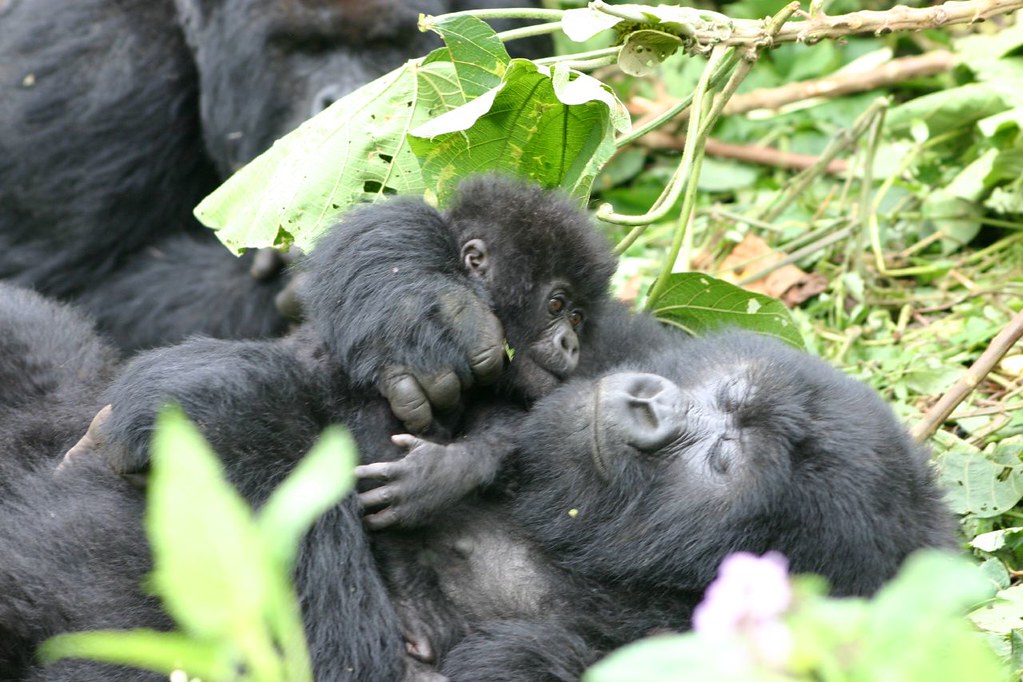
Mountain gorillas are heavily built with thick, dark fur adapted to cold montane climates. Their long hair helps them survive in high-altitude forests where temperatures can become cool, especially at night and early morning.
Adult silverbacks appear broad and muscular, with powerful shoulders and dense coats.
Eastern lowland gorillas are larger overall, especially in body length and hand size, but they usually have shorter and slightly less dense hair because they live in warmer lowland forests.
Their faces are often described as slightly narrower and more expressive, and their bodies can appear leaner despite being larger animals.
For photographers, the visual contrast between the two species becomes obvious once seen side by side in images.
Where mountain gorilla safaris happen
Mountain gorilla trekking takes place mainly in:
Bwindi Impenetrable National Park
Volcanoes National Park
Mgahinga Gorilla National Park
Virunga National Park
These habitats are mountainous, cool, and often physically demanding due to elevation and steep terrain.
Where eastern lowland gorilla safaris happen
Eastern lowland gorilla trekking primarily occurs in:
Kahuzi-Biega National Park
This park contains dense tropical rainforest at lower altitudes compared to mountain gorilla regions.
The trekking environment is more humid, greener, and more jungle-like, with tall trees and thicker canopy systems.
Trekking environment comparison
One of the biggest safari differences is the forest itself.
Mountain gorilla trekking usually involves hiking through bamboo forests, volcanic slopes, tangled vegetation, and steep terrain. The altitude can make hiking physically demanding, especially in places like Volcanoes National Park and parts of Bwindi.
The atmosphere often feels misty and dramatic, with cool mountain air and dense undergrowth.
Eastern lowland gorilla trekking takes place in lower-altitude rainforest. The terrain is generally flatter but more humid. Trails may still be muddy and physically challenging, but the environment feels more tropical than mountainous.
The forest canopy is taller, and the sense of deep jungle immersion is stronger.
Gorilla behavior differences
Mountain gorillas are generally calmer and more accustomed to human presence due to decades of tightly managed tourism and habituation programs.
They often spend long periods feeding, resting, or interacting quietly within family groups. Encounters feel peaceful and intimate.
Eastern lowland gorillas are also social and family-oriented, but they tend to move more through dense forest and can appear slightly less predictable during tracking.
Their feeding behavior also differs because they consume different vegetation in lowland rainforest ecosystems.
Despite these differences, both species display strong social bonds, maternal care, grooming behavior, and silverback leadership structures.
Group size and viewing experience
Mountain gorilla groups visited by tourists are often well habituated and relatively stable. Visitors commonly observe close family interactions, including mothers with infants, playful juveniles, and dominant silverbacks.
Viewing is usually clearer because mountain gorillas spend more time on or near the ground.
Eastern lowland gorilla viewing can feel more raw and wild because the rainforest is denser. Visibility may be more limited in thick vegetation, and photography can be harder due to darker forest conditions.
However, many travelers find this creates a more adventurous and less commercial atmosphere.
Accessibility and tourism infrastructure
Mountain gorilla tourism is far more developed and accessible.
Uganda and Rwanda have established infrastructure, professional trekking systems, luxury lodges, and highly organized permit structures. Gorilla tourism in these countries is one of Africa’s most polished wildlife experiences.
Eastern lowland gorilla tourism in the Democratic Republic of Congo is much less developed. Access is more adventurous and can involve more logistical complexity.
Because of this, lowland gorilla trekking attracts travelers seeking a more remote and expedition-style experience.
Cost differences
Mountain gorilla permits are significantly more expensive, especially in Rwanda where permits are among the highest-priced wildlife experiences in Africa.
Uganda offers slightly more affordable mountain gorilla permits while maintaining strong trekking quality.
Eastern lowland gorilla trekking permits in Congo are generally cheaper than mountain gorilla permits, but travel logistics and security considerations can offset some of the savings.
Photography differences
Mountain gorillas are generally easier to photograph because they spend more time stationary and visible on the forest floor.
The open bamboo sections and lighter vegetation in some mountain habitats also improve visibility.
Eastern lowland gorillas are more challenging to photograph due to darker rainforest conditions, dense foliage, and lower visibility.
However, the rainforest atmosphere itself creates dramatic and immersive imagery for photographers seeking a wilder jungle aesthetic.
Conservation status
Both mountain gorillas and eastern lowland gorillas face conservation pressure, but their situations differ.
Mountain gorilla conservation is considered one of Africa’s major wildlife success stories. Populations have slowly increased due to strict protection, veterinary care, anti-poaching efforts, and tourism revenue.
Eastern lowland gorillas remain under heavier threat from habitat destruction, mining activity, instability, and poaching in parts of the Congo Basin.
Tourism revenue contributes to conservation in both cases, but eastern lowland gorillas remain more vulnerable overall.
Which gorilla safari is better?
Neither experience is objectively better. They appeal to different types of travelers.
Mountain gorilla trekking is best for travelers seeking a highly organized, emotionally intimate, and reliable gorilla encounter with stronger infrastructure and easier logistics.
Eastern lowland gorilla trekking is best for travelers seeking a more adventurous, remote, and rainforest-heavy expedition experience.
Mountain gorillas offer more accessible viewing and easier photography.
Eastern lowland gorillas offer a rarer and more rugged safari atmosphere.
Thoughts
Mountain gorillas and eastern lowland gorillas may belong to the same eastern gorilla family, but the safari experience surrounding them is very different.
Mountain gorilla trekking focuses on high-altitude forests, structured tourism, and calm, intimate family encounters.
Eastern lowland gorilla trekking delivers a deeper rainforest expedition with larger gorillas, denser jungle conditions, and a more remote atmosphere.
Both experiences are extraordinary in their own way, and both reveal the intelligence, social complexity, and emotional depth of one of humanity’s closest relatives.