
A Calm Afternoon on the Plains
The afternoon had been unusually quiet.
The sun hung high above the savannah, and most animals seemed content to conserve energy during the hottest part of the day. A herd of zebras grazed peacefully across an open stretch of grassland while a few foals rested near their mothers.
Nothing appeared out of place.
Our safari vehicle had stopped at a comfortable distance, giving us a clear view of the herd. Several travellers focused their cameras on a young foal playing among the adults, while others simply enjoyed the peaceful scene.
Then one of the zebras suddenly raised its head.
Trouble Approaching
At first, it was difficult to see what had caused the reaction.
The stallion stood motionless, staring towards a patch of low shrubs several hundred metres away. Moments later, other zebras stopped feeding and looked in the same direction.
Our guide lifted his binoculars.
“Hyenas,” he said quietly.
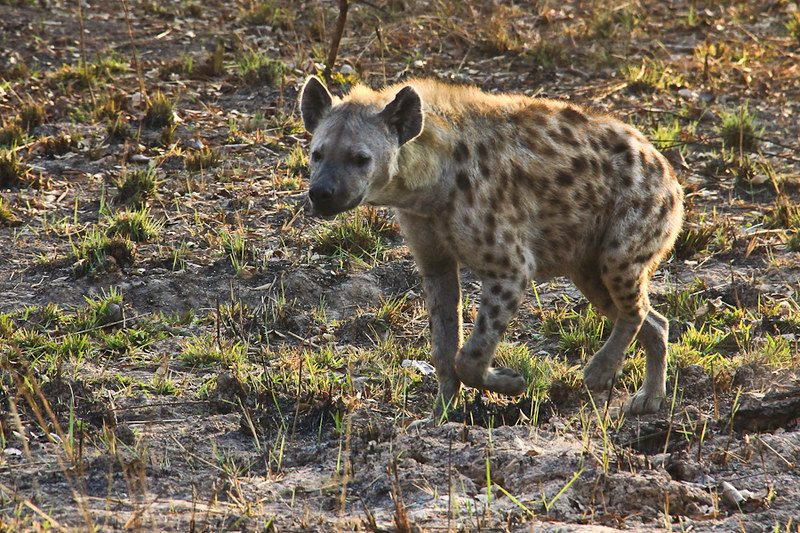
A small group of spotted hyenas was moving across the grassland.
They were not running or actively hunting, but their direction suggested they were heading towards the zebra herd. The foals immediately became the centre of attention.
Young zebras are vulnerable, and predators know it.
The Reputation of Hyenas
Many people underestimate hyenas.
Popular films often portray them as scavengers that survive by stealing food from other predators. In reality, spotted hyenas are highly skilled hunters capable of bringing down large prey through teamwork and persistence.
They are intelligent, powerful, and remarkably efficient predators.
A coordinated hyena pack can challenge animals much larger than themselves, especially when they identify a weak, injured, or young target.
The approaching group appeared interested in the herd.
The zebras knew it too.
The Stallion Steps Forward
As the hyenas drew closer, the herd’s behaviour changed dramatically.
The mares gathered the foals towards the centre of the group while several adults formed a loose protective line around them.
Then the stallion moved forward.
He positioned himself between the herd and the approaching predators.
His ears flattened.
His head lowered.
Every movement signalled determination.
Unlike many prey animals that immediately flee, zebras can become surprisingly aggressive when defending themselves and their families.
A Powerful Defender
People often think of zebras as peaceful grazing animals.
They are certainly not predators, but they are far from helpless.
An adult zebra possesses powerful muscles, strong jaws, and some of the most dangerous kicks in the animal kingdom. A well placed kick can break bones and cause serious injuries to predators.
The stallion understood his advantage.
Rather than retreating, he stood his ground.
The hyenas continued approaching.
The Charge Nobody Expected
The distance between the two sides continued shrinking.
Then, without warning, the stallion exploded into action.
He charged.
Dust flew from beneath his hooves as he sprinted directly towards the hyenas. The sudden display caught everyone by surprise, including the predators.
Instead of finding a nervous prey animal, they were facing an angry defender moving towards them at full speed.
The lead hyena hesitated.
That hesitation changed everything.
Turning the Tables
The stallion continued his charge.
His ears remained pinned back while his powerful legs carried him across the grassland. The hyenas quickly realised the situation had become far more dangerous than expected.
One by one, they began backing away.
The stallion did not stop immediately.
He continued pushing forward until the predators increased their distance from the herd.
Only then did he slow down.
The message was clear.
The foals were not available.
Why Predators Avoid Injury
Predators hunt to survive, but they also avoid unnecessary risks.
An injured lion struggles to hunt.
An injured hyena may lose its position within the pack.
Even relatively small injuries can threaten survival.
The stallion’s aggressive response changed the risk calculation.
The potential reward of attacking a zebra foal no longer justified the possibility of receiving a powerful kick or bite.
The hyenas chose the safer option.
They walked away.
The Herd Responds
As the predators retreated, the atmosphere within the herd gradually relaxed.
The mares remained close to their foals for several more minutes, but heads slowly lowered back towards the grass.
The crisis had passed.
The stallion returned to the group, resuming his position near the edge of the herd.
To an outside observer, it almost looked as though nothing had happened.
Yet everyone watching knew they had witnessed something remarkable.
The Protective Role of Zebra Stallions
A stallion’s responsibilities extend far beyond breeding.
He protects the family group from threats, monitors the herd’s movements, and helps maintain social order. When danger appears, he is often the first to confront it.
Not every confrontation ends dramatically.
Sometimes a warning posture is enough. Sometimes predators move away before conflict develops. Occasionally, however, a stallion must actively defend the herd.
The willingness to take that risk plays a major role in the survival of mares and foals.
Wildlife Is Full of Surprises
One lesson every safari teaches is that wildlife rarely follows expectations.
Many visitors arrive hoping to witness predator action. Few expect to see prey animals aggressively confronting predators.
Yet these encounters happen more often than people realise.
Buffalo chase lions.
Elephants charge hyenas.
Warthogs defend their young.
And zebras, despite their calm appearance, can become fierce protectors when their families are threatened.
Nature is rarely as simple as predator and prey.
Where Such Encounters Can Happen
Zebras and hyenas share habitats throughout many of East Africa’s major wildlife destinations.
In Uganda, these interactions may occur in Lake Mburo National Park and Kidepo Valley National Park. In Kenya, the Maasai Mara National Reserve and Tsavo ecosystems provide excellent opportunities to observe both species.
Tanzania’s Serengeti National Park and Ngorongoro Conservation Area also support large populations of zebras and spotted hyenas living within the same ecosystems.
While dramatic encounters are never guaranteed, the possibility always exists when predators and prey share the landscape.
A Moment That Changed Perceptions
As our vehicle eventually moved on, the image remained unforgettable.
Most people think of zebras as beautiful animals defined by their striking stripes. That afternoon revealed another side of their character.
We had watched a stallion place himself between danger and his family.
We had seen him challenge predators that many animals fear.
We had watched a prey animal refuse to back down.
More Than Just Stripes
Long after the safari ended, that encounter remained one of the clearest memories of the trip.
Not because of a hunt.
Not because of a kill.
But because of a defence.
The stallion never intended to become the star of the afternoon. He simply responded to a threat the way countless zebra stallions have for generations. In doing so, he reminded everyone watching that courage in the wild is not limited to predators.
Sometimes it belongs to the animal standing between danger and its family, refusing to move even when a pack of hyenas is approaching. Sometimes it belongs to a zebra stallion determined to protect his herd at all costs.