
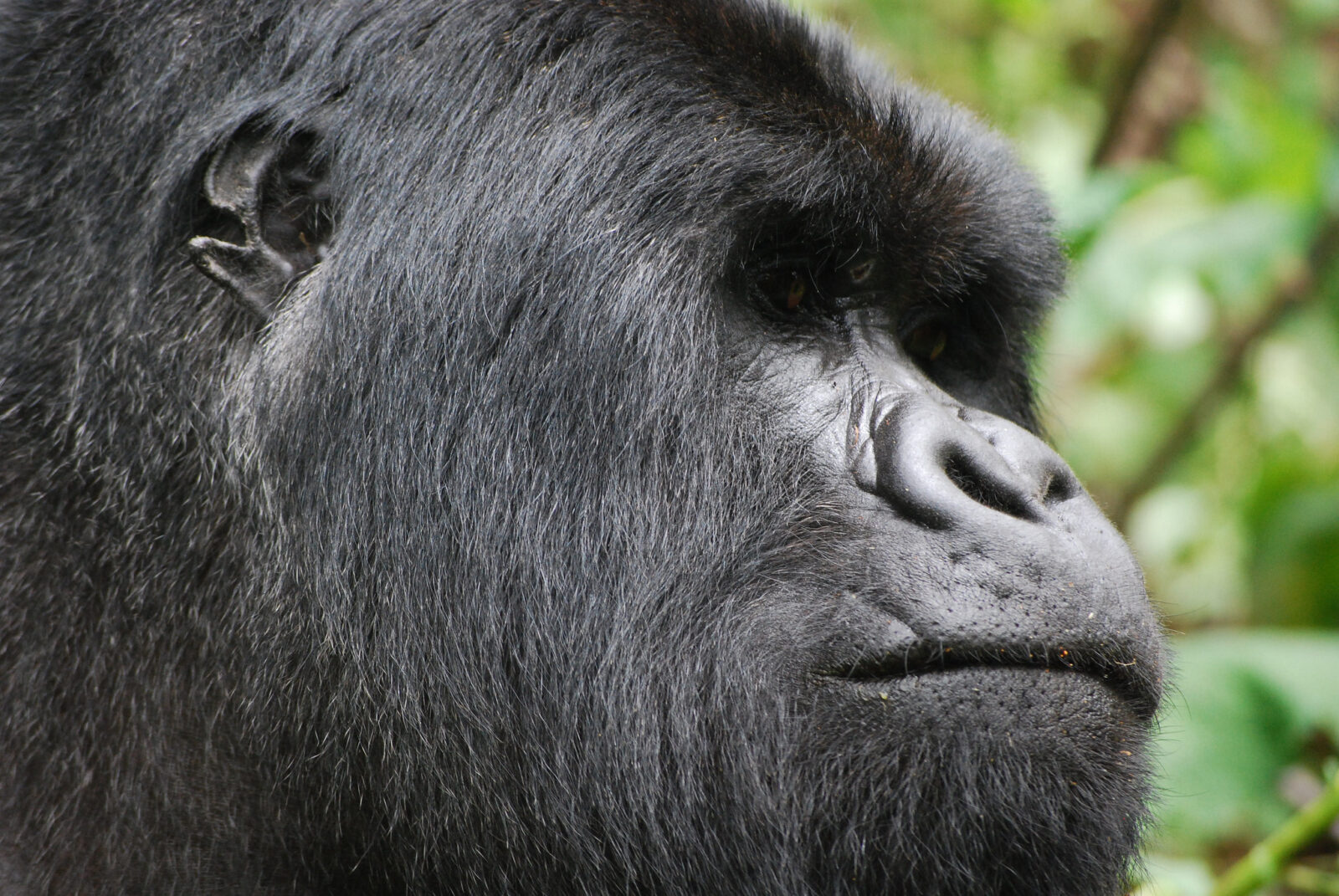
How Rwanda’s Gorilla Population Has Recovered: A Conservation Success Story
Few wildlife recovery stories anywhere in the world offer as clear and well-documented a trajectory as this one. How Rwanda’s gorilla population has recovered from the brink of collapse to genuine, sustained growth stands as one of the clearest conservation success stories anywhere in the world, a trajectory worth understanding for anyone about to trek through Volcanoes National Park and encounter its direct results firsthand. The Virunga Massif, the mountain range spanning Rwanda, Uganda, and the Democratic Republic of Congo that Rwanda’s gorillas share territory across, tells a story of near-collapse followed by decades of deliberate, sustained recovery that offers real lessons for endangered species conservation more broadly.
The Crisis Years: How Close the Population Came to Collapse
By 1981, the Virunga Massif’s mountain gorilla population had fallen to a documented low of roughly 242 individuals, the result of sustained poaching pressure, both direct killing for bushmeat and infant capture for the illegal pet trade, combined with habitat loss as surrounding human populations expanded agricultural land into gorilla territory. This period represented a genuine crisis point for the species, and conservationists at the time, including Dian Fossey during her years running Karisoke Research Center, worked against a real possibility that mountain gorillas could disappear from the Virunga region entirely within a generation. Political instability across the region through the late twentieth century, including the Rwandan genocide and its aftermath, added further disruption to conservation efforts during an already precarious period, making the population’s eventual recovery considerably more remarkable given how many compounding threats it had to survive. Some conservation historians point out that mountain gorillas came closer to extinction during this period than many people realize today, precisely because the recovery since has been so thorough that the crisis years can feel almost abstract in hindsight, a distant statistic rather than the genuinely near-run outcome it actually was.
The Recovery in Numbers
From that 1981 low point, the Virunga Massif’s gorilla population has grown steadily and, notably, has continued growing even through periods of significant regional political instability, a testament to how deeply the conservation infrastructure built around it has become embedded regardless of broader turmoil. A census covering 2003 to 2010 recorded a 26.3 percent increase in the Virunga population, and the population continued climbing from roughly 480 individuals in 2010 to 604 by the 2016 census. Combined with the separate but related Bwindi Impenetrable Forest population in Uganda, the total mountain gorilla population across both ecosystems surpassed 1,000 individuals for the first time in recorded conservation history, and the most recent comprehensive census placed the combined figure between 1,063 and 1,080 individuals, an increase of roughly 26 percent since 2018 alone. Mountain gorillas remain one of the very few great ape populations globally trending upward rather than declining, a genuinely rare distinction worth appreciating in the context of how most other great ape species continue losing ground to habitat destruction and poaching pressure elsewhere in Africa and Southeast Asia.
What Actually Drove the Recovery
Rwanda’s specific contribution to this broader Virunga recovery rests on a combination of factors that reinforce each other rather than any single intervention working in isolation. Intensive daily ranger and tracker monitoring of every habituated family, a practice pioneered in part by Fossey’s own research methods at Karisoke, allows conservationists to detect health issues, injuries, and threats to specific gorillas far faster than periodic or indirect monitoring ever could. Strict anti-poaching enforcement across Volcanoes National Park, backed by genuine political commitment from the Rwandan government over multiple decades, has dramatically reduced the direct killing and capture that drove the 1980s population collapse. Tourism revenue, channeled directly into conservation funding and community revenue-sharing programs, has created a self-reinforcing economic model where local communities benefit tangibly from the gorillas’ continued survival rather than experiencing them purely as a land-use restriction.
The Dian Fossey Gorilla Fund’s continued research and veterinary intervention work, active in the region since Fossey’s original research decades ago, adds a further layer: direct medical treatment for sick or injured gorillas in the field, an approach that has genuinely saved individual animals whose deaths would have meaningfully impacted a population still measured in the low thousands rather than the hundreds of thousands typical of more numerous species.
How Census Data Actually Gets Collected
Understanding how conservationists arrive at these population figures adds another layer of appreciation for how rigorous this recovery story actually is. Mountain gorilla censuses involve extensive, methodical fieldwork: teams of trackers and researchers systematically survey the entire Virunga Massif over several months, counting individual nests, collecting genetic samples from dung to distinguish between overlapping family groups, and cross-referencing findings against known family compositions maintained through the daily monitoring habituated groups already receive. This is neither a quick estimate nor a simple extrapolation; it represents one of the most intensively studied wild great ape populations anywhere on the planet, a direct legacy of the individual-based monitoring approach Fossey pioneered at Karisoke decades ago. The rigor behind these numbers is part of why conservationists and organizations like the Dian Fossey Gorilla Fund can speak with genuine confidence about the population trajectory rather than relying on rough guesses.
Why This Recovery Story Matters to Your Trek
Every visitor trekking through Volcanoes National Park today is, in a very direct sense, walking through the results of this decades-long recovery effort, and the specific family a group encounters on any given trekking day exists because of this sustained work rather than despite the region’s turbulent recent history. Understanding this context reframes the trekking permit fee, often the first thing travelers research when planning a trip, as a continuation of the same funding model that produced this recovery rather than simply a cost of admission to see wildlife. Our page on the cost of a gorilla trekking permit in Uganda and Rwanda covers how that fee breaks down in more detail.
Rwanda’s Distinctive Approach Within the Regional Effort
While the Virunga recovery reflects coordinated effort across Rwanda, Uganda, and the DRC, Rwanda’s specific model has carried some distinctive elements worth understanding on their own terms. Rwanda’s decision to price its gorilla permit considerably higher than Uganda’s, currently $1,500 against Uganda’s $800, reflects a deliberate high-value, lower-volume tourism strategy that channels substantial per-visitor revenue into conservation and infrastructure, rather than maximizing total visitor numbers. This approach has funded a particularly well-resourced ranger and monitoring system relative to the number of visitors it serves, and it has also funded substantial community infrastructure investment in the districts bordering Volcanoes National Park, part of why Rwanda’s revenue-sharing programs are often cited as a reference model by conservation programs elsewhere in Africa.
Rwanda’s post-genocide national rebuilding effort more broadly has also intersected meaningfully with its conservation strategy, with gorilla tourism positioned as both an economic development priority and a symbol of national recovery in its own right, a framing that has helped sustain strong government commitment to conservation funding and enforcement across successive administrations since the 1990s. This political continuity matters more than it might initially seem, since conservation programs that depend on decades of sustained funding and enforcement are especially vulnerable to disruption whenever government priorities shift, and Rwanda’s consistency on this specific point has been a genuine advantage relative to some neighboring countries’ more variable conservation funding histories.
What Threats Remain Despite the Recovery
Recovery does not mean the population is now free of risk, and understanding the ongoing threats helps explain why the strict trekking rules, the one-hour limit, the distance requirements, the illness screening, remain so tightly enforced even after decades of population growth. Disease transmission from human contact remains the most significant ongoing risk given how closely related gorillas are to humans genetically, which is precisely why tourism, the same activity that funds the conservation model, also requires such careful management to avoid undermining its own foundation. Habitat pressure from surrounding human population growth continues at the edges of protected areas, even with revenue-sharing programs working to offset the economic incentives that might otherwise favor converting forest land to agriculture. Climate change presents a longer-term, less immediately visible threat to the specific high-altitude bamboo and afromontane forest habitat mountain gorillas depend on, a concern conservationists are increasingly factoring into long-term habitat protection planning across the Virunga region. Researchers monitoring vegetation patterns across the mountains have noted subtle shifts in plant distribution tied to changing rainfall and temperature patterns over recent decades, early signals that even a well-protected habitat can face slow-moving pressures no amount of anti-poaching enforcement alone can fully address.
Seeing the Recovery Firsthand
Our broader page on gorilla population growth success stories covers this trajectory across both Rwanda and Uganda in further depth, and our piece on the Dian Fossey tomb trail connects this recovery story directly to the researcher whose work helped set it in motion. Our page on how gorilla rangers protect Bwindi covers the parallel Uganda side of this same conservation model. A three-day Rwanda gorilla safari puts you directly in front of the living result of this recovery, a population that, against genuinely long odds, is not just surviving but continuing to grow. How Rwanda’s gorilla population has recovered is, in the end, a story best understood in person, standing a few meters from a family that would not exist today without the decades of work described above.